Things To Know About Bosnia and Herzegovina
By: Straighter Mobile Team
Essential Travel Tips for Bosnia and Herzegovina
Knowing a few key facts before arriving in Bosnia and Herzegovina makes the difference between a trip full of small frustrations and one that runs smoothly from day one. Every country has its own practical rhythms — its approach to money, transport, greetings, tipping, and the unwritten rules that guidebooks sometimes skip. The tips below address what actually matters on the ground, fact-checked for accuracy.
Some of these tips are practical (entry requirements, currency, transport); some are cultural (greetings, dining times, hospitality customs); some are safety-related. All of them apply regardless of where you are travelling from. None of them are difficult once you know them — but they are easy to get wrong if you arrive with assumptions drawn from home.
Entry requirements and political situations can change. Always verify visa rules through your own government's official travel advisory before departure. Travel insurance is non-negotiable for any international trip — ensure yours covers your planned activities. With the basics in hand, you are free to direct your attention towards what makes Bosnia and Herzegovina genuinely worth visiting.
Key Takeaways:
- Always verify current entry requirements through your government's official travel advisory
- Understand the local currency and whether cards or cash are expected before you arrive
- Even a single word in the local language changes how you are received
- Cultural norms around dining, tipping, and social behaviour are worth knowing in advance
- Safety-specific tips for Bosnia and Herzegovina are included — read them before you go
Staying connected in Bosnia and Herzegovina
Stay connected to the internet throughout Europe, including Bosnia and Herzegovina, without worrying about expensive roaming fees with a Bosnia and Herzegovina eSIM that lets you install a digital SIM in minutes and stay connected effortlessly as you travel.
10 Things to Know Before Visiting Bosnia and Herzegovina
1. Visa and Entry
Citizens of the EU, US, UK, Canada, and Australia can enter visa-free for up to 90 days within a 180-day period. Bosnia is neither an EU nor Schengen member. Your passport should be valid for at least three months beyond your stay. No Schengen implications — Bosnia does not count against your EU 90-day allowance.
2. Currency
The Bosnian Convertible Mark (BAM/KM) is pegged to the Euro at a fixed rate of 1.95583 BAM per Euro. Cards work in hotels and larger restaurants in Sarajevo and Mostar, but cash is essential in smaller towns, traditional restaurants, and rural areas. The peg to the Euro is fixed by law and has been stable since 1997 — it will not fluctuate.
3. Political Sensitivity
Bosnia has a complex governmental structure with two entities (Federation of BiH and Republika Srpska) and a shared state. National identity — Bosniak, Croat, or Serb — is deeply felt. Be diplomatically aware and avoid expressing strong opinions on contested historical narratives. Listen more than you speak on questions of national identity and the 1990s war.
4. Bosnian Coffee
Bosnian coffee (bosanska kafa) is brewed in a copper dzezva and served with grounds still settling, a sugar cube, and often a piece of rahat lokum. Ordering 'Turkish coffee' may cause mild offence — it is specifically Bosnian coffee here. Order 'bosanska kafa' not 'Turkish coffee' — the distinction matters to Bosnians.
5. Landmine Warning
Approximately 1,000 square kilometres of Bosnian countryside still contain landmines remaining from the 1992–1995 war. The risk is concentrated in rural hillsides and forests away from tourist routes. Never leave clearly marked paths in the countryside, and heed warning signs (yellow triangle with skull symbol) without exception. Stick to marked paths and roads in rural areas — landmines are not a historical footnote here.
6. Language
Bosnian, Croatian, and Serbian are mutually intelligible and officially recognised. Latin script is standard in Sarajevo and the Federation; Cyrillic may be seen in Republika Srpska. English is widely spoken in Sarajevo and tourist areas. 'Hvala' (thank you) and 'Molim' (please) work across all three language variants.
7. Mostar Strategy
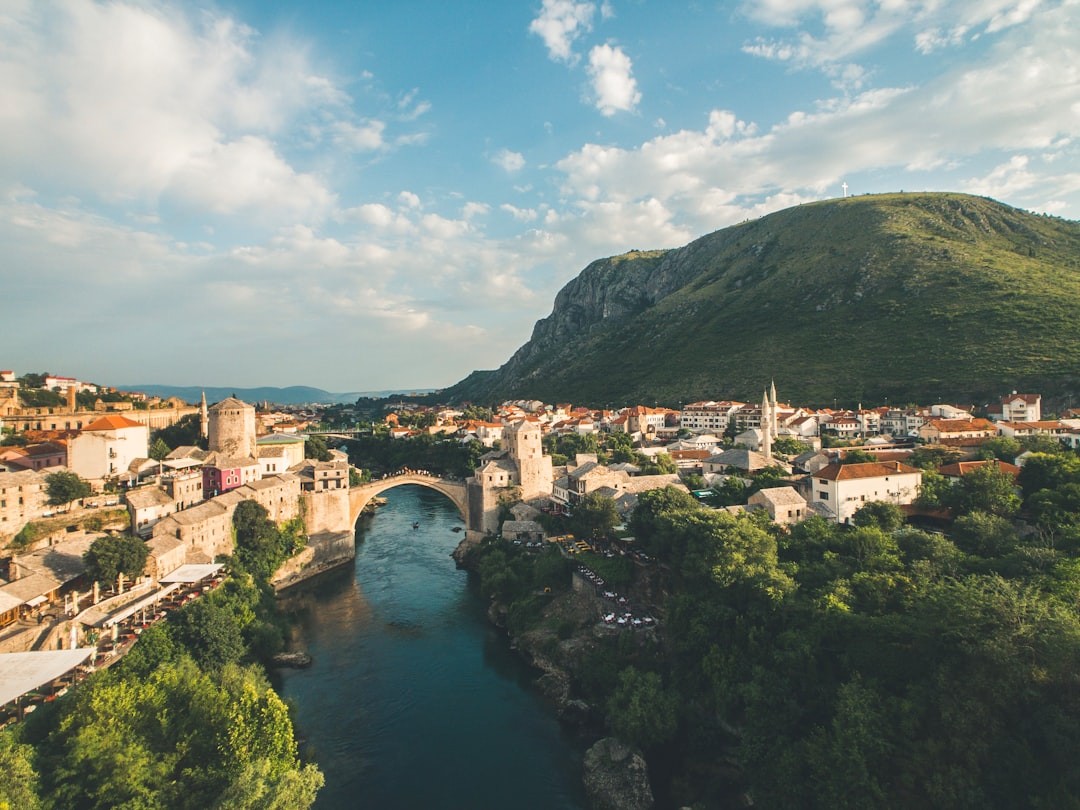
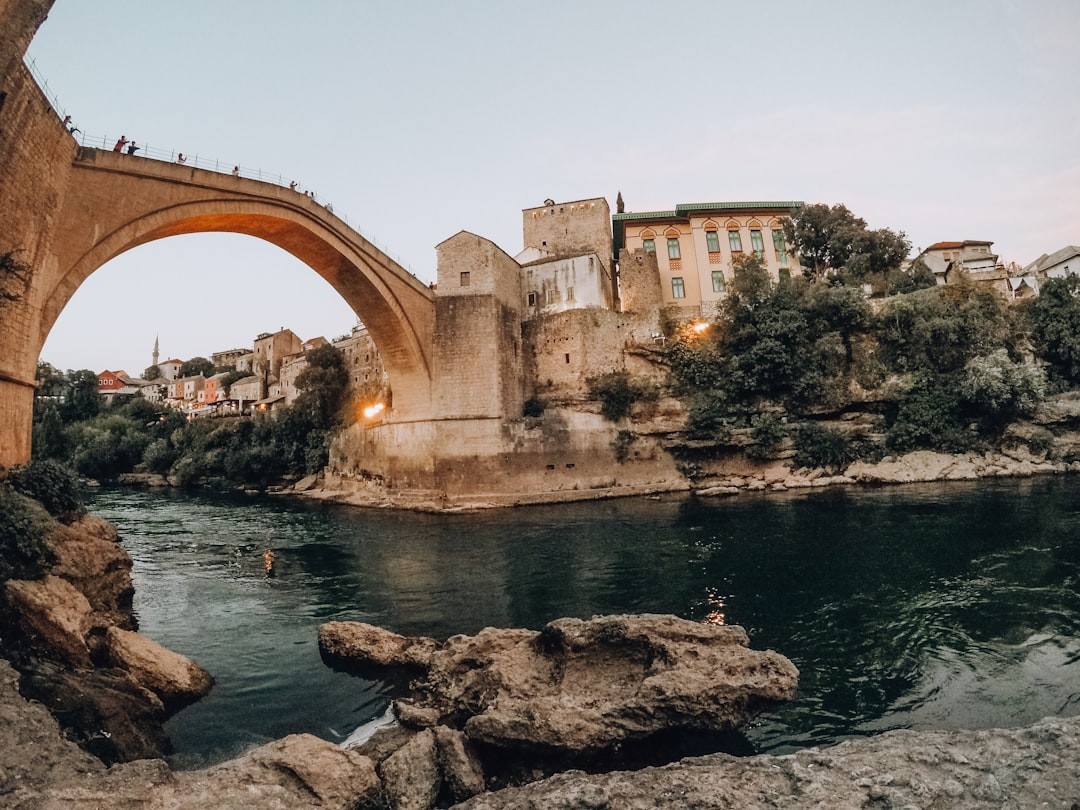
Mostar's old town is often overwhelmed by day-trippers from Dubrovnik between 10am and 5pm. Arriving before 9am or staying overnight gives a completely different experience. The bridge divers jumping from the Stari Most are a genuine local tradition, not a tourist performance. Stay overnight in Mostar rather than day-tripping — the evening atmosphere is entirely different.
8. Food
Cevapi (grilled minced meat sausages with flatbread, onion, and kajmak cream) is the national street food and should be eaten from a proper grill in the Sarajevo Baščaršija. Burek (meat or cheese pastry) is the traditional breakfast. Portions are large and prices are low. Eat cevapi at a charcoal grill in the Baščaršija, not a tourist restaurant.
9. Safety
Bosnia is generally safe for tourists. Sarajevo is a lively and welcoming city. The main caution is the landmine risk in rural areas (see above) and the general advice to be geopolitically aware given recent history. Do not confuse geopolitical complexity with physical danger. Sarajevo is safe and very welcoming — the risk is in rural areas, not the cities.
10. Tipping
10% in sit-down restaurants in Sarajevo and Mostar is appreciated and expected. In local restaurants and cafes, rounding up is standard. Accepting hospitality — coffee, food, or raki — without expectation of payment is a real Bosnian tradition; accept graciously. Accept freely offered hospitality graciously — refusing can be considered impolite.
Final Thoughts on Travelling in Bosnia and Herzegovina
The most important thing you can bring to Bosnia and Herzegovina is genuine curiosity and a willingness to engage with the country on its own terms. The practical tips above handle the logistics — entry, money, transport, customs. The quality of the experience beyond that depends on the attitude you bring: openness to the differences, patience with the unfamiliar, and respect for a culture that has its own valid way of doing things.
Where something seems inconvenient — later meal times, different tipping conventions, shops closed on certain days — it is worth remembering that these are features of a living culture, not failures to meet external expectations. Adapting to them, rather than working around them, consistently produces a richer experience.
Go with a flexible itinerary, the right practical foundation, and an appetite for what makes Bosnia and Herzegovina genuinely itself. That combination serves well in any country and particularly well here.