Things To Know About San Marino
By: Straighter Mobile Team
Essential Travel Tips for San Marino
Knowing a few key facts before arriving in San Marino makes the difference between a trip full of small frustrations and one that runs smoothly from day one. Every country has its own practical rhythms — its approach to money, transport, greetings, tipping, and the unwritten rules that guidebooks sometimes skip. The tips below address what actually matters on the ground, fact-checked for accuracy.
Some of these tips are practical (entry requirements, currency, transport); some are cultural (greetings, dining times, hospitality customs); some are safety-related. All of them apply regardless of where you are travelling from. None of them are difficult once you know them — but they are easy to get wrong if you arrive with assumptions drawn from home.
Entry requirements and political situations can change. Always verify visa rules through your own government's official travel advisory before departure. Travel insurance is non-negotiable for any international trip — ensure yours covers your planned activities. With the basics in hand, you are free to direct your attention towards what makes San Marino genuinely worth visiting.
Key Takeaways:
- Always verify current entry requirements through your government's official travel advisory
- Understand the local currency and whether cards or cash are expected before you arrive
- Even a single word in the local language changes how you are received
- Cultural norms around dining, tipping, and social behaviour are worth knowing in advance
- Safety-specific tips for San Marino are included — read them before you go
Staying connected in San Marino
Stay connected to the internet throughout Europe, including San Marino, without worrying about expensive roaming fees with a San Marino eSIM that lets you install a digital SIM in minutes and stay connected effortlessly as you travel.
10 Things to Know Before Visiting San Marino
1. Visa and Entry
San Marino is surrounded entirely by Italy and shares Italy's open, uncontrolled borders. EU, US, UK, Canadian, and Australian citizens enter freely. There are no border formalities between San Marino and Italy. No border controls — you cross between Italy and San Marino without stopping.
2. Currency
San Marino uses the Euro and has a monetary agreement with the EU. San Marino mints its own Euro coins, which are legal tender throughout the EU but are sought after by collectors as they rarely circulate. The post office sells sets of San Marinese Euro coins and stamps. San Marinese Euro coins are collector's items — buy a set at the post office.
3. Getting There
San Marino has no airport or railway station. The most practical access is by bus from Rimini on the Adriatic coast (approximately 25km, 45 minutes). The cable car from Borgo Maggiore to the historic centre provides a final scenic ascent. Bus from Rimini station (25km, 45 min) is the standard way to visit San Marino.
4. Scale
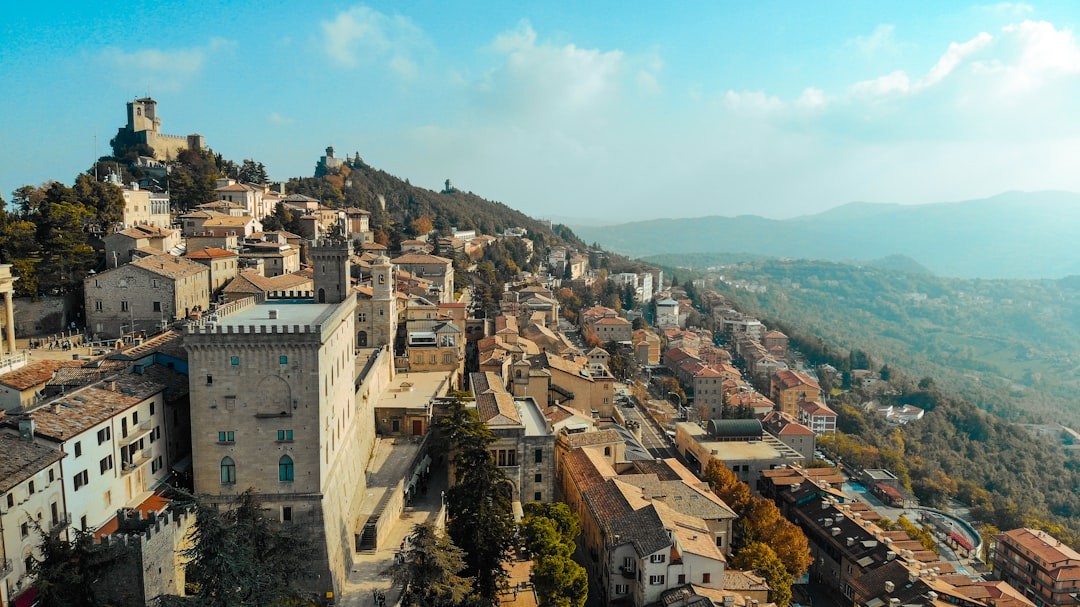
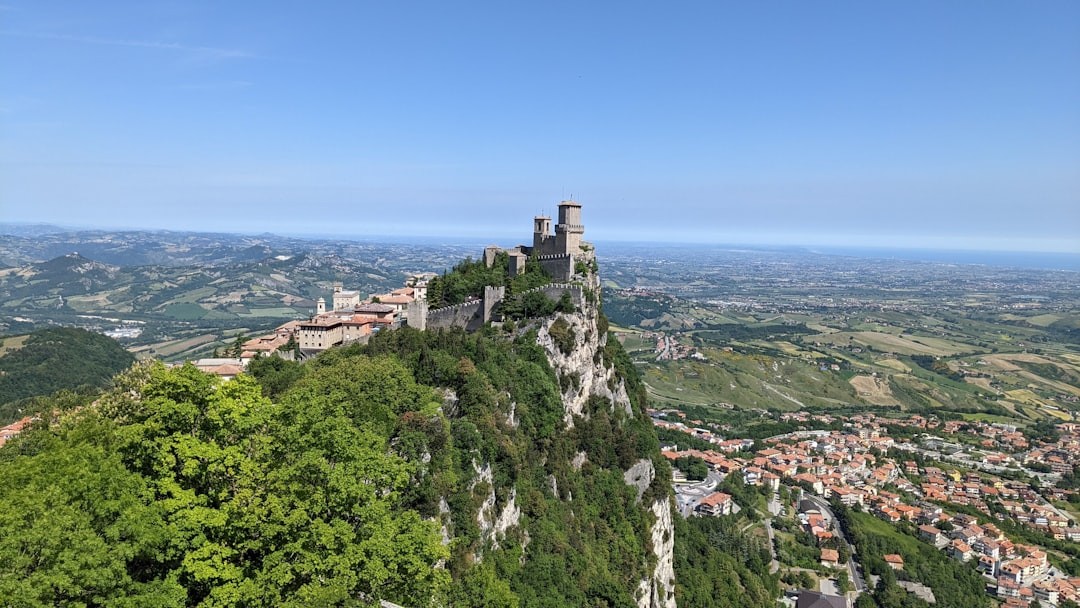
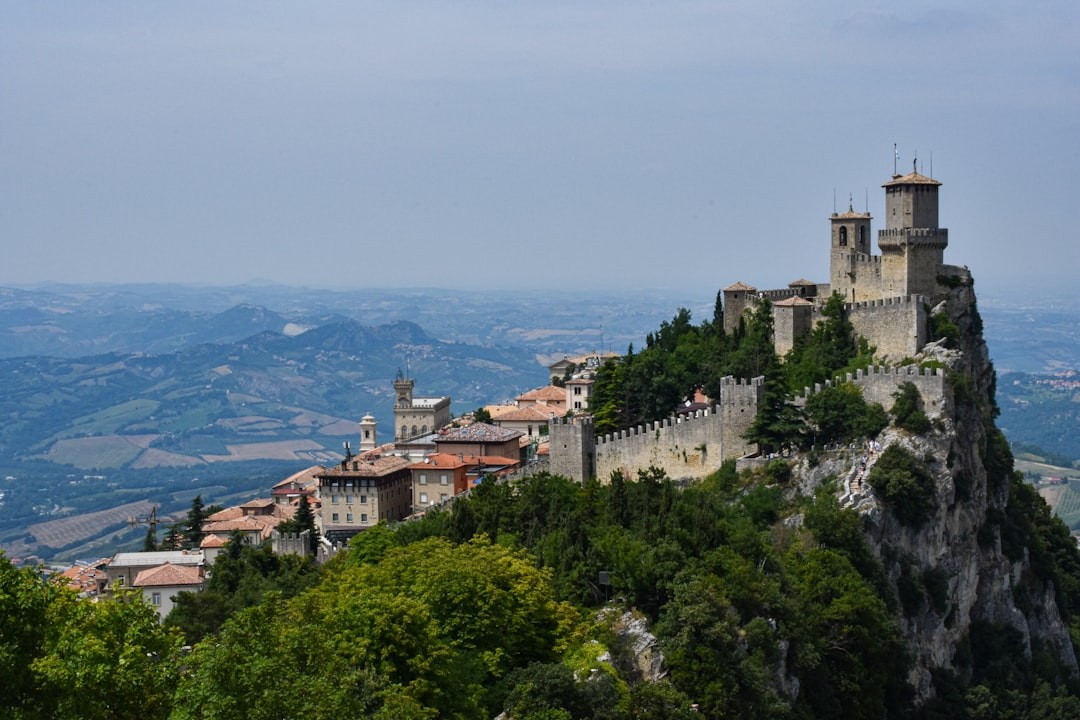
San Marino is one of the world's smallest countries — approximately 61 km². The UNESCO-listed historic centre can be walked across in under 15 minutes. The three fortress towers and the old city are the primary sights. Allow half a day to explore properly. You can see all of San Marino properly in half a day — do not rush, but do not over-plan.
5. Crowds and Timing
Day-trippers from the Adriatic coast typically arrive mid-morning and leave by mid-afternoon. Arriving before 10am or after 4pm gives a significantly more peaceful experience of the historic centre. Before 10am or after 4pm avoids the Rimini day-tripper crowd.
6. The Republic's Claim
San Marino is the world's oldest republic, founded according to tradition in 301 AD by Marinus, a Christian stonemason fleeing Roman persecution. It has maintained independence continuously for over 1,700 years. This history is a genuine source of national pride. San Marino has been an independent republic for 1,700 years — its pride in this is entirely justified.
7. Stamps and Philately
San Marino's postage stamps have been internationally celebrated since 1877 and are genuine collectors' items. The Philatelic and Numismatic Office in the historic centre sells current and historical issues of genuinely high quality. San Marinese stamps are world-famous philatelic collectibles — the philatelic office is worth visiting even if you are not a collector.
8. Food
San Marino's cuisine reflects its immersion in the Emilia-Romagna culinary tradition — one of Italy's finest regional kitchens. The piadina (flatbread with squacquerone cheese, prosciutto, and rucola) is the local staple. The torta tre monti (wafer and chocolate layered cake) is the primary local food souvenir. Torta tre monti is the local sweet souvenir — buy it at one of the specialist shops in the historic centre.
9. National Day
San Marino's National Day on 3 September celebrates the republic's foundation in 301 AD with ceremonies, medieval pageantry, and crossbow competitions in traditional costume. The republic also celebrates a second National Day on 1 April (Arengo). 3 September National Day features medieval costumes and crossbow competition — worth planning around.
10. Tipping
San Marino follows Italian restaurant customs. A coperto (cover charge for bread and table settings) is standard. Tipping of 10% for good service is appreciated. Coperto is standard (not a scam); 10% tip appreciated in restaurants.
Final Thoughts on Travelling in San Marino
The most important thing you can bring to San Marino is genuine curiosity and a willingness to engage with the country on its own terms. The practical tips above handle the logistics — entry, money, transport, customs. The quality of the experience beyond that depends on the attitude you bring: openness to the differences, patience with the unfamiliar, and respect for a culture that has its own valid way of doing things.
Where something seems inconvenient — later meal times, different tipping conventions, shops closed on certain days — it is worth remembering that these are features of a living culture, not failures to meet external expectations. Adapting to them, rather than working around them, consistently produces a richer experience.
Go with a flexible itinerary, the right practical foundation, and an appetite for what makes San Marino genuinely itself. That combination serves well in any country and particularly well here.