Never Split the Difference vs Getting to Yes
Two much-loved negotiation books, two different starting points: a former FBI negotiator’s toolkit and the Harvard Negotiation Project’s principles. Here’s what each offers, who each suits and which to read first.
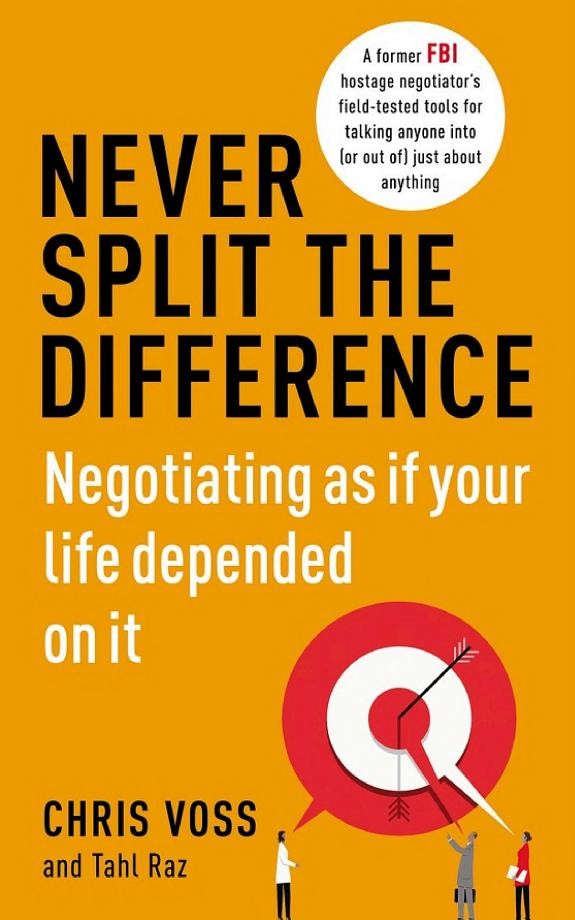 Never Split the DifferenceChris Voss and Tahl Raz
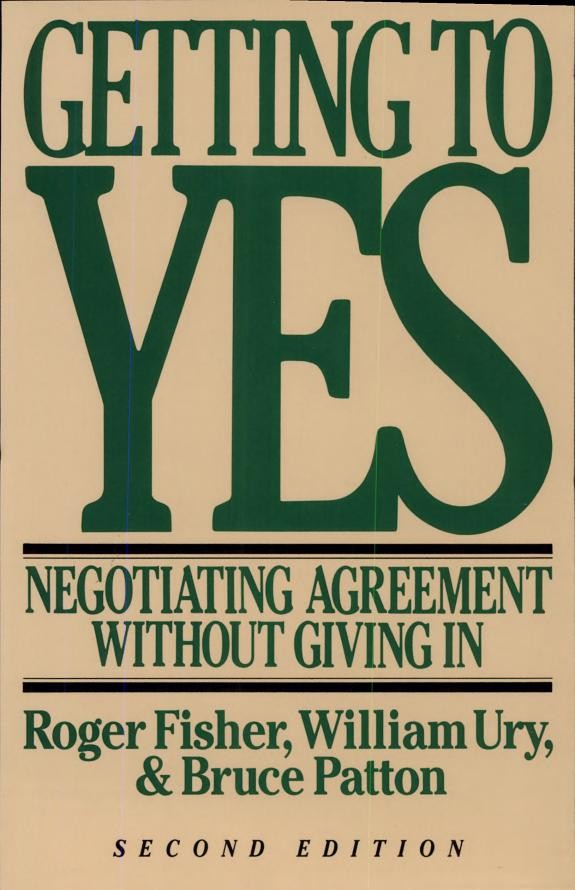 Getting to YesRoger Fisher, William Ury and Bruce Patton
Two of the most widely read negotiation books are often recommended in the very same breath: Chris Voss’s Never Split the Difference and Getting to Yes by Roger Fisher, William Ury and Bruce Patton. It’s easy to assume they say the same thing, but they don’t quite. They begin in different places, speak in different voices and, happily for anyone who reads both, they complement each other rather well.
If you’ve ever wondered which one to pick up first, or whether you need both, this guide walks through what each book offers, who tends to get the most from each, and a gentle suggestion for how to read them together.
Voss gives you a toolkit for the human side of a conversation: how to listen, how to ask good questions and how to keep things steady when emotions run high. Fisher, Ury and Patton give you a framework for the shape of a negotiation: what you really want, what might work for both sides, and how to know when to say yes or walk away. Most readers find it works well to start with Getting to Yes and then bring in Voss for the day-to-day conversational techniques.
The two books side by side
| Never Split the Difference | Getting to Yes | |
|---|---|---|
| Authors | Chris Voss, with Tahl Raz | Roger Fisher and William Ury (Bruce Patton joined for later editions) |
| First published | 2016 | 1981, with updated editions since |
| Core idea | Understand the person across the table and let them know they’ve been heard (“tactical empathy”) | “Principled negotiation”: look for solutions that meet both sides’ underlying interests |
| Signature tools | Mirroring, labelling, calibrated questions | Interests over positions, options for mutual gain, objective criteria, BATNA |
| Lovely for | Emotional, one-to-one or high-pressure conversations | Structured, collaborative deals, and relationships you want to keep |
| Worth knowing | Lessons arrive through stories from Voss’s career, which you can scale to suit everyday life | Principles to adapt to your own situation rather than scripts, with a little practice and reflection helping them settle in |
| How it reads | Conversational and story-led | Clear, structured and framework-led |
Never Split the Difference: a hostage negotiator’s toolkit
Chris Voss spent much of his career as an FBI negotiator, and Never Split the Difference, written with Tahl Raz, draws on that experience. What makes the book so approachable is that it takes techniques developed for extremely high-stakes situations and shows how the same instincts can help in ordinary ones, such as a pay conversation, a supplier call or a disagreement with a client.
At its heart is an idea Voss calls tactical empathy: working to understand what the other person feels and wants, and showing them you’ve understood it. From there, the book offers a handful of practical tools:
- Mirroring. Repeating the last few words someone said, with a gentle, curious tone, which tends to invite them to say a little more.
- Labelling. Putting a name to the emotion you can sense (“It sounds like this deadline is worrying you”) so the other person feels heard.
- Calibrated questions. Open questions that start with “how” or “what” and invite the other side to help solve the problem. “How am I supposed to do that?” is probably the best-known example.
- Listening for “that’s right.” Voss describes hearing those words as a sign that someone feels truly understood.
The book also explores the Ackerman model, a structured approach to bargaining over numbers, and what Voss calls “black swans”: pieces of hidden information that can change the whole shape of a negotiation once you uncover them.
Voss is wary of simply splitting the difference, and the title is a nod to that. It’s an invitation to keep exploring a little longer before settling for the middle.
Each day for a month, choose one ordinary conversation and try just one technique in it: mirror a few of their words, or offer one label (“It seems like…”). Jot down a line afterwards on what changed. Small, repeated practice is where this kind of skill tends to settle in.
Getting to Yes: negotiation as shared problem-solving
Getting to Yes first appeared in 1981, written by Roger Fisher and William Ury, who were associated with the Harvard Negotiation Project. Bruce Patton joined the author team for later editions. It has stayed in print for decades, and it’s easy to see why: it offers a calm, clear way of thinking that works whether you’re negotiating a contract, a salary or a family decision.
The book describes an approach it calls principled negotiation, built around four ideas:
- Separate the people from the problem. You can be warm and respectful towards the person while being firm about the issue.
- Focus on interests, not positions. A position is what someone says they want; an interest is why they want it. Looking behind the position often reveals more room to manoeuvre than you expected.
- Invent options for mutual gain. Before deciding, take time to brainstorm possible solutions that could work well for both sides.
- Insist on objective criteria. Agreeing on a fair standard, such as market rates or an independent benchmark, can make decisions feel less like a contest of wills.
The book also introduces BATNA, which stands for “best alternative to a negotiated agreement.” In plain terms, it’s knowing what you would do if the conversation didn’t result in a deal. Having thought that through tends to make people calmer and clearer at the table, because they know what “good enough” looks like.
One of the book’s well-known examples involves the negotiations over the Sinai peninsula between Egypt and Israel, which shows how two sides with opposing positions can still find a solution once their underlying interests, sovereignty on one side and security on the other, come into view.
Before any meaningful negotiation this month, write three short lines: what you want and why (your interests), what the other side probably wants and why, and what you would do if you didn’t reach an agreement (your BATNA). Notice how the preparation changes the way the conversation feels.
Where the two books agree
For all their differences, these books share quite a bit of common ground. Both treat negotiation as a skill that can be learned rather than a talent you either have or don’t. Both encourage you to get curious about the other side’s point of view. And both suggest that the best outcomes rarely come from simply digging in or giving way.
Where they feel different
The clearest difference is the starting point. Getting to Yes begins with structure: clarify interests, widen the options, agree a fair standard. Never Split the Difference begins with the conversation itself: how you listen, how you ask, how you respond when feelings run high.
They also differ in tone. Fisher, Ury and Patton write in the measured voice of a framework; Voss writes as a storyteller drawing on real situations. Both voices are valuable, and they tend to speak to different moments: one when you’re preparing and one when you’re in the room.
Which one suits which situation?
Here’s a gentle rule of thumb, based on what each book emphasises. Treat it as a starting point rather than a rulebook:
| Situation | Where Getting to Yes helps | Where Voss helps |
|---|---|---|
| A salary conversation | Preparing: know your interests, your alternatives and the market evidence for your pay | In the room: calibrated questions such as “How can we make this work?” |
| A supplier price | Exploring options beyond price, and agreeing a fair benchmark | Labelling tension gently when talks get tight |
| A client dispute | Working out what each side truly needs, then designing a fix | Mirroring and labelling to calm things and make sure everyone feels heard |
Our suggested reading order
If you can, we’d suggest reading Getting to Yes first. It gives you a clear map of what a good negotiation looks like. Then pick up Never Split the Difference for the language and techniques that bring that map to life in real conversations. If you have a difficult conversation coming up very soon, and feelings are likely to run high, it’s perfectly sensible to begin with Voss and come back to Fisher, Ury and Patton afterwards.
Frequently asked questions
Should I read Never Split the Difference or Getting to Yes first?
Most readers find Getting to Yes a helpful first step because it sets out the overall framework. Never Split the Difference then adds practical conversational tools. If an emotionally charged conversation is imminent, starting with Voss is a lovely choice.
Is Never Split the Difference better than Getting to Yes for salary negotiation?
They help with different parts of it. Getting to Yes is especially useful for the preparation: understanding your interests, your alternatives and the objective evidence behind your request. Never Split the Difference is especially useful for the conversation itself, such as asking open questions and responding calmly to hesitation.
Can I read Never Split the Difference and Getting to Yes together, and is it worth it?
Yes, and many people enjoy doing so. The books approach the same subject from different directions, so reading both can give you a fuller toolkit. You might try one idea from each over the same month, using the 30-day tests above, and see which ones feel most natural to you.
A closing thought
Negotiation can feel intimidating, but both of these books are, at heart, encouraging. They suggest that listening well, preparing thoughtfully and staying curious about the other person can change how conversations go. Whichever you choose to open first, you’re likely to come away with something useful to try the very next time you sit down to talk something through.
Book links go to Amazon; see our advertising disclosure.