Getting Things Done vs Eat That Frog!
David Allen’s system for getting everything out of your head and Brian Tracy’s focus on your most important task first: two productivity classics, compared, with a ‘which fits your week’ guide and a suggested reading order.
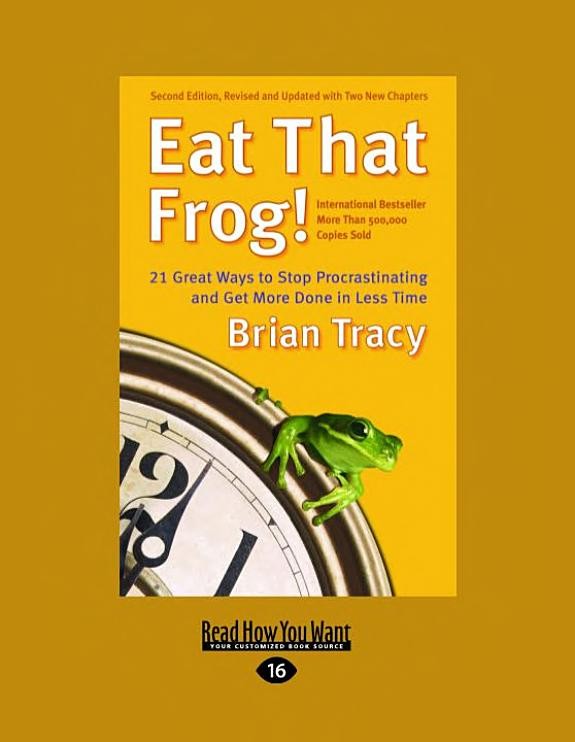
If your to-do list sometimes feels heavier than your day, you are in good company. Two popular productivity books have helped many readers with exactly that feeling, from different directions. David Allen’s Getting Things Done is a system for collecting everything on your mind and turning it into clear, manageable next steps. Brian Tracy’s Eat That Frog! is a short, lively guide to tackling your most important task first, with twenty-one ideas for overcoming procrastination. They are often recommended together, and they fit together nicely.
This guide looks at what each book offers, how they compare and which might suit you best. We will also offer a simple “which system fits your week” guide, and point to a few of our other Book Club guides that connect with the same themes.
Getting Things Done is about a system: it invites you to capture everything that has your attention, decide what each item needs, organise it and review it regularly, so that your mind is free to focus. Eat That Frog! is about priorities: it suggests that choosing your most important task and doing it first, before anything else, can make a real difference to your day. Many readers find Getting Things Done a thorough way to tame a busy inbox and a long list of commitments, and Eat That Frog! a quick, encouraging nudge for a task they have been putting off. Many people enjoy using both.
The two books side by side
| Getting Things Done | Eat That Frog! | |
|---|---|---|
| Author | David Allen | Brian Tracy |
| First published | 2001, with a revised edition in 2015 | 2001, with later editions |
| Core idea | Get everything out of your head and into a trusted system, so you can decide what to do next with a clear mind | Choose your most important task, your “frog”, and do it first |
| Signature ideas | Capture, clarify, organise, reflect, engage; next actions; the two-minute rule; the weekly review | Twenty-one practical methods, including setting clear goals, planning ahead and focusing on the most valuable tasks |
| Focus | A complete system for managing commitments | Priorities and overcoming procrastination |
| Size of the commitment | Larger: it asks you to build and maintain a system | Smaller: you can try an idea on the same day |
| Best for | Readers with many projects, messages and loose ends | Readers who would like a quick boost for a specific task |
| Reading experience | Thorough and detailed, with a step-by-step approach | Short, direct and easy to read in one or two sittings |
What they share
- Clarity about what matters. Both ask you to be clear about what you are trying to do.
- Planning before acting. Each encourages a little preparation, so that your time goes where you want it to.
- Practical, doable steps. Both are built around actions you can try rather than abstract ideas.
- Calm and confidence. Each hopes to leave you feeling more in control of your day.
Getting Things Done: a system for a clear mind
David Allen published Getting Things Done in 2001, with a revised edition in 2015. It describes a method for managing the many things that ask for our attention, and its premise is that our minds are better at having ideas than at holding on to them. By moving commitments out of our heads and into a trusted system, we can think more clearly about what to do next.
Some of the key ideas:
- Five steps. Capture what has your attention, clarify what it means, organise the results, reflect on them regularly and engage with your choices.
- Next actions. For each item, decide the very next physical step, which makes it easier to begin.
- The two-minute rule. If a task takes less than two minutes, do it straight away rather than tracking it.
- The weekly review. A regular check-in to tidy your lists, look ahead and keep the system trustworthy.
- Projects. Anything that needs more than one step becomes a project with its own next action.
Many readers enjoy the sense of relief that comes from getting everything onto a trusted list, and treat the book as a reference to return to as their needs change.
Set aside half an hour to write down everything that is on your mind, big and small, in one list. For each item, decide the very next action. Then do a short weekly review, a quarter of an hour at the same time each week, and note how your mind feels at the end of the month.
Eat That Frog!: your most important task, first
Brian Tracy, a speaker and author on personal and professional development, published Eat That Frog! in 2001. The title comes from a saying, often attributed to Mark Twain, that if you eat a live frog first thing in the morning, nothing worse will happen to you for the rest of the day. In the book, your “frog” is your biggest, most important task, the one you are most likely to put off.
Some of the key ideas:
- Decide exactly what you want. Clear goals make it easier to know which task is the frog.
- Plan every day in advance. A written list, made the day before, can give you a head start.
- Do the most important thing first. Starting with the biggest task builds momentum.
- Prioritising your list. Tracy offers a simple letter-ranking method for sorting tasks by importance.
- Breaking tasks into pieces. Taking a large task one slice at a time can make it feel more manageable.
The book is short and quick to read, and many readers enjoy it as an energetic reminder to start the thing they have been avoiding.
Each evening for the month, write down the one task that would make tomorrow a success, and do it first thing the next day, before email or messages. At the end of the week, note how many frogs you ate and how you felt about the rest of the day.
Which system fits your week?
Here is a simple guide to help you decide where to start. Think about what your week usually feels like:
| If your week feels like… | Then you might enjoy… | Why |
|---|---|---|
| Too many small tasks, messages and loose ends, and a worry that something is being forgotten | Getting Things Done | It gives you a place to capture everything and a routine for reviewing it |
| One big task you keep putting off | Eat That Frog! | It focuses on starting the most important task first |
| Lots of projects at once, with changing priorities | Getting Things Done | Its project lists and weekly review help you keep track |
| A clear list, but difficulty getting started | Eat That Frog! | Its methods are aimed at starting and finishing |
| Both overwhelm and procrastination | Both | One gives you the system, the other helps you begin |
Where the two books feel different
The clearest difference is the size of the idea. Getting Things Done offers a whole system that takes some time to set up, and it rewards you with a sense of order across your life and work. Eat That Frog! offers a handful of simple ideas that you can try today, and it rewards you with quick wins. One is like organising a whole house, the other like tidying one room.
They also differ in tone. Getting Things Done is thorough and calm, and it explains the thinking behind each step. Eat That Frog! is brisk and encouraging, with short chapters that each end with a practical action. Many readers find that the two balance each other well: the system keeps things in order, and the frog gives you a way to begin.
A gentle note on attention and focus
Different people find different systems helpful, and what works can depend on how your attention works, how busy your life is and what kind of work you do. Some readers find that a detailed system suits them well, while others prefer a lighter routine, and it is absolutely fine to take only the parts that help. If you ever find it hard to focus or organise, and you are wondering whether there is a reason, a conversation with a health professional or a qualified coach can offer support that a book cannot.
If you enjoyed these ideas
A handful of our other Book Club guides connect closely with the ideas in these two books:
- Small habits, repeated. Building routines that stick is the subject of our guide to Atomic Habits and The Power of Habit.
- Managing time and meetings. Andy Grove’s practical ideas on how managers spend their time appear in our guide to The Hard Thing About Hard Things and High Output Management.
- Prioritise and execute. Focusing on the most important problem first is a theme of our guide to Extreme Ownership and Leaders Eat Last.
- Taking the first step. Replacing excuses with action links with our guide to Think and Grow Rich and The Magic of Thinking Big.
- Why plans slip. The tendency to underestimate how long things take is explored in our guide to Thinking, Fast and Slow and Noise.
You can find all of these, and more as we add them, on our CROWNLEIGH Book Club page.
Our suggested reading order
If you would like a quick, encouraging start, we would suggest beginning with Eat That Frog!. It is short, and you can try its main idea the same day. Then read Getting Things Done when you are ready to build a fuller system for everything else on your plate. If your main feeling is overwhelm rather than procrastination, it works nicely the other way round: begin with Getting Things Done to get everything out of your head, and follow with Eat That Frog! to help you choose where to start.
Frequently asked questions
Should I read Getting Things Done or Eat That Frog! first?
If you would like a quick idea to try today, Eat That Frog! is a lovely first read. If you would like a complete system for managing your commitments, Getting Things Done is a natural place to begin. Many readers enjoy either order.
Is Getting Things Done good for people with ADHD?
Some readers find that externalising their tasks into lists, as the book suggests, helps them feel more in control, while others find that a detailed system is more than they would like to maintain. Everyone is different, and the books are not medical advice. If you would like support with attention or organisation, a health professional can help you find approaches that suit you.
Do I need to read both?
Not necessarily. Each book stands happily on its own. If you do read both, you get a system for managing commitments and a simple method for getting started.
Is Eat That Frog! too simple?
It is short and direct by design, and many readers enjoy that. Its ideas are easy to try, and they sit well alongside a fuller system if you would like one.
Can I read Getting Things Done and Eat That Frog! together, and is it worth it?
Yes, and many people enjoy it. A pleasant approach is to read a chapter of one, then a chapter of the other, and try one idea from each over the same month. The 30-day tests above are an easy way to do just that.
A closing thought
Both books carry a gentle message: that a little structure can make room for what matters. Whichever you open first, you may finish with a lighter to-do list, and a pleasant sense of having a clearer idea of where to begin.
Book links go to Amazon; see our advertising disclosure.