The Challenger Sale vs SPIN Selling
Matthew Dixon and Brent Adamson on teaching, tailoring and taking control, and Neil Rackham on question-led discovery: two sales classics, compared, with a call-script comparison and a suggested reading order.
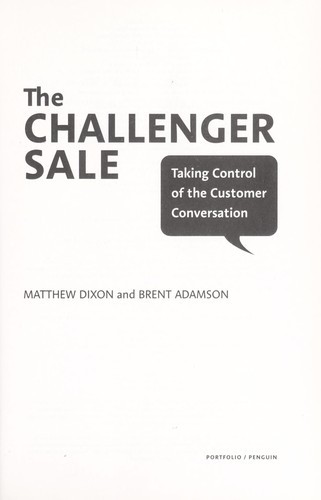
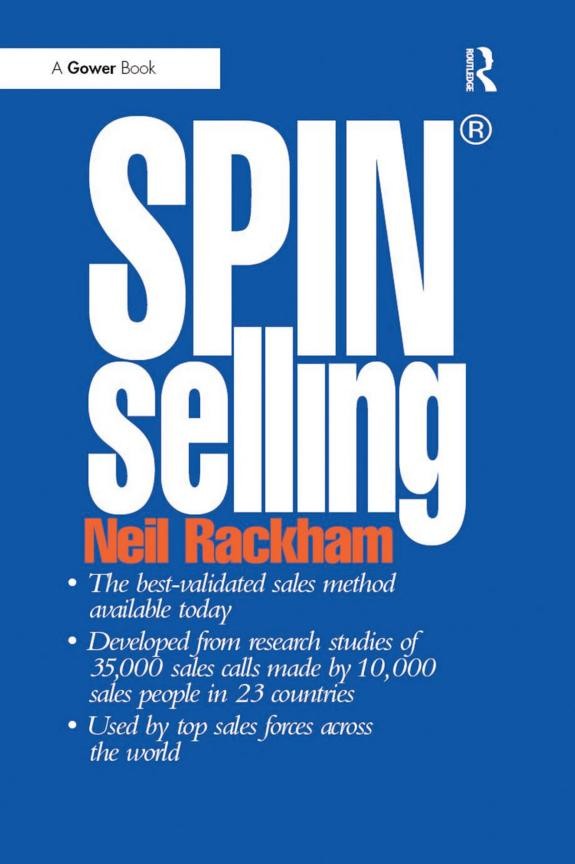
Selling to businesses is a long conversation, often with several people and a lot at stake. Two much-discussed books approach that conversation from different directions. Matthew Dixon and Brent Adamson’s The Challenger Sale suggests that the most successful sellers in complex sales teach customers something new, tailor their message and are comfortable guiding the conversation alongside the customer. Neil Rackham’s SPIN Selling puts the emphasis on questions: a four-part sequence for understanding what a customer needs and helping them see its value. They are often recommended together, and they sit well side by side.
This guide looks at what each book offers, how they compare and which might suit you best. Because many readers like to see ideas in action, we have added a short call-script comparison, and we will point to a few of our other CROWNLEIGH Book Club guides that connect with the same themes.
The Challenger Sale is about leading the conversation: it describes sellers who bring fresh insight, tailor it to each customer and guide the discussion with confidence. SPIN Selling is about discovery: it offers a sequence of Situation, Problem, Implication and Need-payoff questions that helps customers explore their own needs. Many readers find SPIN Selling a clear, practical guide to discovery calls and The Challenger Sale a thoughtful lens on complex business-to-business sales. They complement each other nicely, and each is best read alongside your own experience.
The two books side by side
| The Challenger Sale | SPIN Selling | |
|---|---|---|
| Authors | Matthew Dixon and Brent Adamson | Neil Rackham |
| First published | 2011 | 1988 |
| Based on | Research by the Corporate Executive Board into the habits of high-performing sales reps | Research by the Huthwaite organisation into large numbers of real sales calls |
| Core idea | Top performers in complex sales teach, tailor and take control | Skilled sellers use well-chosen questions to uncover and develop customer needs |
| Signature ideas | Five seller profiles, commercial teaching, tailoring for the audience, constructive tension | Situation, Problem, Implication and Need-payoff questions; implied and explicit needs |
| Focus | How to lead and shape the sales conversation | How to discover and develop needs through questions |
| Best for | Teams selling complex, higher-value solutions to businesses | Anyone preparing discovery calls and customer meetings |
| Reading experience | Research-led, with clear frameworks for sales teams and managers | Practical and structured, with many examples of questions |
What they share
- Research-based thinking. Both books are built on studies of what successful sellers actually do, not on opinion alone.
- Customer value. Each puts the customer’s situation and outcomes at the centre of the conversation.
- Complex sales. Both are aimed mainly at larger, considered purchases, rather than quick transactions.
- Preparation. Each rewards the seller who prepares thoughtfully before a meeting.
The Challenger Sale: teach, tailor, take control
Matthew Dixon and Brent Adamson published The Challenger Sale in 2011, drawing on research from the Corporate Executive Board. The book describes five types of sales representative, and suggests that, in complex sales, one type tends to do especially well: the “Challenger”, who brings a distinctive point of view to the customer.
Some of the key ideas:
- Five seller profiles. The authors describe the Hard Worker, the Challenger, the Relationship Builder, the Lone Wolf and the Reactive Problem Solver.
- Teach. Offer customers new insight about their own business, so that the conversation is genuinely useful.
- Tailor. Adapt the message to the person and organisation you are speaking with.
- Take control. In the authors’ phrase, this means being comfortable guiding the conversation together with the customer, including gently discussing price and next steps.
- Constructive tension. Respectfully challenging how the customer thinks, when you can support it with evidence.
Many readers enjoy the book for its research and for the way it gets sales teams talking about what a valuable conversation looks like.
Before your next customer conversation, write down one insight about their business that they may not have considered, and how it connects to a problem you can help with. Share it in a friendly way, and afterwards note how they responded and what you would adjust.
SPIN Selling: the power of the right questions
Neil Rackham published SPIN Selling in 1988, based on research carried out by the Huthwaite organisation, which analysed a large number of real sales calls. The book’s central idea is that in larger sales, the questions a seller asks matter more than the claims they make.
Some of the key ideas:
- Situation questions. Facts and background about the customer’s current circumstances.
- Problem questions. Exploring difficulties, dissatisfactions and challenges.
- Implication questions. Helping the customer explore the effects and consequences of those problems.
- Need-payoff questions. Inviting the customer to describe the value of solving the problem.
- Implied and explicit needs. Moving from vague dissatisfactions to clear needs that a solution can address.
Many readers appreciate the book as a practical guide to discovery calls, with examples of questions they can adapt.
For each of your next few customer calls, plan one question in each of the four categories before you start. Afterwards, write down which question led to the most useful answer and why. At the end of the month, collect your best questions into a short list.
A call-script comparison
To see the difference in flavour, imagine a seller speaking to a customer who runs a growing logistics firm. The two scripts below are our own short, invented illustrations of each book’s flavour, not quotations from either book and not scripts to follow word for word.
| Moment | In the style of SPIN Selling | In the style of The Challenger Sale |
|---|---|---|
| Opening | “Could you tell me how you currently plan your delivery routes?” (Situation) | “Many firms at your stage find that route planning quietly becomes their biggest cost. Here is what we have seen elsewhere.” (Teach) |
| Exploring | “Where does that process cause you the most difficulty?” (Problem) | “I would like to understand where this matches your experience, and where it differs.” (Tailor) |
| Deepening | “If late deliveries continue, what would that mean for your customer relationships?” (Implication) | “I would suggest a different way of looking at it: the cost is not the fuel but the idle time.” (Constructive tension) |
| Moving forward | “How would it help if routes updated automatically?” (Need-payoff) | “Here is what I suggest as a next step, and who we might involve on your side.” (Take control) |
Notice how the first column asks, so the customer arrives at the insight, and the second offers a point of view, so the customer has something to react to. In practice, good sellers often blend the two, which is part of why many readers enjoy having both books.
Where the two books feel different
The clearest difference is where each places the spotlight. SPIN Selling puts it on the customer’s answers: the seller’s job is to ask well and listen. The Challenger Sale puts it on the seller’s perspective: the seller’s job is to bring something worth hearing. One is a conversation led by curiosity, the other a conversation led by insight.
They also reflect different times. SPIN Selling was published in 1988 and focuses on the structure of individual sales calls. The Challenger Sale was published in 2011 and focuses on the profile of the seller and on how customers buy in complex organisations. Many readers find that reading both gives a fuller picture: questions to uncover needs, and a point of view to help customers see what is possible.
Which one suits which situation?
Here is a gentle guide, based on what each book emphasises. Treat it as a starting point rather than a rulebook:
| Your situation | Where to start | Why |
|---|---|---|
| You are preparing for discovery calls | SPIN Selling | Its four question types are built for exactly that |
| You sell complex solutions to larger organisations | The Challenger Sale | It focuses on insight, tailoring and leading the conversation |
| You manage a sales team and want a shared language | The Challenger Sale | Its seller profiles and frameworks are good conversation starters |
| You would like to ask better questions in any meeting | SPIN Selling | Its question types work well beyond sales |
| You would like both discovery and insight | Both | Together they cover asking well and offering a point of view |
If you enjoyed these ideas
A handful of our other CROWNLEIGH Book Club guides connect closely with the ideas in these two books:
- Negotiation and conversation. Skilled questioning is at the heart of our guide to Never Split the Difference and Getting to Yes.
- Persuasion. How the way we frame a message shapes the response is explored in our guide to Influence and Pre-Suasion.
- Building rapport. Warm, practical ideas about connecting with people appear in our guide to How to Win Friends and Influence People and How to Talk to Anyone.
- Selling to the mainstream. How a new product wins its customers is explored in our guide to Crossing the Chasm and The Innovator’s Dilemma.
- Learning from customers. Discovery conversations are a close cousin of the experiments in our guide to Zero to One and The Lean Startup.
You can find all of these, and more as we add them, on our CROWNLEIGH Book Club page.
Our suggested reading order
If you are preparing for customer calls, we would suggest starting with SPIN Selling. Its question types give you a clear structure to practise straight away. Then read The Challenger Sale to add a point of view and a way of leading the conversation, particularly in larger, more complex sales. If you already have strong discovery habits and want to sharpen your message, it works nicely the other way round: begin with The Challenger Sale for the insight, and follow with SPIN Selling for the questions.
Frequently asked questions
Should I read The Challenger Sale or SPIN Selling first?
If you would like practical structure for discovery calls, SPIN Selling is a lovely first read. If you sell complex solutions and want to think about how you lead conversations, The Challenger Sale is a natural place to begin. Many readers enjoy either order.
Is SPIN Selling still relevant for business-to-business sales?
Many readers find that it is. Its four question types give a simple framework for understanding a customer’s situation, which remains useful in many kinds of conversation. Because it was published in 1988, some of the examples reflect an earlier era, and it is worth adapting them to the way you sell today.
Do I need to read both?
Not necessarily. Each book stands happily on its own. Reading both gives you a structure for asking questions and a way of bringing insight to the conversation.
Are these books only for salespeople?
No. Both are written about selling, but many readers use their ideas in meetings, consulting, fundraising and other conversations where understanding another person’s needs matters.
Can I read The Challenger Sale and SPIN Selling together, and is it worth it?
Yes, and many people enjoy it. A pleasant approach is to read a chapter of one, then a chapter of the other, and try one idea from each over the same month. The 30-day tests above are an easy way to do just that.
A closing thought
Both books carry a gentle message: that good selling is a service built on understanding. Whichever you open first, you may finish with a few new questions to ask, and a clearer sense of the insight you can offer the people you work with.
Book links go to Amazon; see our advertising disclosure.