Blue Ocean Strategy vs Good Strategy Bad Strategy
Kim and Mauborgne on creating uncontested market space and Richard Rumelt on the kernel of good strategy: two strategy classics, compared, with a one-page strategy template for small businesses and a suggested reading order.
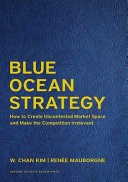
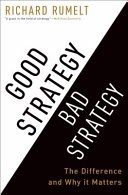
“What is our strategy?” is one of the most common questions in business, and one of the hardest to answer well. Two respected books take it on from different angles. W. Chan Kim and Renée Mauborgne’s Blue Ocean Strategy suggests that, rather than fighting for customers in crowded markets, a business can create new space where competition matters less. Richard P. Rumelt’s Good Strategy/Bad Strategy asks a plainer question: what does a genuinely good strategy look like, and why do some documents called “strategy” not quite get there? They are often recommended together, and they work nicely as a pair.
This guide looks at what each book offers, how they fit together and which might suit you best. For small businesses in particular, we have added a one-page “strategy kernel” template at the end of the book sections, and we will point to a few of our other CROWNLEIGH Book Club guides that connect with the same themes.
Blue Ocean Strategy is about finding a new position: it encourages you to look beyond today’s competitors and create “uncontested market space”, using a simple grid that asks what to eliminate, reduce, raise and create. Good Strategy/Bad Strategy is about thinking clearly: it describes a good strategy as having a diagnosis, a guiding policy and a set of coherent actions, and it also helps you notice when a document is more a list of goals than a strategy. Many readers find Blue Ocean Strategy an inspiring way to look for new positioning and Good Strategy/Bad Strategy a clear-headed guide to writing a strategy that is useful in practice. Both are well worth reading.
The two books side by side
| Blue Ocean Strategy | Good Strategy/Bad Strategy | |
|---|---|---|
| Authors | W. Chan Kim and Renée Mauborgne, professors at the business school INSEAD | Richard P. Rumelt, a professor of business and strategy |
| First published | 2005, with an expanded edition in 2015 | 2011 |
| Core idea | Create new market space rather than competing in crowded markets | A good strategy faces the challenge honestly and focuses effort through a clear logic |
| Signature ideas | “Red” and “blue” oceans, value innovation, the strategy canvas, the Four Actions Framework | The “kernel” of a strategy: diagnosis, guiding policy, coherent actions; the signs of a weaker strategy |
| Focus | Where to compete: finding new positioning | How to think: building a strategy that holds together |
| Best for | Founders and teams looking for new opportunities | Leaders who want to sharpen the strategy they already have |
| Reading experience | Framework-led, with tools and case studies | Direct, witty and example-rich |
What they share
- Strategy as a choice. Both treat strategy as deciding what to do and what not to do, not as a long wish-list.
- Clear tools. Each gives readers frameworks that can be sketched on a single page.
- Real examples. Both illustrate ideas with stories of organisations making strategic decisions.
- A call for clarity. Each encourages simplicity and focus over complexity.
Blue Ocean Strategy: creating new market space
Blue Ocean Strategy was first published in 2005 by W. Chan Kim and Renée Mauborgne, who are professors at INSEAD, with an expanded edition in 2015. The book uses a simple image: in a “red ocean”, companies compete in a crowded, known market, and the water turns red with rivalry; in a “blue ocean”, a business creates demand in space where there is little direct competition.
Some of the key ideas:
- Value innovation. Offering buyers a leap in value while keeping costs in check, rather than choosing between differentiation and low cost.
- The strategy canvas. A simple chart that compares what an industry competes on and how your offering differs.
- The Four Actions Framework. Four questions: which factors could be eliminated, which reduced, which raised and which created?
- Looking beyond existing customers. Thinking about people who do not buy from the industry today, and why.
Many readers enjoy the book’s practical tools and its case studies, which include the circus company Cirque du Soleil.
Pick your business or project and list the five or six factors that everyone in your field competes on. Using the four questions, note one thing you could eliminate, reduce, raise and create. At the end of the month, share the sketch with a friend or colleague and note which idea they found most interesting.
Good Strategy/Bad Strategy: the kernel of a good strategy
Richard P. Rumelt published Good Strategy/Bad Strategy in 2011, drawing on decades of studying and advising organisations. The book begins with a gentle observation: that some of what is called strategy is closer to a list of hopes or goals, and that a good strategy can be simpler, and less common, than it first appears.
Some of the key ideas:
- The kernel. A good strategy has three parts: a diagnosis of the challenge, a guiding policy for dealing with it and a set of coherent actions.
- Facing the challenge. A good strategy begins by naming what is actually in the way.
- Hallmarks of bad strategy. Rumelt describes signs to look out for, such as vague language, not quite facing the challenge, treating goals as if they were a strategy and setting objectives that are hard to act on.
- Focus. Concentrating effort where it can make a real difference, rather than spreading it thinly.
Many readers enjoy the book for its clarity and its sense of humour, and it is often recommended to anyone who writes or reads strategy documents.
Write your current strategy for one project in three short parts: the main challenge, your approach to it and the actions that fit together. Share it with someone you trust and ask whether the actions really follow from the approach. Revise it once, and see what changes.
A one-page strategy kernel for small businesses
Here is a simple template that borrows from both books. It is meant for a small business, and it fits on one sheet of paper. Try filling it in over a cup of tea:
| Section | Question to answer | Idea from |
|---|---|---|
| 1. The challenge | What is the single biggest thing standing in the way of our progress right now? | Good Strategy/Bad Strategy |
| 2. Our guiding approach | What overall approach will we take to deal with that challenge, and what will we choose not to do? | Good Strategy/Bad Strategy |
| 3. Where we stand | What do competitors in our field compete on, and where do we want to be different? | Blue Ocean Strategy |
| 4. Our four moves | What will we eliminate, reduce, raise and create? | Blue Ocean Strategy |
| 5. Coherent actions | What are three to five actions for the next three months that fit together and support the approach? | Good Strategy/Bad Strategy |
| 6. How we will know | What would tell us, in a few months, that we are on the right track? | Both |
If the actions in section 5 do not follow from the approach in section 2, it may be a gentle sign that the strategy could be tightened a little. Writing it on one page makes that easy to see.
Where the two books feel different
The clearest difference is what each helps you do. Blue Ocean Strategy helps you look outwards and find a new place to stand, with tools for spotting opportunities in the market. Good Strategy/Bad Strategy helps you look inwards and check that your thinking holds together, with a keen eye for what makes a strategy useful. One is about finding the idea, and the other about testing it.
They also differ in style. Blue Ocean Strategy is organised around frameworks and visual tools, and often reads like a workshop. Good Strategy/Bad Strategy is more of an essay, with a conversational voice and a gift for plain language. Many readers find they balance each other well: the first gives you ideas, and the second helps you turn them into a coherent plan.
Which one suits which situation?
Here is a gentle guide, based on what each book emphasises. Treat it as a starting point rather than a rulebook:
| Your situation | Where to start | Why |
|---|---|---|
| You would like to find a fresh position in a crowded market | Blue Ocean Strategy | It is built around creating new market space |
| You need to write or review a strategy for your team | Good Strategy/Bad Strategy | It explains what a good strategy contains |
| You like visual frameworks and workshops | Blue Ocean Strategy | Its canvas and four questions are easy to sketch |
| You like plain-speaking, witty business writing | Good Strategy/Bad Strategy | It is direct, clear and entertaining |
| You would like both new ideas and a way to test them | Both | Together they cover finding a position and building a plan |
If you enjoyed these ideas
A handful of our other CROWNLEIGH Book Club guides connect closely with the ideas in these two books:
- Building something new. Starting small and finding a distinctive idea is at the heart of our guide to Zero to One and The Lean Startup.
- Staying great. The habits of lasting companies are explored in our guide to Good to Great and Built to Last.
- Launching into the mainstream. How a new idea finds its market appears in our guide to Crossing the Chasm and The Innovator’s Dilemma.
- The classics of strategy. Timeless thinking about positioning and choice appears in our guide to The Art of War and The Prince.
- Leading through hard choices. Making decisions when there are no easy answers is explored in our guide to The Hard Thing About Hard Things and High Output Management.
You can find all of these, and more as we add them, on our CROWNLEIGH Book Club page.
Our suggested reading order
If you would like a clear, grounded way in, we would suggest starting with Good Strategy/Bad Strategy. It sharpens your sense of what a strategy is, which makes Blue Ocean Strategy more useful when you read it next, because you will have a clear challenge to apply its tools to. If you are looking for fresh ideas first, it works nicely the other way round: begin with Blue Ocean Strategy to explore new positioning, and follow with Good Strategy/Bad Strategy to test and tighten the plan.
Frequently asked questions
Should I read Blue Ocean Strategy or Good Strategy/Bad Strategy first?
If you would like to sharpen your thinking about strategy, Good Strategy/Bad Strategy is a lovely first read. If you are searching for new opportunities, Blue Ocean Strategy is a natural place to begin. Many readers enjoy either order.
What is the difference between good strategy and blue ocean strategy?
Good strategy, as Rumelt describes it, is a way of thinking: it has a diagnosis, a guiding policy and coherent actions. Blue ocean strategy is a specific approach to finding a position: creating new demand in space with little direct competition. A blue ocean idea can be put into practice well or poorly, and the kernel in Good Strategy/Bad Strategy is a helpful way to check it.
Do I need to read both?
Not necessarily. Each stands on its own. Reading both gives you tools for finding a new position and a way of testing whether your strategy holds together.
Are these books useful for small businesses?
Many readers think so. Both are written with larger organisations in mind, but their ideas, such as focusing on a clear challenge and noticing what customers value, apply at any size. The one-page template above is a simple way to try them.
Can I read Blue Ocean Strategy and Good Strategy/Bad Strategy together, and is it worth it?
Yes, and many people enjoy it. A pleasant approach is to read a chapter of one, then a chapter of the other, and try one idea from each over the same month. The 30-day tests above are an easy way to do just that.
A closing thought
Both books carry a gentle message: that good strategy is less about complicated plans than about clear choices. Whichever you open first, you may well finish with a sharper sense of where you would like to stand, and a one-page plan to help you get there.
Book links go to Amazon; see our advertising disclosure.