The 48 Laws of Power vs The Prince
A modern bestseller of power tactics and a short Renaissance classic on how rulers gain and keep influence. Here is what each offers, how they connect and which to read first.
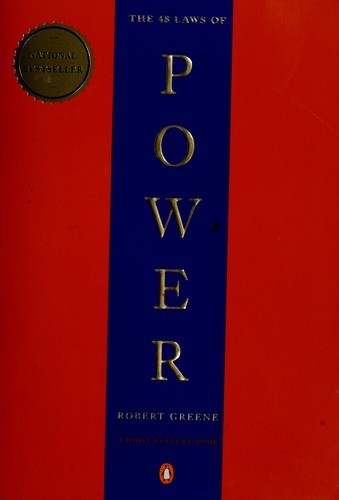
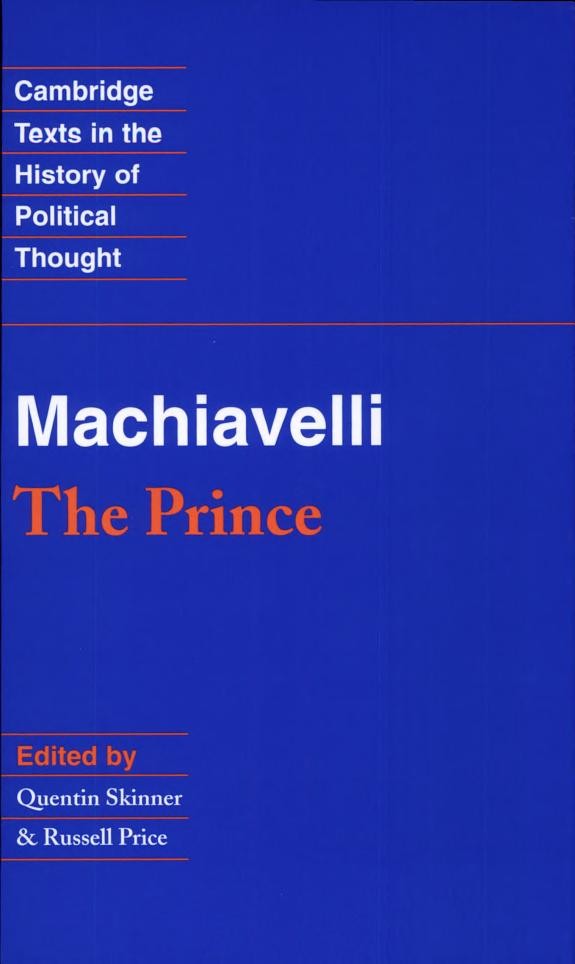
Few books about power are mentioned in the same breath as often as Robert Greene’s The 48 Laws of Power and Niccolò Machiavelli’s The Prince. One is a modern bestseller organised into 48 tidy laws; the other is a short political treatise from the Renaissance. They’re often recommended together, and it’s easy to see why: both are fascinated by how people gain influence and hold on to it.
If you’re wondering which to open first, or whether you need both, this guide walks through what each book offers, who tends to enjoy each, and how they sit alongside one another. We’ll also tackle the question many readers quietly ask before starting either one: is it all a bit ruthless?
The Prince is the original: a brief, focused look at how a ruler gains and keeps power, written in the early 1500s. The 48 Laws of Power is a catalogue of power tactics, each illustrated with stories from history. For the underlying logic, many readers find it rewarding to start with Machiavelli; for a wide range of examples and a ready-made list of tactics, Greene is a real treat. Because The Prince is so short, it’s a gentle way in.
The two books side by side
| The 48 Laws of Power | The Prince | |
|---|---|---|
| Author | Robert Greene | Niccolò Machiavelli |
| First published | 1998 | Written around 1513; published after Machiavelli’s death, in 1532 |
| Format | 48 laws, each followed by an explanation and illustrative stories | A short treatise in 26 brief chapters |
| Core idea | Power can be understood as a set of recurring patterns, which history shows again and again | A ruler has to deal with the world as it is, not only as we might wish it to be |
| Best for | Readers who like stories, examples and a practical, dip-in structure | Readers who enjoy a classic text and a more compact, argument-led read |
| Worth knowing | A generous length, and lovely taken in small portions rather than all in one go | Written in a very different time, so an edition with notes can be a friendly companion |
| Difficulty | Easy to read, with short sections | Short, but the context may need a little unpacking |
The 48 Laws of Power: power as a set of patterns
Robert Greene’s book first appeared in 1998 and has been popular ever since. Its structure is a big part of the appeal. Each of the 48 laws has its own chapter, and each chapter follows a similar pattern: the law, a short explanation, stories from history that show it in action, and often a section on how the law can be reversed or where it might not apply. That makes the book very easy to dip into.
The laws range from the familiar to the thought-provoking. Law 1 is “Never outshine the master,” Law 3 is “Conceal your intentions,” and Law 48 is “Assume formlessness.” Greene illustrates them with figures and episodes from history, which is a large part of what makes the book such a lively read.
A kind way to approach it is as a book of observations about how power tends to work in groups, offices and courts, whether or not you ever plan to use a particular tactic yourself. Many readers find that simply recognising the patterns, such as someone taking credit or guarding their real plans, helps them understand what’s going on around them.
Pick one law each week for a month and simply watch for it. Where do you see it at work, in a meeting, in the news, in a film? Jot down a line each time. You’re not trying to use the laws, only to notice them, and that alone often makes the reading feel more practical.
The Prince: the original, in miniature
Machiavelli wrote The Prince around 1513, and it was published in 1532, after his death. It is dedicated to a member of the Medici family and is addressed to a ruler, or would-be ruler, in Renaissance Italy. At its heart is a straightforward idea: that a ruler has to deal with the world as it actually is.
The book moves briskly through different kinds of states, how they are won and held, the role of armies, and the qualities a ruler might need. A few ideas recur throughout:
- Virtù and fortuna. Roughly, skill and energy on one side, luck and circumstance on the other. Machiavelli is interested in how much a capable leader can shape events, and how much is simply down to chance.
- Appearance and reality. Because people judge on what they can see, reputation matters a great deal.
- Being loved or feared. Perhaps the book’s best-known passage. Machiavelli suggests that, if one has to choose, it is safer to be feared than loved, and then adds an important qualification: a ruler should still avoid being hated.
Reading the passage in full, with that qualification, gives a more balanced picture than the famous one-liner alone, which is a lovely reason to enjoy the original as well as the famous quotations.
Choose one short chapter a day, or one a week if you prefer, and write a single sentence on what Machiavelli is actually arguing. Then add a second sentence on whether the same idea shows up in a modern workplace or organisation. It’s a pleasant way to bridge five centuries.
Is it ethical to read these books?
It’s a fair question, and one that readers of both books often ask. The kind answer is: yes, and reading about power isn’t the same as wanting to misuse it.
The Prince has been debated for centuries. Some readers see it as a plain-spoken manual for rulers; others, the philosopher Jean-Jacques Rousseau among them, have read it as a work that exposes how rulers behave, offering a kind of lesson to ordinary citizens. Many historians simply see it as an honest, unsentimental study of politics. The 48 Laws of Power is often discussed in a similar way. Its stories include cautionary tales as well as success stories, and many of its laws come with notes on where they can backfire.
A helpful way to hold both books is as a lens rather than a to-do list. Understanding how influence works can help you spot it, respond thoughtfully and decide for yourself what kind of person you want to be at work and at home. You can admire the insight in a chapter and still choose your own path.
Where the two books meet
The 48 Laws of Power is often described as a modern descendant of The Prince, and the two certainly share themes. Here are five places where the ideas rhyme. This is our own reading, offered as a way to connect the books rather than a claim that Greene built each law on a particular chapter:
| Theme in Greene | Law | Echo in The Prince |
|---|---|---|
| Keeping your plans to yourself | Law 3: Conceal your intentions | Chapter 18, on how appearances and promises work for a ruler |
| Guarding your reputation | Law 5: So much depends on reputation, guard it with your life | Chapter 19, on avoiding contempt and hatred |
| Making yourself needed | Law 11: Learn to keep people dependent on you | Chapter 9, where Machiavelli suggests a wise prince finds ways for citizens to need the state and him |
| Dealing decisively with rivals | Law 15: Crush your enemy totally | Chapter 3, where people are said to be best either treated well or crushed |
| Adapting to changing times | Law 48: Assume formlessness | Chapter 25, on fortune and the need to fit your approach to the times |
Where they feel different
The biggest difference is scale and shape. The Prince is compact and builds a single line of argument. The 48 Laws of Power is expansive and works through repeated examples, which makes it easier to read in short bursts but longer overall.
They also feel different in voice. Machiavelli writes as an adviser addressing a ruler. Greene writes as a modern storyteller addressing the general reader, which is part of why the book has found such a wide audience.
A note on reading The Prince for free
Machiavelli’s original text is old enough to be in the public domain in most countries, so you can find free versions online. If you’re in the UK, that’s the case for the original text. Do bear in mind that translations can be a different matter, since a modern translation may still be protected. Many readers like a printed edition with an introduction and notes, because the historical background makes the chapters much clearer. The edition linked above is a Penguin Classics paperback.
Our suggested reading order
If you’d like the foundations first, we’d suggest starting with The Prince. It’s short enough to read in a few sittings, and it gives you the underlying questions. Then move on to The 48 Laws of Power, where you can enjoy the wealth of stories and see the same themes in many settings. If you’d prefer to begin with stories and examples, starting with Greene and returning to Machiavelli afterwards works perfectly well too.
Frequently asked questions
Should I read The 48 Laws of Power or The Prince first?
Many readers find The Prince a rewarding place to start because it is short and sets out the core ideas. The 48 Laws of Power then adds a large collection of examples. If you prefer stories to theory, beginning with Greene is a good choice.
Is The 48 Laws of Power just a modern version of The Prince?
They share a great deal of territory, and Greene’s book is often described as a modern successor. But they are different in form: Machiavelli offers one compact argument for rulers, while Greene offers a series of laws illustrated with stories for a general modern audience.
Can I read The 48 Laws of Power and The Prince together, and is it worth it?
Yes, and many people enjoy it. Reading a chapter of Machiavelli alongside a related law from Greene, as in the table above, is a nice way to see how the ideas connect across the centuries. The 30-day tests above are an easy way to try this.
A closing thought
Both books are, in their own way, invitations to look closely at how people and power interact. Whether you begin with a short Renaissance classic or a much-loved modern collection of stories, you’re likely to finish with a sharper eye for what’s going on around you, and some thoughtful questions about how you’d like to use your own influence.
Book links go to Amazon; see our advertising disclosure.