Behavioural Economics Books: The Reading List
Eight behavioural economics books ordered from easiest to hardest, from Freakonomics and Predictably Irrational to Nudge, Misbehaving, Thinking, Fast and Slow and Noise, with what to use at work and a 30-day test for each.
Behavioural economics asks what happens to economic theory when you take human behaviour seriously. People procrastinate, follow defaults, dislike losses more than they like equivalent gains and are swayed by how a choice is presented. Over the past few decades, researchers have turned these observations into a rich body of work, and a good number of readable books have followed. If you have wondered where to start, this list is for you.
The eight books below are ordered roughly from easiest to hardest. For each we give the core idea, a ‘play’ for use at work, a 30-day test, who it suits and one honest weakness. There is also a quick-pick table, a short note on the Behavioural Insights Team, a suggested reading order and some frequently asked questions.
How we chose
We looked for books that are widely read, that cover the main strands of the field and that suit different levels of experience. We included classic introductions, personal accounts by researchers and more demanding books on judgement and error. We have used the British spelling of ‘behavioural’ throughout. The list has eight books, and the quick-pick table can help you choose a starting point.
Quick-pick table
| If you want… | Start with | Level |
|---|---|---|
| An entertaining introduction to economic thinking | Freakonomics | 1 · Easiest |
| Lively experiments on everyday irrationality | Predictably Irrational | 1 · Easiest |
| The classic on nudging and choice design | Nudge | 2 · Accessible |
| A look at why we mispredict what will make us happy | Stumbling on Happiness | 2 · Accessible |
| The story of the field told by one of its founders | Misbehaving | 3 · Moderate |
| Simple rules for risk and uncertainty | Risk Savvy | 3 · Moderate |
| The foundation of the field’s research on judgement | Thinking, Fast and Slow | 4 · Hardest |
| How unwanted variability affects judgement | Noise | 4 · Hardest |
In the UK, the Behavioural Insights Team was set up in the Cabinet Office in 2010 to apply ideas from behavioural science to public policy, and it became widely known as the ‘Nudge Unit’. It is a useful example of how the ideas in these books have been used in practice.
Level 1: Easiest
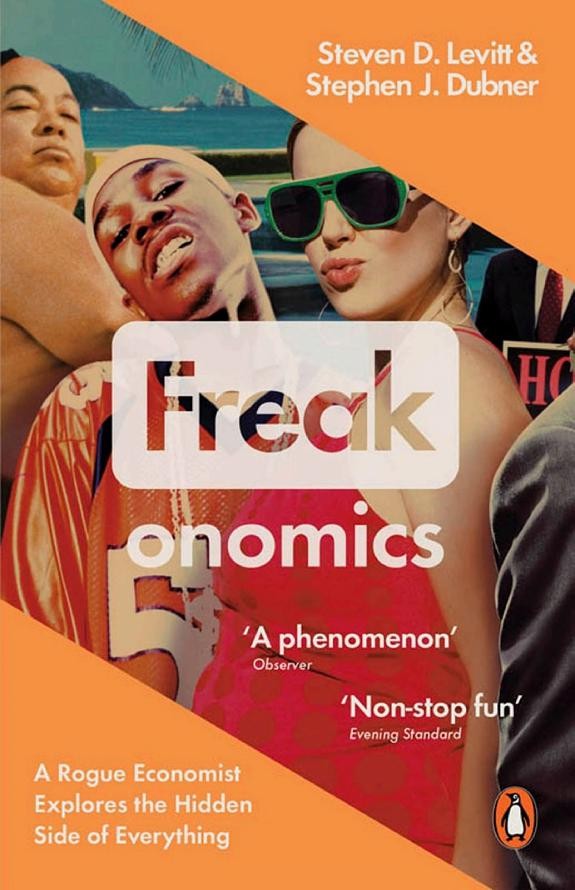
1. Freakonomics by Steven D. Levitt and Stephen J. Dubner
THE IDEA: This popular book uses economic thinking to look at unusual questions, such as the effects of incentives on behaviour. It is more an introduction to economic reasoning than a work of behavioural economics in the narrow sense.
THE PLAY: When something puzzling happens at work, ask what incentives the people involved are facing.
THE 30-DAY TEST: Choose one recurring behaviour in your team this month and write down the incentives that might explain it.
Who it is for: Newcomers who like curious stories and clear writing.
One honest weakness: It ranges across many topics and is lighter on behavioural science than the other books here.
2. Predictably Irrational by Dan Ariely
THE IDEA: Ariely describes lively experiments showing that people make choices in patterned ways that conventional theory does not predict, such as being influenced by irrelevant prices or by the word ‘free’.
THE PLAY: Notice how a price or a comparison on offer changes the way you judge an option.
THE 30-DAY TEST: Run a small, harmless test on yourself or a colleague this month, such as comparing choices when the options are presented in a different order.
Who it is for: Good for people who enjoy short experiments and everyday examples.
One honest weakness: It is a popular account that selects vivid experiments, so it is best read as an introduction rather than a full survey.
Level 2: Accessible
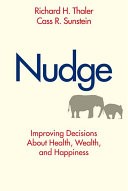
3. Nudge by Richard H. Thaler and Cass R. Sunstein
THE IDEA: The authors argue that how choices are presented, the ‘choice architecture’, shapes what people do, and that the design can steer people toward better outcomes while leaving them free to choose.
THE PLAY: Take one form, default or process at work and consider whether a small change would make the better choice easier.
THE 30-DAY TEST: Change one default in your team’s processes for a month and see what happens.
Who it is for: Managers, policy-minded readers and anyone who designs forms, processes or services.
One honest weakness: Later research has discussed how large nudge effects are in practice, so the book works best as a way of thinking about design.
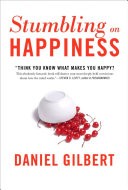
4. Stumbling on Happiness by Daniel T. Gilbert
THE IDEA: Gilbert, a psychologist, explores why people are often poor at predicting what will make them happy, and how imagination and memory shape our expectations.
THE PLAY: Before a big choice, ask someone who has been through something similar how it felt.
THE 30-DAY TEST: Jot down a few predictions this month about how you will feel about an upcoming event, then compare them with how you actually felt.
Who it is for: Readers curious about happiness and forecasting how we feel.
One honest weakness: It is more psychology than economics, so it sits at the edge of this list.
Level 3: Moderate
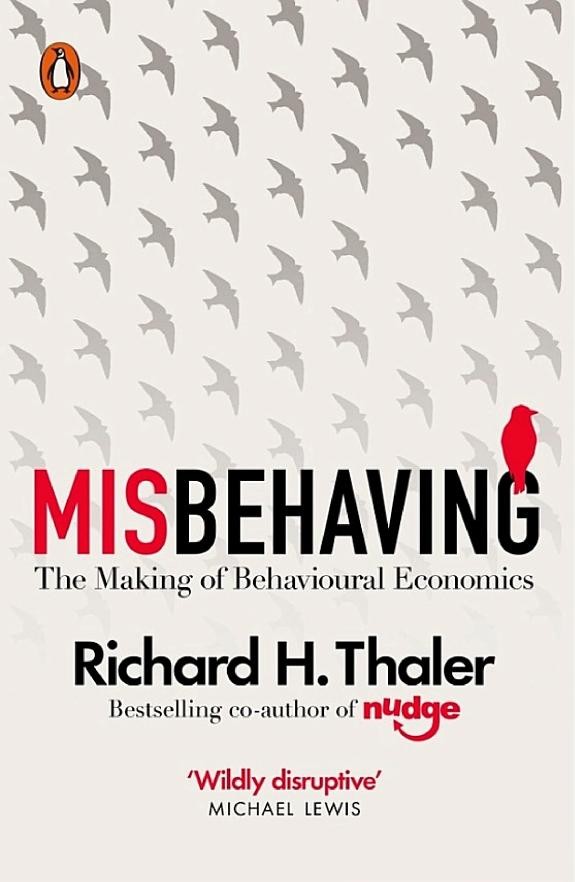
5. Misbehaving by Richard H. Thaler
THE IDEA: Thaler tells the story of how behavioural economics grew, with accounts of early puzzles, arguments and experiments. It combines a personal memoir with a history of the ideas.
THE PLAY: Think of a habit of your own that a ‘rational’ person would not have, and ask what drives it.
THE 30-DAY TEST: Read a few chapters a week and note one idea you could apply to your own team.
Who it is for: For readers who like a story told by someone who was there.
One honest weakness: It is a personal account, so the story follows one researcher’s path rather than surveying the whole field.
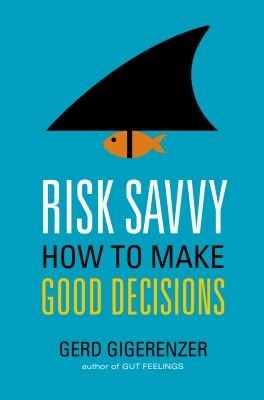
6. Risk Savvy by Gerd Gigerenzer
THE IDEA: Gigerenzer argues for greater understanding of risk and for simple rules of thumb that can work well under uncertainty. He also suggests that people can learn to read statistics better.
THE PLAY: If a risk statistic comes up, ask what it means in plain numbers, such as how many people out of a hundred.
THE 30-DAY TEST: For a month, restate each risk figure you read in plain numbers and see whether it changes your view.
Who it is for: Anyone who would like a second view on how the field treats risk.
One honest weakness: Gigerenzer takes a different view from some of the other authors here, so it reads well alongside them.
Level 4: Hardest
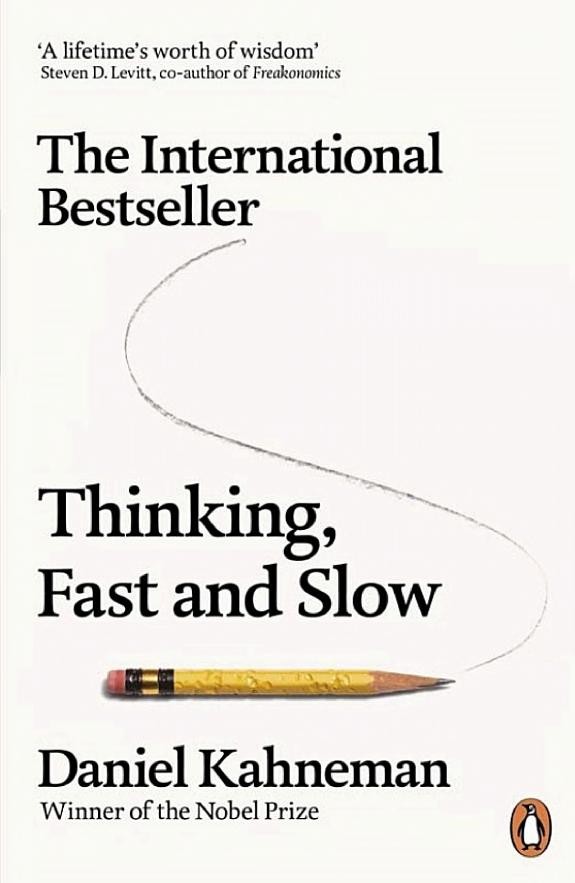
7. Thinking, Fast and Slow by Daniel Kahneman
THE IDEA: Kahneman describes two modes of thought, one fast and intuitive and one slower and more deliberate, and surveys decades of research on judgement and decision-making.
THE PLAY: When an important decision comes up, pause and ask which parts of your thinking are quick impressions and which have been checked.
THE 30-DAY TEST: Write down three decisions this month with the reasoning behind each, then review them later.
Who it is for: Readers who want the research foundations of the field from one of its central figures.
One honest weakness: It is a long book with a great deal of detail, so some readers take it in sections over several weeks.
8. Noise by Daniel Kahneman, Olivier Sibony and Cass R. Sunstein
THE IDEA: The authors look at unwanted variability in human judgement, such as different people reaching different conclusions on the same case, and suggest ‘decision hygiene’ practices to reduce it.
THE PLAY: For repeated judgements, such as scoring candidates, ask people to assess separately before discussing.
THE 30-DAY TEST: Try independent assessments in one team decision and compare them with your usual approach.
Who it is for: Managers whose teams make repeated judgements, such as scoring candidates.
One honest weakness: Some of its suggestions suit large organisations better than small teams.
A suggested reading order
- Begin with Predictably Irrational or Freakonomics for lively introductions.
- Read Nudge for choice design, and Stumbling on Happiness for a psychologist’s view.
- Follow with Misbehaving for the story of the field.
- Add Risk Savvy for a different view on risk and uncertainty.
- Take on Thinking, Fast and Slow and then Noise when you want the research foundations.
Related guides on CROWNLEIGH
A few of our other CROWNLEIGH Book Club guides connect closely with this list:
- Better choices, in our guide to the best books on decision-making.
- Ways of thinking, in our guide to the best books on mental models and critical thinking.
- Two of Kahneman’s books side by side, in our guide to Thinking, Fast and Slow and Noise.
- Behaviour and money, in our guide to books like The Psychology of Money.
- Economics in practice, in our guide to Poor Economics and Why Nations Fail.
You can find all of these, and more as we add them, on our CROWNLEIGH Book Club page.
Frequently asked questions
What is the best behavioural economics book for beginners?
Predictably Irrational and Freakonomics are lively starting points, and Nudge is a good next step if you are interested in design and policy. Thinking, Fast and Slow is the classic but is a longer read.
What is the difference between behavioural economics and psychology?
Psychology studies how people think, feel and behave in general. Behavioural economics borrows from psychology to understand economic choices, such as saving, spending and responding to prices and incentives, and to improve economic models. The fields overlap considerably, and many researchers work in both.
Is Nudge still relevant?
Many people still find its central idea useful: how choices are presented shapes what people do. Later research has debated how large nudge effects are in practice, so it is reasonable to read the book as an influential starting point and to look at current research when you plan to apply it.
A closing thought
Behavioural economics is at its most useful when it prompts good questions: why do people act as they do here, and what small changes might help? You might choose one idea from these books, try it in a small way and see what you learn.
Book links go to Amazon; see our advertising disclosure.