Poor Economics vs Why Nations Fail
Abhijit Banerjee and Esther Duflo on testing what actually helps people living in poverty, and Daron Acemoglu and James Robinson on why institutions shape national prosperity: two Nobel-winning economists’ answers, compared, with a worked example and a suggested reading order.
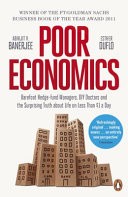
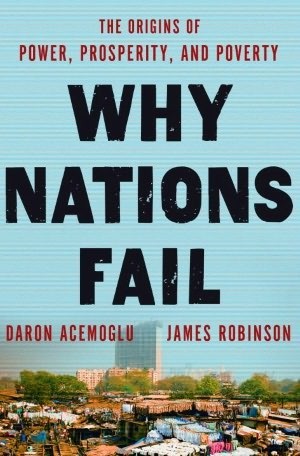
Why are some places rich and others poor, and what, if anything, can be done about it? Two widely read economics books take on that question from opposite ends of the telescope. Abhijit Banerjee and Esther Duflo’s Poor Economics (2011) looks closely at the daily lives and choices of people living in poverty, and asks which small, specific changes are shown by evidence to help. Daron Acemoglu and James Robinson’s Why Nations Fail (2012) looks at whole countries across centuries, and argues that the rules and institutions a society lives under go a long way towards explaining its prosperity. Both are written for general readers, and both have authors who later received the Nobel Prize in Economics.
This guide looks at what each book offers, how they compare and which might suit you best. We have also added a worked example showing how each approach might look in practice, and a reading order. We will point to a few of our other CROWNLEIGH Book Club guides that connect with the same themes.
Poor Economics is a close-up: it describes small experiments and careful observation, and suggests that progress against poverty often comes from answering specific, practical questions, one at a time. Why Nations Fail is a wide-angle view: it argues that nations prosper when their political and economic institutions are inclusive, giving many people a stake and a voice, and struggle when those institutions are built to extract wealth for a few. Many readers find Poor Economics the more hopeful and practical of the two, and Why Nations Fail the more sweeping and historical. They are often read together, and each helps explain what the other leaves out.
The two books side by side
| Poor Economics | Why Nations Fail | |
|---|---|---|
| Authors | Abhijit V. Banerjee and Esther Duflo | Daron Acemoglu and James A. Robinson |
| Subtitle | A Radical Rethinking of the Way to Fight Global Poverty | The Origins of Power, Prosperity and Poverty |
| First published | 2011 | 2012 |
| Scale | Households, villages and individual programmes | Nations and centuries |
| Core idea | Break the big question of poverty into smaller ones, and test what works with careful evidence | Prosperity depends on inclusive institutions; extractive institutions hold countries back |
| Signature ideas | Randomised trials; asking how poor households actually make choices; small changes with large effects; scepticism towards one-size-fits-all answers | Inclusive and extractive institutions; creative destruction; critical junctures; virtuous and vicious circles |
| Method | Field experiments and close observation in many countries | Historical case studies, from medieval Europe to modern Africa, Asia and the Americas |
| Best for | Readers who like evidence, practical questions and real-world detail | Readers who like history, politics and a single organising argument |
| Things to bear in mind | Programme-level findings can be hard to generalise to every setting, as the authors themselves note | A big, unifying argument, so some readers feel it leaves less room for other explanations |
| Reading experience | Down to earth and story-led, with many short examples | Sweeping and narrative, moving between eras and countries |
What they share
- A focus on incentives. Both books are interested in how people respond to the choices and rewards in front of them.
- Doubt about simple answers. Each is wary of explanations, such as ‘it is all about culture’ or ‘it is all about aid’, that claim to cover every case.
- Evidence from many countries. Examples range across continents, from India and Kenya to Botswana, Congo and England.
- Accessible writing. Both are written by leading academics for general readers, with few equations and plenty of stories.
Poor Economics: the economics of everyday decisions
Abhijit Banerjee and Esther Duflo are economists at the Massachusetts Institute of Technology and co-founders of the Abdul Latif Jameel Poverty Action Lab, known as J-PAL, a research network that tests anti-poverty programmes. They shared the 2019 Nobel Prize in Economics with Michael Kremer for their experimental approach to alleviating global poverty. Poor Economics reports what they and others have learned, and its central suggestion is that big, abstract arguments about aid and development are less useful than careful, specific questions.
Some of the key ideas:
- Ask smaller questions. Rather than ‘does aid work?’, ask, for instance, how to encourage families to vaccinate their children, or whether to charge a small price for a health product.
- Test, and compare. The book makes the case for randomised trials, in which similar groups receive different approaches so that the effect can be measured.
- Take people’s choices seriously. The authors look at how poor households manage money, food, health and education, and often find reasons behind choices that look puzzling from outside.
- Small things matter. Modest changes, such as timing, reminders or convenience, can sometimes have large effects.
- Politics and institutions get some attention. The book discusses the role of politics and institutions, while arguing that a great deal can be learned at the level of programmes.
The book is often enjoyed for its warmth and its patient curiosity about how people actually live, and for the way it treats a hard subject with open-minded realism.
Choose one problem you care about, such as a habit at home or a process at work, and write it as a small, specific question. Design the simplest fair comparison you can, perhaps trying one approach for two weeks and another for the next two, and note what you measure. At the end of the month, write down what the evidence suggests, and where it is too thin to tell.
Why Nations Fail: institutions and the long view
Daron Acemoglu, an economist, and James Robinson, a political scientist, have studied the history of states and economies. They were later awarded, with Simon Johnson, the 2024 Nobel Prize in Economics for studies of how institutions are formed and affect prosperity. Why Nations Fail presents their central argument for a general audience: that the main difference between richer and poorer nations lies in the institutions they have, rather than in geography, culture or the knowledge of their leaders.
Some of the key ideas:
- Inclusive and extractive institutions. Inclusive institutions spread power and opportunity widely, and protect property and contracts. Extractive institutions concentrate them in the hands of a few.
- Creative destruction. Lasting growth involves new firms and technologies replacing old ones, which those who benefit from the old order may resist.
- Critical junctures. Moments of upheaval, such as a revolution or a plague, can open the way for institutions to change, in either direction.
- Virtuous and vicious circles. Institutions tend to reinforce themselves, which helps explain why patterns persist for a long time.
- Looking at neighbours. The book uses the town of Nogales, which sits on both sides of the border between Arizona and Sonora, to show how similar places can diverge under different institutions.
- Doubts about other explanations. The authors argue against theories that place the main weight on geography, culture or the ignorance of rulers.
Those who enjoy it tend to mention its clear organising idea and the way it connects stories from very different times and places.
Pick one organisation or community you know well, and write down who makes the rules, who can change them, and who benefits when they work well. Then ask whether a newcomer with a good idea would have a fair chance to try it. Over the month, notice one situation where the answer shapes what people do.
Where the two books agree, and where they feel different
The two books share more ground than their different scales suggest. Both are about incentives and how people respond to the structures around them, and both are cautious about simple solutions. Each also points, in its own way, to the importance of institutions: Why Nations Fail places them at the centre, and Poor Economics treats them as an important part of the picture.
The main difference is the level at which each asks its questions. Poor Economics asks what works, and for whom, in a particular programme or setting, and its answers are usually modest and specific. Why Nations Fail asks why whole countries diverged, and its answer is large and general. Neither of these is the only way of looking at the subject, and economists continue to discuss how the two levels relate. A useful way to hold both in mind is to think of Why Nations Fail as describing the setting in which programmes operate, and of Poor Economics as describing what can be learned and improved within it.
There is also a difference of mood. Poor Economics tends to be hopeful about incremental progress, because small improvements can add up. Why Nations Fail can feel more cautious about quick fixes, because it suggests that institutions change slowly and sometimes only after a crisis. For some, that contrast is part of the pleasure of reading them together.
A worked example: one problem, two lenses
To see the difference in flavour, imagine a region where many children miss school. The two columns below are short illustrations of how each book might shape the discussion, not a summary of either.
| Question | In the style of Poor Economics | In the style of Why Nations Fail |
|---|---|---|
| What do we ask first? | Why exactly are these children absent: distance, health, cost, or something else? | Who decides how schools are funded and run, and who is held to account for the results? |
| What would we look at? | Local data on attendance, plus a closer look at how families make decisions | The rules, incentives and political arrangements that shape schooling over time |
| What might we try? | A small pilot, such as a health check, a reminder or a change of timetable, compared with a similar area without it | Reforms that give families and communities more say, and make leaders more answerable |
| How would we judge progress? | Did the pilot change attendance more than the comparison group? | Are the institutions becoming more open, and do the improvements last? |
| What is the limit? | A pilot that works in one place may need adapting elsewhere | Broad reforms can take a long time and are hard to design from outside |
Notice how the first column looks for something to try next week, and the second looks at the structures that decide what is possible over decades. In practice, some people working on such problems draw on both.
Which one suits which situation?
Here is a rough guide, based on what each book emphasises. Treat it as a starting point rather than a rulebook:
| Your situation | Where to start | Why |
|---|---|---|
| You like evidence and practical detail | Poor Economics | It is built around specific questions and how they were tested |
| You are interested in history and politics | Why Nations Fail | It follows one idea across centuries and continents |
| You work in charity, policy or programme design | Poor Economics | Its examples show how ideas are tried and measured |
| You want to understand why nations differ in wealth | Why Nations Fail | It offers a single, clear answer to that question |
| You are looking for a book-club discussion | Why Nations Fail | Its big claim invites debate |
| You would like both the close-up and the wide view | Both | One looks at what works, the other at the setting it works in |
If you enjoyed these ideas
A handful of our other CROWNLEIGH Book Club guides connect closely with the ideas in these two books:
- Why societies differ. Another sweeping answer to the question of why some regions prospered is in our guide to Sapiens and Guns, Germs and Steel.
- Shared stories and structures. How collective beliefs and institutions shape what societies can do appears in our guide to Sapiens and Homo Deus.
- How people really decide. The psychology behind the choices both books describe is explored in our guide to Thinking, Fast and Slow and Noise.
- Small tests. The idea of learning from small, quick experiments is explored in our guide to Rework and The Lean Startup.
- Thinking with evidence. Careful, honest ways of weighing evidence feature in our guide to Superforecasting and The Signal and the Noise.
You can find all of these, and more as we add them, on our CROWNLEIGH Book Club page.
Our suggested reading order
If you are new to the subject, we would suggest starting with Poor Economics. It is concrete and approachable, and it gives you a feel for how economists think about the lives of real people. Then read Why Nations Fail to place those stories in a wider setting and to think about why institutions matter. If you already enjoy history and politics, it works equally well the other way round: begin with Why Nations Fail for the big picture, and follow with Poor Economics to see how specific questions are tested on the ground.
Frequently asked questions
Should I read Poor Economics or Why Nations Fail first?
If you like practical, story-led writing, Poor Economics is a good first read. If you prefer history and a single organising argument, Why Nations Fail is a natural place to begin. Either order can work, and each is readable over a few weeks of evenings.
What is the main difference between Poor Economics and Why Nations Fail?
Mainly scale. Poor Economics looks at small, specific questions, often at the level of households and programmes, and asks what the evidence shows. Why Nations Fail looks at whole countries over long periods, and argues that institutions explain much of the difference in their fortunes.
Do the two books disagree?
They emphasise different things, but they are not simply opposed. Poor Economics does not claim that institutions are unimportant, and Why Nations Fail does not claim that small programmes are useless. Many readers see them as describing the same subject at different levels.
Do I need to read both?
Not necessarily. Each stands well on its own. Reading both gives you a close-up of what helps and a wide view of why places differ.
Can I read Poor Economics and Why Nations Fail together, and is it worth it?
Yes, and some readers like to. One approach is to read a chapter of one, then a chapter of the other, and try one idea from each over the same month. The 30-day tests above are an easy way to do just that.
A closing thought
Read together, the two books suggest a simple idea: that progress can be understood at more than one scale, from a single household to a whole nation, and that curiosity and evidence help at each. Whichever you open first, you may finish with a few better questions about why things are the way they are.
Book links go to Amazon; see our advertising disclosure.