Rework vs The Lean Startup: Which to Read First?
Jason Fried and David Heinemeier Hansson on keeping things small and simple, and Eric Ries on testing ideas through experiments: two business classics, compared, with a bootstrapper’s decision guide and a suggested reading order.
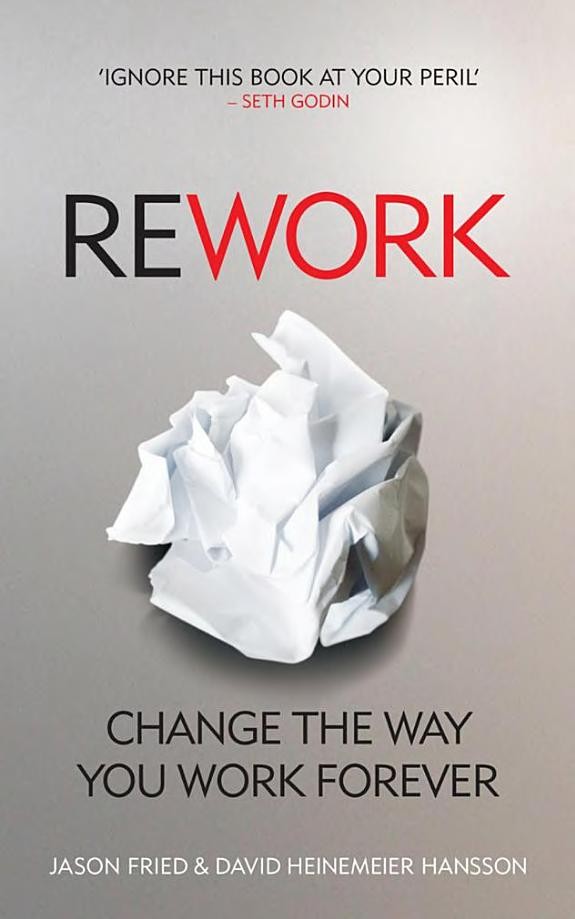
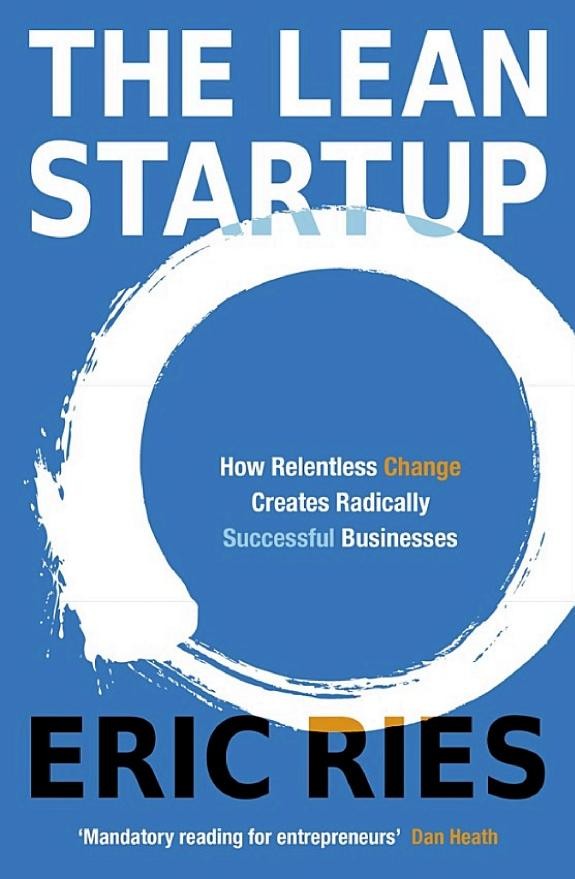
Starting a business means making a great many decisions with very little information. Two widely read books offer help, from quite different directions. Jason Fried and David Heinemeier Hansson’s Rework (2010) is a collection of short, plain-spoken essays that encourage you to keep things small, skip the elaborate plan and get on with making something useful. Eric Ries’s The Lean Startup (2011) offers a method: treat your early ideas as guesses, test them with small experiments and learn from what customers actually do. They are often recommended to the same readers, and they make an interesting pair.
This guide looks at what each book offers, how they compare and which might suit you best. It is written with bootstrapped founders and small-business owners in mind, so we have added a decision guide for common situations, along with a reading order. We will also point to a few of our other CROWNLEIGH Book Club guides that connect with the same themes.
Rework is a pocket-sized argument for staying small and simple: its authors suggest that long plans are really guesses, that you can start with what you have and that copying your competitors is not the way to stand out. The Lean Startup is a method for working out what to build: you make a small version of an idea, measure how customers respond and use what you learn to decide whether to carry on or change direction. Many readers find Rework the more encouraging of the two for bootstrapped, steady-growth businesses, and The Lean Startup the more useful when you are not yet sure that customers want what you are making. Both can be read in an evening or two, and both are best tried against your own business.
The two books side by side
| Rework | The Lean Startup | |
|---|---|---|
| Authors | Jason Fried and David Heinemeier Hansson | Eric Ries |
| First published | 2010 | 2011 |
| Format | Short, punchy essays, a page or two each | Longer chapters built around a single method, with case studies |
| Core idea | Keep things small, simple and self-funded, and do not wait for a perfect plan | Learn what customers want through small, fast experiments before investing heavily |
| Signature ideas | Planning is guesswork; start making something; build half a product, not a half-hearted one; say no by default | Build-Measure-Learn; minimum viable product; validated learning; pivot or persevere; actionable metrics |
| Attitude to uncertainty | Accept it, stay flexible and avoid committing too much too soon | Reduce it, one small test at a time |
| Best for | Bootstrappers, freelancers and small teams who want to grow steadily on their own revenue | Founders of new products, especially when it is unclear who the customer is or what they want |
| Things to bear in mind | Short and opinionated, so the advice is stronger on attitude than on step-by-step method | Examples come largely from technology start-ups, so some ideas need adapting for other kinds of business |
| Reading experience | Quick and quotable; easy to dip into | More structured; best read in order |
What they share
- A preference for starting small. Both books suggest that a modest first version in front of real customers is more useful than a long period of preparation.
- Caution about big plans. Each, in its own way, treats the traditional business plan as a set of assumptions rather than a set of facts.
- Attention to customers. Both put real customer behaviour ahead of opinions, including the founder’s own.
- Speed and simplicity. Each encourages teams to cut what is not essential and to keep things moving.
Rework: less planning, more doing
Jason Fried and David Heinemeier Hansson are co-founders of the software company 37signals, and Rework draws on their experience of running it. The book is written as a series of brief essays, and its tone is direct and good-humoured. Its central suggestion is that many of the things founders are told they need, such as detailed plans, outside funding, rapid growth and large teams, are less necessary than they appear.
Some of the key ideas:
- Planning is guessing. The authors suggest that long-range plans can give a false sense of certainty, and that it is often better to decide as you go.
- Start making something. Rather than waiting for the perfect idea or the perfect moment, begin with what you have and improve it.
- Scratch your own itch. Making something you would use yourself gives you a head start on understanding what it should do.
- Build half, not half-hearted. It is better to do fewer things well than to include everything at an average standard.
- Do not copy competitors. The authors warn against imitating rivals, and suggest that you are better off concentrating on doing your own work well.
- Say no by default. Keep the product, and the company, simple by requiring new ideas to earn their place.
Readers often enjoy the book for its brevity and its permission-giving tone. It is the sort of book that can be finished in an afternoon and then revisited for a single page when you need a nudge.
Choose one thing you have been planning for a while, and set a date within the next week to put a first, simple version in front of someone. Write down what you will leave out on purpose. Afterwards, note what you learned from that first version that no amount of planning would have told you.
The Lean Startup: learn before you build
Eric Ries wrote The Lean Startup after his own experience of working with start-ups, and it describes a method for building a new product under conditions of uncertainty. Its central idea is that a start-up’s early job is to learn what customers will actually value, and that the quickest way to learn is to run small experiments.
Some of the key ideas:
- Build-Measure-Learn. A loop in which you make something small, measure how people respond and learn from the results before deciding what to do next.
- Minimum viable product. The simplest version of an idea that lets you begin learning from customers.
- Validated learning. Progress is measured by what you have learned about customers, supported by evidence, rather than by how much has been built.
- Actionable metrics. The book encourages measures that show cause and effect, rather than totals that only ever go up.
- Pivot or persevere. A regular, honest decision about whether to continue on the current path or to change direction.
The book is often appreciated as a clear way of turning vague ideas into questions that can be tested, and as a shared language for teams that are trying new things.
Write down the single biggest assumption behind your idea, and design the smallest test that could show whether it holds, such as a short survey, a landing page or a conversation with five likely customers. Run it within two weeks, record what happened, and decide whether you would carry on, adjust or change direction.
Where the two books agree, and where they feel different
The two books agree more than their reputations suggest. Both are wary of elaborate planning, both encourage getting something real in front of customers and both are concerned about wasted effort. The difference lies in how each handles uncertainty.
Rework is an invitation to accept uncertainty and keep going. Its authors write from the experience of building a company that grows at its own pace, and much of its advice is about attitude and priorities: keep things small, keep them simple and start making something. The Lean Startup is an invitation to reduce uncertainty in a structured way. Its method is aimed at situations where you do not yet know whether anyone wants what you are making, and where the cost of being wrong can be high.
There are places where they pull in different directions. Rework cautions against copying rivals, while the lean approach asks you to listen closely to what customers do, which may include noticing what they use instead of your product. The Lean Startup also makes measurement central, which is not a major theme of Rework. These differences can feel less like a clash than a useful balance: one book reminds you not to over-engineer your process, and the other reminds you to check your assumptions.
A bootstrapper’s decision guide
Here are a few common situations, and the ideas from each book that many readers find helpful. Treat it as a starting point rather than a rulebook:
| Your situation | Where to start | Why |
|---|---|---|
| You are working on a service you already know people will pay for | Rework | Its advice on staying small, simple and focused fits a business with a clear customer |
| You have an idea but are not sure anyone wants it | The Lean Startup | Its experiments help you find out before you invest heavily |
| You are a freelancer or sole trader thinking about growth | Rework | Its essays on staying small by choice, and on questioning whether you need to grow at all, may be reassuring |
| You are building a new product with a small team | The Lean Startup | Build-Measure-Learn gives the team a shared way of deciding what to try next |
| You feel stuck in planning and have yet to begin | Rework | Its push to start making something can help you break the deadlock |
| You are launching something new and have limited money | Both | One keeps costs low, the other keeps your guesses honest |
If you enjoyed these ideas
A handful of our other CROWNLEIGH Book Club guides connect closely with the ideas in these two books:
- Building something new. Another look at starting small and learning quickly appears in our guide to Zero to One and The Lean Startup.
- Finding your market. The step from early customers to a wider audience is explored in our guide to Crossing the Chasm and The Innovator’s Dilemma.
- Competing on your own terms. Ideas about standing apart from rivals feature in our guide to Blue Ocean Strategy and Good Strategy Bad Strategy.
- Running the company. Practical advice from the founder’s chair appears in our guide to The Hard Thing About Hard Things and High Output Management.
- Winning and keeping customers. How products are talked about and returned to is explored in our guide to Hooked and Contagious.
You can find all of these, and more as we add them, on our CROWNLEIGH Book Club page.
Our suggested reading order
If you are not yet sure that customers want what you are making, we would suggest starting with The Lean Startup. Its method gives you a structured way to find out, and it may help you avoid building the wrong thing. Then read Rework to keep that method in proportion: it is a good reminder to stay small, keep the work simple and not to let testing become a substitute for getting on with it. If you already have customers and a steady business, the order can work the other way round: begin with Rework for its focus on simplicity, and follow with The Lean Startup when you want a clear way to try something new.
Frequently asked questions
Should I read Rework or The Lean Startup first?
If you are testing a new idea, The Lean Startup is a natural first read. If you already have a business and want encouragement to keep it simple, Rework is a good place to begin. Either order can work, and each is quick enough to read in a few sittings.
Is Rework good advice for UK small businesses?
Much of it is about attitude and priorities, which travel well: start small, focus on customers and keep the business simple. The authors run a company based in the United States, so some of their examples reflect that, and the book does not go into the rules that apply to small businesses in particular countries, such as employment, tax or consumer law. It is worth reading it for its spirit and checking the practical details with a local adviser.
Is The Lean Startup only for technology start-ups?
The book’s examples come mainly from technology companies, but others apply its ideas more widely, from a new café menu to a training course. The core idea of testing an assumption cheaply before committing to it works in many settings.
Do I need to read both?
Not necessarily. Each stands well on its own. Reading both gives you a way to accept some uncertainty and a way to reduce it, and many readers find that the combination works well.
Can I read Rework and The Lean Startup together, and is it worth it?
Yes, and some readers like to. One approach is to read a few of the short Rework essays, then a chapter of The Lean Startup, and try one idea from each over the same month. The 30-day tests above are an easy way to do just that.
A closing thought
Read together, the two books suggest a simple idea: that you can start small, stay curious and let real customers guide what comes next. Whichever you open first, you may finish with a clearer sense of what to leave out and what to test first.
Book links go to Amazon; see our advertising disclosure.