Superforecasting vs The Signal and the Noise
Philip Tetlock and Dan Gardner on the habits of the best forecasters, and Nate Silver on why so many predictions fail: two books on thinking about the future, compared, with a worked forecasting example and a suggested reading order.
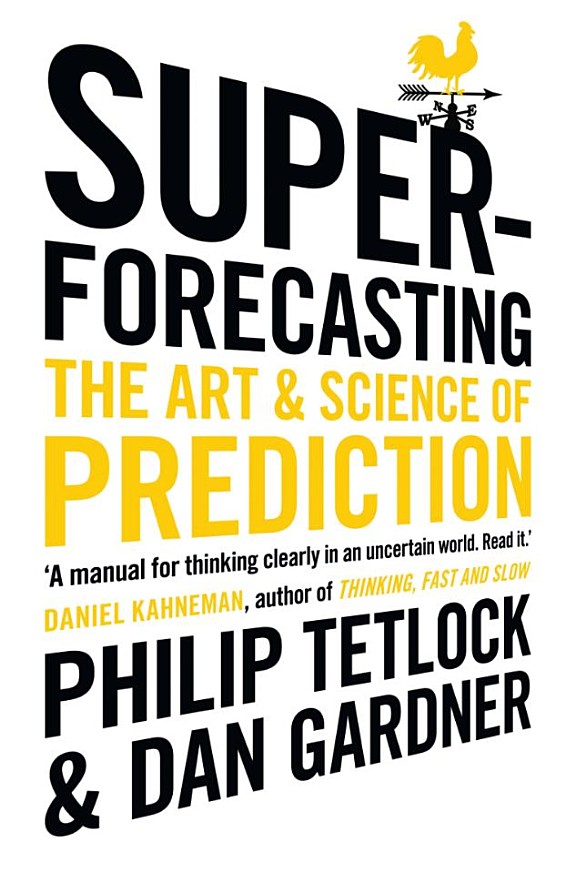
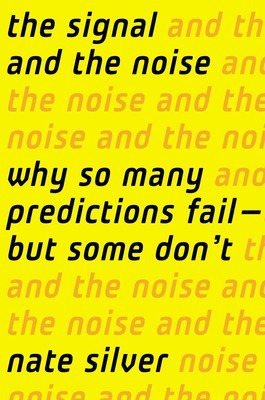
Almost every decision depends on a guess about the future: whether a customer will renew, whether a project will finish on time, whether prices will rise. Most of us make those guesses without much thought, and rarely check how they turned out. Two well-known books ask what happens if we take forecasting seriously. Philip Tetlock and Dan Gardner’s Superforecasting (2015) describes a research project in which ordinary volunteers learned to make unusually accurate predictions, and the habits they shared. Nate Silver’s The Signal and the Noise (2012) travels through baseball, weather, poker, politics and economics to ask why so many predictions fail and a few succeed. They are natural companions, and they approach the same subject from different directions.
This guide looks at what each book offers, how they compare and which might suit you best. Because forecasting is a skill that rewards practice, we have added a worked example, a simple prediction-journal exercise and a reading order. We will also point to a few of our other CROWNLEIGH Book Club guides that connect with the same themes.
Superforecasting is about method: it sets out the habits of people who made unusually accurate forecasts, such as breaking questions into parts, thinking in precise probabilities and updating as new evidence arrives. The Signal and the Noise is about context: it explains why forecasting is hard in different fields, why confident predictions so often miss and how a Bayesian way of thinking, which treats beliefs as probabilities to be revised, can help. Many readers find Superforecasting the more practical guide to improving their own judgement, and The Signal and the Noise the broader tour of why that judgement needs improving. Each is best read with a notebook nearby.
The two books side by side
| Superforecasting | The Signal and the Noise | |
|---|---|---|
| Authors | Philip E. Tetlock and Dan Gardner | Nate Silver |
| First published | 2015 | 2012 |
| Subtitle | The Art and Science of Prediction | Why So Many Predictions Fail, but Some Don’t |
| Based on | Tetlock’s research on forecasting accuracy, including the Good Judgment Project forecasting tournaments | Silver’s work as a statistical analyst and forecaster, plus interviews and case studies across many fields |
| Core idea | Forecasting is a skill that can be measured, practised and improved | Good forecasts come from separating signal from noise and updating beliefs with evidence |
| Signature ideas | Foxes and hedgehogs; breaking problems down; precise probabilities; Brier scores; updating; teamwork | Bayesian thinking; overfitting; the limits of prediction; humility about uncertainty; learning from fields that forecast well |
| Best for | Anyone who wants to make better judgements and track how they do | Anyone curious about why predictions fail, and about data, models and uncertainty |
| Things to bear in mind | Its examples centre on geopolitical questions, so some habits need adapting to everyday work | Wide-ranging, so some chapters go into topics that may be less relevant to you; some of its examples date from the early 2010s |
| Reading experience | Story-led and reflective, with a clear set of practical habits near the end | Broad and conversational, with chapters that work as separate case studies |
What they share
- Respect for uncertainty. Both books treat the future as something we can think about carefully, without pretending to know it.
- The fox’s view. Each draws on the idea, from the philosopher Isaiah Berlin, of the fox who knows many small things and the hedgehog who knows one big thing, and each favours the fox.
- Probabilistic thinking. Both encourage thinking in degrees of likelihood, rather than in confident yes-or-no answers.
- Learning from results. Each suggests that we improve when we compare what we expected with what actually happened.
Superforecasting: the habits of better forecasters
Philip Tetlock is a psychologist who has spent decades studying how well experts predict events. Superforecasting, written with the journalist Dan Gardner, builds on that work and on the Good Judgment Project, a team that took part in a forecasting tournament sponsored by a US research agency for intelligence. The book follows a group of volunteers, nicknamed “superforecasters”, whose predictions were consistently among the most accurate, and asks what they did differently.
Some of the key ideas:
- Foxes and hedgehogs. Forecasters who draw on several perspectives and change their minds tend to do better than those who hold one big theory.
- Break it down. A large question is turned into smaller ones that can be estimated separately, a technique often described in terms of Fermi estimates.
- Start with the outside view. Before looking at the details of a case, ask how often similar cases turn out a particular way.
- Precise probabilities. The best forecasters distinguish between, say, 60 and 70 per cent, rather than settling for “likely”.
- Keep score and keep updating. Accuracy is measured, for instance with Brier scores, and forecasts are revised in small steps as evidence arrives.
- Work with others. Teams that share reasons and challenge one another often do better than individuals working alone.
The book is encouraging in tone, with its message that careful thinking can be practised, and it ends with a clear list of habits, which the authors present as guidelines and not as rigid rules.
Write down ten forecasts about things that will be settled within the month, such as whether a project will ship on time or a particular team will win. Give each a probability and a date. When each is resolved, record the outcome, and at the end of the month look for patterns: were you often too confident, or too cautious?
The Signal and the Noise: why predictions fail, and what to do about it
Nate Silver is a statistician and writer who founded the website FiveThirtyEight and is known for his early work analysing baseball. The Signal and the Noise takes a tour of several fields that depend on forecasting and asks how each performs. Weather forecasting, which has improved steadily and which forecasters check against results every day, is held up as an encouraging example. Economic and political forecasting, by contrast, are shown to have a more mixed record.
Some of the key ideas:
- Signal and noise. In any set of data, some patterns are meaningful and some are chance, and the hard part is telling them apart.
- Overfitting. A model that matches past data too closely can mistake noise for signal and then perform poorly on new cases.
- Bayesian thinking. Start with a reasoned prior belief, then update it as new evidence comes in, in proportion to how strong that evidence is.
- Learning from forecasts that work. Fields with fast, frequent feedback, such as weather and poker, tend to build better habits.
- Humility. A good forecast says how uncertain it is, and the book is cautious about overconfident predictions.
The book can serve as an approachable introduction to statistical thinking, with plenty of stories to carry the ideas along.
Choose one thing you would like to predict, such as whether a local shop will open on schedule. Write down a starting probability based on how often similar things happen, then note each piece of new information as it arrives and how much it changes your estimate. At the end of the month, review whether the updates moved you in the right direction.
A forecasting example
To see the difference in flavour, imagine a manager asking: “Will our new booking system go live by the end of March?” The two columns below are short illustrations of how each book might shape the answer, not a recipe to follow word for word.
| Step | In the style of Superforecasting | In the style of The Signal and the Noise |
|---|---|---|
| Frame the question | Make it precise: what counts as “live”, and by what date? (Clear questions can be scored) | Ask what the data can and cannot tell you about this kind of project |
| Starting point | Look at how often similar projects finish on time (the outside view) | Set a prior from past projects, and be explicit about how confident you are in it |
| Break it down | Split it into smaller questions: testing, training, supplier delivery | Look for patterns that could be noise, such as one early success or one early delay |
| Put a number on it | Estimate, say, 55 per cent, and decide what would move it to 45 or 65 | Give a range, and describe the main sources of uncertainty |
| Update and review | Revise in small steps, then score the forecast when the result is known | Update as evidence arrives, in proportion to how strong it is, and review the reasoning |
Notice how the first column leans on a repeatable routine, and the second on a way of thinking about evidence. In practice the two overlap a good deal, and many forecasters use both: the habits keep the process tidy, and the Bayesian mindset keeps the updating honest.
Where the two books feel different
The clearest difference is the question each asks. Superforecasting asks: what do the best forecasters do, and can the rest of us learn it? Its centre of gravity is a group of people and their habits. The Signal and the Noise asks: why is prediction so difficult, and where does it work best? Its centre of gravity is a set of fields and their data.
They also differ in how far they take the reader into the maths. The Signal and the Noise introduces Bayes’ theorem and spends time on models and statistics, though always with examples. Superforecasting is lighter on formulas, and keeps its attention on judgement and temperament. They were also written at different moments. The Signal and the Noise was published in 2012, and some of its examples reflect that time. Superforecasting followed in 2015, partly drawing on a research project that ran between 2011 and 2015. Many readers find that reading both gives them a fuller picture, with The Signal and the Noise setting the scene and Superforecasting describing a way forward.
Which one suits which situation?
Here is a rough guide, based on what each book emphasises. Treat it as a starting point rather than a rulebook:
| Your situation | Where to start | Why |
|---|---|---|
| You make forecasts at work, such as sales, timelines or budgets | Superforecasting | Its habits are designed to be tried and scored |
| You are curious about why predictions fail | The Signal and the Noise | It surveys the question across many fields |
| You would like an accessible introduction to Bayesian thinking | The Signal and the Noise | It explains the idea with stories and examples |
| You want to improve your own judgement over a few months | Superforecasting | Its closing habits suit a practice routine |
| You enjoy data, models and statistics | The Signal and the Noise | It spends more time on how forecasting models work |
| You would like both method and context | Both | One describes how to forecast, the other why it is hard |
If you enjoyed these ideas
A handful of our other CROWNLEIGH Book Club guides connect closely with the ideas in these two books:
- The limits of prediction. Why rare events are so hard to foresee is the subject of our guide to The Black Swan and Antifragile.
- How we judge. The quirks of human judgement behind many forecasting errors appear in our guide to Thinking, Fast and Slow and Noise.
- Investing under uncertainty. Humility about the future runs through our guide to The Intelligent Investor and The Psychology of Money.
- Building the habit. Turning a practice such as a prediction journal into a routine is explored in our guide to Atomic Habits and The Power of Habit.
- Strategy and judgement. Diagnosing a situation honestly before choosing a course of action features in our guide to Blue Ocean Strategy and Good Strategy Bad Strategy.
You can find all of these, and more as we add them, on our CROWNLEIGH Book Club page.
Our suggested reading order
If you would like to start improving your own forecasts straight away, we would suggest beginning with Superforecasting. Its habits are concrete enough to try the same week, and its emphasis on keeping score gives you a way to see progress. Then read The Signal and the Noise for the wider picture: why forecasting is hard, where it works well and how Bayesian thinking can sit behind the habits. If you are more curious about the subject than eager to practise, it works equally well the other way round: begin with The Signal and the Noise for its tour of the field, and follow with Superforecasting when you are ready to build a routine.
Frequently asked questions
Should I read Superforecasting or The Signal and the Noise first?
If you want practical habits, Superforecasting is a good first read. If you would like a broad introduction to why predictions fail, The Signal and the Noise is a natural place to begin. Either order can work, and each is readable in a few weeks of evenings.
Can anyone become a superforecaster?
The book’s message is that forecasting is a skill that can be practised, and that the best forecasters tend to be curious, open to changing their minds and willing to keep score. It does not promise that everyone will reach the top group, and the authors are careful about that. Simply keeping a prediction journal may bring noticeable improvements in your own judgement.
Do I need to be good at maths to read The Signal and the Noise?
No. The book introduces Bayes’ theorem and some statistics, but it does so through stories and examples, and it is written for general readers. Those who enjoy numbers will find plenty to explore, and others can read for the ideas.
Do I need to read both?
Not necessarily. Each stands well on its own. Reading both gives you a way of practising forecasts and a wider sense of why they are difficult.
Can I read Superforecasting and The Signal and the Noise together, and is it worth it?
Yes, and some readers like to. One approach is to read a chapter of one, then a chapter of the other, and keep a prediction journal over the same month. The 30-day tests above are an easy way to do just that.
A closing thought
Read together, the two books suggest a simple idea: that the future is uncertain, but our thinking about it can improve with practice and a willingness to be wrong in small, useful ways. Whichever you open first, you may finish with a notebook of predictions, and a clearer sense of how much you really know.
Book links go to Amazon; see our advertising disclosure.