The Hard Thing About Hard Things vs High Output Management
Ben Horowitz on leading through hard times and Andy Grove on the systems of high-output teams: two operator classics, compared, with a ‘first 100 days as CEO’ lens and a suggested reading order.
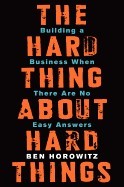
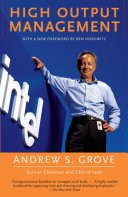
Stepping into a leadership role, whether you are running a company, a team or a project, can feel as though everyone else received a manual you missed. Two much-loved books come close to being that manual, from two different directions. Ben Horowitz’s The Hard Thing About Hard Things is a candid, story-led account of leading a company when there are no easy answers. Andy Grove’s High Output Management is a clear, practical guide to how managers can help their teams produce more. They are often recommended together, and they sit beautifully side by side.
This guide looks at what each book offers, how they fit together and which might suit you best. We will also try a “first 100 days as CEO” lens, imagining how each book might guide the early weeks of a new leader, and point to a few of our other Book Club guides that connect with the same themes.
The Hard Thing About Hard Things is about the human side of leading under pressure: it shares honest lessons on difficult decisions, tough conversations and the “wartime” and “peacetime” styles of leadership. High Output Management is about the systems of management: it explores how leverage, meetings, one-to-ones and clear indicators can raise the output of a whole team. Many readers find Grove’s book a lovely foundation for routines and structure, and Horowitz’s a warm companion for the emotional side of leading. Both are written by people who ran large organisations, and both draw on real experience.
The two books side by side
| The Hard Thing About Hard Things | High Output Management | |
|---|---|---|
| Author | Ben Horowitz | Andrew S. Grove |
| Author’s background | Technology entrepreneur and investor; co-founder of the venture firm Andreessen Horowitz | Long-time leader of the chip maker Intel, where he served as chief executive |
| First published | 2014 | 1983 (with a later revised edition) |
| Core idea | Leading a company means facing hard problems with no formulas; honesty and courage help | A manager’s output is the output of their team, so effort is best spent on high-leverage activities |
| Signature ideas | Wartime and peacetime leadership, looking after people, product and profit, the struggle | Managerial leverage, meetings as the work of management, one-to-ones, task-relevant maturity, paired indicators |
| Focus | The emotional and human side of leading under pressure | Systems, routines and measurement for teams |
| Best for | Founders and leaders facing tough decisions | New and experienced managers who like clear frameworks |
| Reading experience | Personal, candid and story-led, with a touch of humour | Practical, concise and structured |
What they share
- Lessons from real experience. Both authors led demanding organisations, and both write from what they lived through.
- A focus on people. Each book recognises that a company’s results come through the people in it.
- Straightforward honesty. Both are open that leading is not easy, and both aim above all to be useful.
- Ideas you can try on Monday. Both are full of suggestions you can apply to your own team.
The Hard Thing About Hard Things: leading when there are no easy answers
Ben Horowitz published The Hard Thing About Hard Things in 2014, with the subtitle “Building a Business When There Are No Easy Answers”. Before he co-founded the venture firm Andreessen Horowitz, he co-founded and led the software company Loudcloud, later known as Opsware, and many of the book’s lessons come from those years. Rather than offering a neat formula, he shares what he learned about the situations that few people feel fully prepared for.
Some of the key ideas:
- Wartime and peacetime. Horowitz describes how a company facing a serious threat needs a different leadership style from one that is comfortably ahead, and how the same leader may need to change gear.
- Taking care of people, product and profit. He suggests that, in that order, a company that looks after its people is better placed to deliver a product and, in turn, results.
- Difficult moments. The book talks openly about hiring and letting people go, managing executives, and the loneliness that can come with leading.
- The struggle. A frank and encouraging chapter on the moments when everything feels hard, and what can help.
Many readers find the book comforting as well as useful, because it reassures you that hard moments are a normal part of leading, not a sign that you are doing it wrong.
Choose one conversation you have been putting off, such as giving tough feedback or sharing difficult news. Prepare it by writing down what is true, what you are worried about and how you would like the other person to feel afterwards. Have the conversation within the month, and note what you learned from it.
High Output Management: the systems of high-output teams
Andy Grove, who spent decades at Intel and led it as chief executive, published High Output Management in 1983. It is a compact, practical guide, and many readers return to it for its clarity. Its starting point is that a manager’s output is the output of the team they are responsible for, and so a manager’s time is best spent on activities that multiply the team’s output.
Some of the book’s key ideas:
- Managerial leverage. Activities that help many people at once, or that have a lasting effect, tend to have the highest value for a manager’s time.
- The breakfast factory. Grove uses the familiar example of preparing a simple breakfast to explain production, bottlenecks and indicators.
- Meetings as the medium of management. He treats meetings as the way managers do much of their work, and so as something to plan and run well.
- One-to-ones. Regular, structured conversations with each team member are presented as a central routine.
- Task-relevant maturity. The idea that the style of management should fit how experienced a person is at a particular task.
- Clear indicators. Goals and measures that balance one another, so that improving one thing does not quietly harm another.
The book is short and to the point, and many readers enjoy it as a reference they come back to.
Start a simple weekly one-to-one routine with one or two people you work with: choose a regular time, agree a short list of topics in advance and keep brief notes. After a month, look at what the routine has helped you notice that you might otherwise have missed.
A “first 100 days as CEO” lens
Imagine you have just become the leader of a company. Here is how each book might help in the early weeks. It is a gentle thought experiment rather than a prescription:
| Early-weeks question | What High Output Management offers | What The Hard Thing About Hard Things offers |
|---|---|---|
| How should I spend my time? | The idea of leverage, to help you choose activities that lift the whole team | Reminders that you will also need to respond to unexpected problems as they arise |
| How do I get to know my team? | A structure for regular one-to-ones, with agreed topics | Honest conversations and the courage to ask difficult questions |
| How do I know how we are doing? | Clear, paired indicators that give an honest picture | A sense of when the situation calls for a more urgent, wartime approach |
| How do I cope when things are hard? | A calm routine that keeps the team’s work visible | Encouragement that the struggle is a normal part of leading |
Taken together, they suggest that early leadership is about both structure and heart: routines that keep things clear, and the resilience to handle what the routines cannot anticipate.
Where the two books feel different
The clearest difference is what each puts in the foreground. High Output Management focuses on the machinery of management: how to organise time, meetings and measures so that a team does its best work. The Hard Thing About Hard Things focuses on the experience of leading: the decisions that keep you awake at night and how to face them. One is a well-drawn plan, the other a trusted friend who has been there.
They also differ in style. High Output Management is concise and orderly, with each chapter building a clear idea. The Hard Thing About Hard Things is more personal and wide-ranging, mixing stories, lessons and the occasional song lyric. Many readers find that the two balance each other nicely, and that reading both gives them a more rounded picture of leadership.
Which one suits which situation?
Here is a gentle guide, based on what each book emphasises. Treat it as a starting point rather than a rulebook:
| Your situation | Where to start | Why |
|---|---|---|
| You have just become a manager and want clear routines | High Output Management | It offers practical systems you can try straight away |
| You are a founder facing tough decisions | The Hard Thing About Hard Things | It speaks openly about the hard moments of leading |
| You would like to run better meetings and one-to-ones | High Output Management | These are central topics in the book |
| You would like encouragement for a difficult stretch | The Hard Thing About Hard Things | It is candid, reassuring and personal |
| You would like both the system and the spirit | Both | Together they cover structure and the human side |
If you enjoyed these ideas
A handful of our other Book Club guides connect closely with the ideas in these two books:
- Building a company. Early-stage thinking sits at the heart of our guide to Zero to One and The Lean Startup.
- Building lasting organisations. The qualities of enduring companies are explored in our guide to Good to Great and Built to Last.
- Talking when it matters. The hard conversations Horowitz describes link closely to our guide to Crucial Conversations and Difficult Conversations.
- Protecting focus. Grove’s emphasis on using time well connects with our guide to Deep Work and Essentialism.
- Planning for surprises. The unexpected moments in The Hard Thing About Hard Things echo our guide to The Black Swan and Antifragile.
You can find all of these, and more as we add them, on our CROWNLEIGH Book Club page.
Our suggested reading order
If you are new to managing, we would suggest starting with High Output Management. It gives you routines and a way of thinking about your time, which makes a calm foundation. Then read The Hard Thing About Hard Things for the emotional side, and for companionship when things get difficult. If you are already leading and in the middle of a challenge, it works nicely the other way round: start with The Hard Thing About Hard Things for reassurance and perspective, and follow with High Output Management for structure.
Frequently asked questions
Should I read The Hard Thing About Hard Things or High Output Management first?
If you would like practical systems for managing a team, High Output Management is a lovely first read. If you are facing difficult decisions and would like a candid companion, The Hard Thing About Hard Things is a natural place to begin. Many readers enjoy either order.
Which should a first-time founder read first?
Many first-time founders enjoy The Hard Thing About Hard Things first, because it speaks openly about the experience of building a company. High Output Management then adds a clear toolkit for organising a growing team. Either order works well, and both are worth having on the shelf.
Do I need to read both?
Not necessarily. Each stands on its own. Reading both gives you a set of management routines and a candid account of leading through hard times.
Is High Output Management still relevant, given when it was first published?
Many readers find that it is. It was first published in 1983, and a revised edition followed, and its focus on leverage, meetings and one-to-ones continues to be widely discussed in management today. As always, it is worth adapting ideas to your own team.
Can I read The Hard Thing About Hard Things and High Output Management together, and is it worth it?
Yes, and many people enjoy it. A pleasant approach is to read a chapter of one, then a chapter of the other, and try one idea from each over the same month. The 30-day tests above are an easy way to do just that.
A closing thought
Both books carry a gentle message: that leading well is a craft you can learn, made of good routines and honest conversations. Whichever you open first, you may well finish with a little more confidence in your own judgement, and a few practical ideas to try with your team this week.
Book links go to Amazon; see our advertising disclosure.