Sapiens vs Homo Deus
Yuval Noah Harari on how humans came to dominate the planet, and on where technology and data might take us next: two big-picture bestsellers, compared, with a reading order for Harari’s books and a suggested place to start.
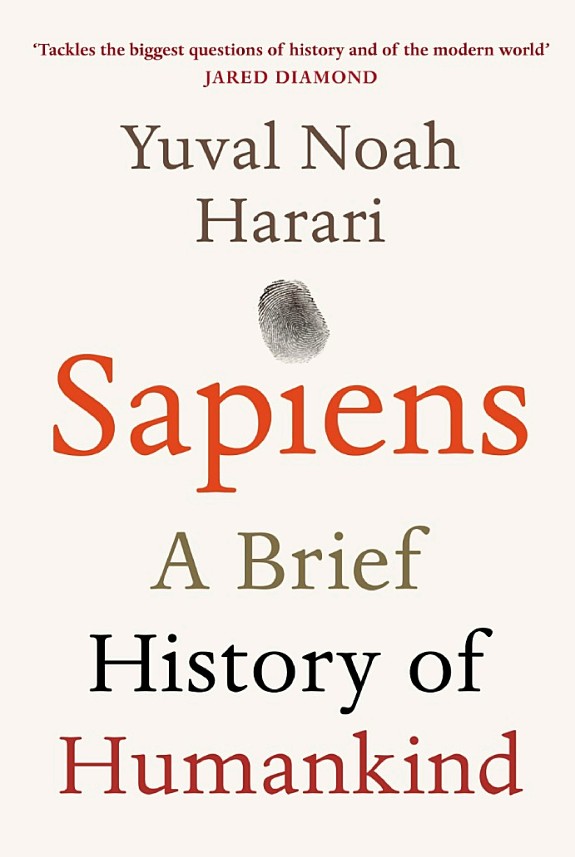
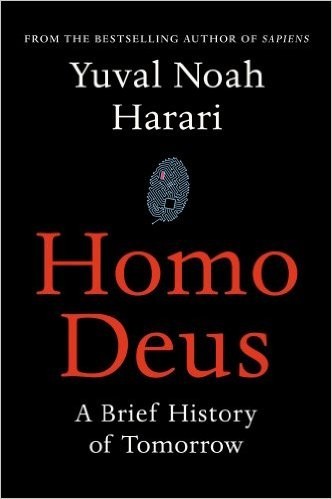
Few non-fiction books of recent years have travelled as widely as Yuval Noah Harari’s Sapiens, and many of its readers go on to ask the same question: should I read Homo Deus next? The two books are companions. Sapiens looks back across the whole story of our species, from the first humans to the modern world. Homo Deus, published a few years later, looks forward and asks what might happen to humanity as technology, data and biology advance. Both are written for general readers, and both are big-picture books with a clear point of view.
This guide looks at what each book offers, how they compare and which might suit you best. We have also added a short note on the order in which Harari’s books were written, a thinking exercise, and a reading order. We will point to a few of our other CROWNLEIGH Book Club guides that connect with the same themes.
Sapiens is a history of how humans came to dominate the planet, told through three great turning points and the idea that shared stories, such as money, nations and religions, let large numbers of strangers cooperate. Homo Deus builds on that history to ask where we are heading, discussing how humanity has changed its priorities and how data and algorithms might reshape our lives. Most readers find it natural to start with Sapiens, which sets up the ideas, and to move on to Homo Deus if they are curious about technology and the future. Homo Deus is the more speculative of the two, so it is best read with that in mind.
The two books side by side
| Sapiens | Homo Deus | |
|---|---|---|
| Author | Yuval Noah Harari | Yuval Noah Harari |
| Subtitle | A Brief History of Humankind | A Brief History of Tomorrow |
| First published | 2011 (in Hebrew; English edition 2014) | 2015 (in Hebrew; English edition 2016) |
| Time frame | From early humans to the present day | From the present day into possible futures |
| Core idea | Humans came to dominate through large-scale cooperation, made possible by shared stories and beliefs | Having made progress against famine, plague and war, humanity may turn to new goals, while data and algorithms gain influence |
| Signature ideas | The Cognitive, Agricultural and Scientific Revolutions; imagined orders; money, empires and religion as shared stories | New human goals; humanism; ‘Dataism’; the possible separation of intelligence from consciousness |
| Best for | Readers who enjoy a sweeping, connected view of history | Readers curious about technology, data, artificial intelligence and the future |
| Things to bear in mind | Very broad in scope, so specialists in individual fields sometimes question particular details | Openly speculative, so it is best read as a set of possibilities, not predictions |
| Reading experience | Story-led and engaging, with many surprising comparisons | More argumentative, with a stronger sense of looking ahead |
What they share
- The long view. Both books step back from daily events to ask how humanity’s story fits together.
- Stories as a force. The idea that people live partly inside shared stories, and that these stories shape what societies can do, runs through both.
- An accessible style. Harari writes for general readers, with short chapters, vivid examples and few technical terms.
- Big questions. Each invites you to think about happiness, power and meaning, not only about events and dates.
Sapiens: a history of how we got here
Yuval Noah Harari is a historian at the Hebrew University of Jerusalem, and Sapiens grew out of a course he taught on world history. The book’s main idea is that what set our species apart was an ability to cooperate flexibly in large numbers, which in turn depends on our ability to believe in things that exist only because we agree about them.
Some of the key ideas:
- Three revolutions. The Cognitive Revolution, the Agricultural Revolution and the Scientific Revolution are presented as the major turning points in our history.
- Shared stories. Money, nations, companies and laws work because large numbers of people agree to take them seriously. Harari calls these imagined orders.
- A questioning view of progress. The book asks whether developments such as farming made individual lives better, a claim the book leaves readers to weigh for themselves.
- Cooperation at scale. Trade, empire and religion are discussed as ways in which strangers have learned to work together.
- The question of happiness. Late in the book, Harari asks whether people have become happier as societies have become more powerful.
Many readers enjoy the book for the way it links distant parts of history together, and for the habit of making familiar things, such as money, look unfamiliar.
Over a week, keep a short list of the shared stories you rely on in daily life, such as money, brands, job titles, public holidays and laws. For each, note what would change if people stopped believing in it. At the end of the month, look back and see which ones you had never thought of as stories before.
Homo Deus: a look at what might come next
Homo Deus was published four years after Sapiens, and it picks up the argument at the present day. Harari suggests that for most of history famine, plague and war were humanity’s great problems, and that although they have not disappeared, they are now more manageable than they were. He asks what a species with those challenges better in hand might aim for next, and how that could change us.
Some of the key ideas:
- A new agenda. The book describes possible new goals, such as longer lives, greater happiness and enhanced abilities, and asks what they might mean.
- Humanism and its challengers. Modern societies often place the individual’s feelings and choices at the centre. Harari asks how that could change as technology develops.
- Dataism. A term Harari uses for the idea that data flows and algorithms might come to be seen as the most trusted source of authority.
- Intelligence and consciousness. The book considers the possibility that machines could become highly capable without being conscious, and what that could mean for people’s work and roles.
- Questions rather than forecasts. Harari presents these as possibilities to think about, and not as predictions.
The book is often read alongside current debates about artificial intelligence, even though it was written before the recent wave of public attention to the subject.
For one week, keep a note of the everyday decisions you hand to an algorithm, such as route suggestions, recommended videos or suggested purchases. At the end of the week, mark which ones you are glad to hand over and which you would like to take back, and try taking one back for the rest of the month.
Harari’s books in order
If you are planning to read more than these two, it helps to know the order in which Harari’s books appeared. Sapiens came first, followed by Homo Deus. His 21 Lessons for the 21st Century (2018) turned to the present day, looking at questions such as work, education and meaning. His more recent Nexus (2024) looks at how information networks have shaped history and what artificial intelligence may mean for them. Readers who enjoy Homo Deus may find Nexus a natural next step if the AI questions are what interest them most.
A thinking exercise: two lenses on one question
To see the difference in flavour, imagine a town introducing a new app that tracks and rewards healthy habits. The two columns below are short illustrations of how each book might shape a conversation about it, not a summary of either.
| Question | Through the lens of Sapiens | Through the lens of Homo Deus |
|---|---|---|
| What is really happening? | Why do people agree to take a new scheme seriously? Which shared stories does it rely on? | What data does the app gather, and who or what uses it to make decisions? |
| Who has authority? | Trust in institutions, rewards and rules rests on collective belief | Authority may drift towards whoever holds the data and the algorithm |
| What changes for people? | How have earlier tools, such as money or the calendar, changed how communities live? | Which choices might people hand over to the system, and which would they want to keep? |
| What would you ask next? | Does this make life better for the people involved, as well as more organised? | Who benefits, and how can people stay in charge of the things that matter to them? |
Notice how the first column looks back to find patterns, and the second looks ahead to find questions. The two work well together: the past gives the future some of its shape, and the future gives the past fresh interest.
Where the two books feel different
The clearest difference is the direction of travel. Sapiens is largely history, and although it is a very broad one, it rests on events that have already happened. Homo Deus is largely speculation, and it asks the reader to think about what could happen. That makes Sapiens the more established of the two, and Homo Deus the more open to disagreement. Homo Deus tends to work best when treated as a set of provocations to think about, rather than as a prediction of the future.
They also differ in mood. Sapiens is often playful and surprising, and it is often described as an enjoyable read. Homo Deus tends to be more serious, with a sharper focus on risks and choices. Readers who enjoy one will often enjoy the other, but they do not feel quite the same.
Which one suits which situation?
Here is a rough guide, based on what each book emphasises. Treat it as a starting point rather than a rulebook:
| Your situation | Where to start | Why |
|---|---|---|
| You have not read any Harari | Sapiens | It sets out the ideas that the later books build on |
| You enjoy history and big-picture storytelling | Sapiens | It is the broadest and most story-led of the two |
| You are curious about artificial intelligence and data | Homo Deus | It is the one that asks what technology may do to us |
| You have already read Sapiens and want more | Homo Deus | It carries the argument forward |
| You would like a book for a book-club discussion | Homo Deus | Its open questions tend to start conversations |
| You want the full picture | Both | One explains how we got here, the other asks where we are going |
If you enjoyed these ideas
A handful of our other CROWNLEIGH Book Club guides connect closely with the ideas in these two books:
- Big-picture history. Another sweeping view of why human societies developed as they did is in our guide to Sapiens and Guns, Germs and Steel.
- Thinking about the future. Careful ways of making predictions are explored in our guide to Superforecasting and The Signal and the Noise.
- Uncertainty. Why rare and unexpected events matter so much is the subject of our guide to The Black Swan and Antifragile.
- How we think. The workings of human judgement, which sit behind many of Harari’s questions, appear in our guide to Thinking, Fast and Slow and Noise.
- Technology and behaviour. How digital products shape what people do is explored in our guide to Hooked and Contagious.
You can find all of these, and more as we add them, on our CROWNLEIGH Book Club page.
Our suggested reading order
If you are new to Harari, we would suggest starting with Sapiens. It is the broader and more established of the two, and it gives you the ideas, such as shared stories and imagined orders, on which Homo Deus builds. Then read Homo Deus if you would like to think about where those ideas might lead, particularly where technology and data are concerned. If you are mainly interested in artificial intelligence and are short of time, you could begin with Homo Deus, since it explains its main ideas as it goes, though it may feel richer once you have read Sapiens.
Frequently asked questions
Should I read Sapiens or Homo Deus first?
Most readers start with Sapiens, because it provides the background and is the better known of the two. If your main interest is technology and the future, Homo Deus can be read on its own, although it builds on ideas from the first book.
Do I need to read Sapiens before Homo Deus?
No. Homo Deus can be read on its own, and it explains the ideas it needs as it goes. Some readers feel they get more from it after Sapiens, but it is not a requirement.
Is Homo Deus still worth reading now that AI is in the news?
Many readers find that it is. It was written before the current attention to artificial intelligence, and some of its details will feel dated, but its questions about data, authority and human choice are still discussed. It works well as a way of starting a conversation, not as a guide to what will happen.
Do I need to read both?
Not necessarily. Each stands well on its own. Reading both gives you a story of where we have been and a set of questions about where we might go.
Can I read Sapiens and Homo Deus together, and is it worth it?
Yes, and some readers like to. One approach is to read a chapter of one, then a chapter of the other, and try one idea from each over the same month. The 30-day tests above are an easy way to do just that.
A closing thought
Read together, the two books suggest a simple idea: that the stories we share have shaped our past, and that the tools we build may shape our future. Whichever you open first, you may finish with a few new questions about the things you take for granted.
Book links go to Amazon; see our advertising disclosure.