Zero to One vs The Lean Startup
Peter Thiel’s bold questions about what to build and Eric Ries’s method for testing whether it works: two much-loved startup books, compared. Here is what each offers and which to read first.
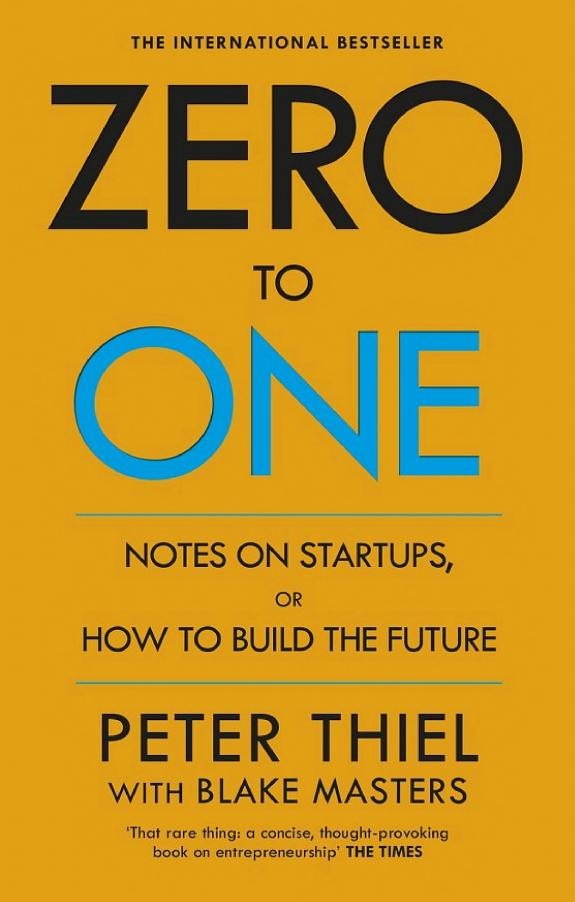
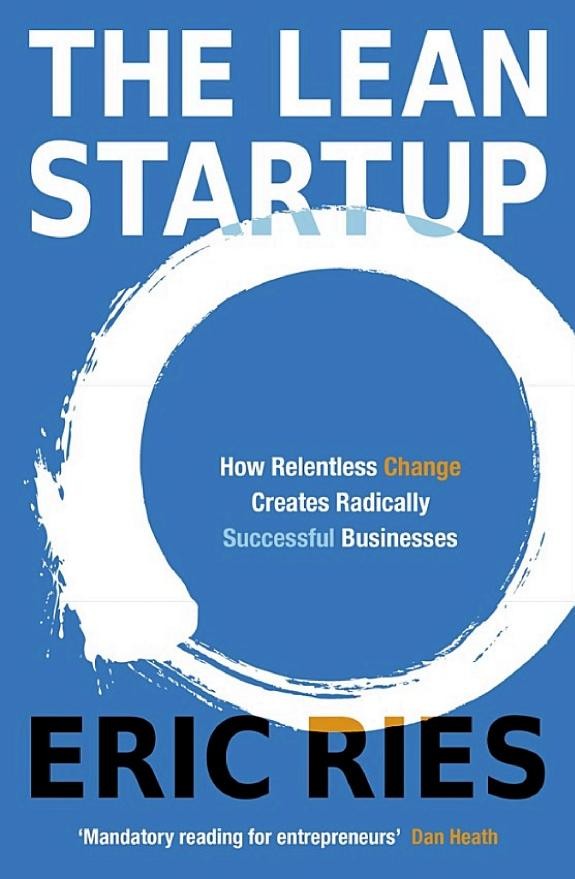
If you’re thinking of starting a business, or you’re already part way along the road, there’s a good chance two titles have been pressed into your hands: Peter Thiel’s Zero to One, written with Blake Masters, and Eric Ries’s The Lean Startup. They are among the most talked-about books for founders, and they’re often mentioned together. They’re also, at first glance, rather different in spirit. One invites you to think boldly about building something genuinely new; the other invites you to test your ideas in small, quick steps and learn from what you find.
This guide looks at what each book offers, where their ideas meet and where they pull in different directions, and how you might use both. We’ll finish with a simple “which stage are you at?” table, and point to a few of our other Book Club guides that connect with the same themes.
Zero to One is about deciding what to build: it encourages you to look for something new and valuable that few others see, and to think about how a business could become distinctive. The Lean Startup is about finding out whether it works: it offers a way of testing ideas quickly, learning from customers and deciding whether to change direction or carry on. Many readers find that Zero to One sharpens the question and The Lean Startup supplies the method for answering it. Both are lively, thoughtful reads.
The two books side by side
| Zero to One | The Lean Startup | |
|---|---|---|
| Author | Peter Thiel, with Blake Masters | Eric Ries |
| First published | 2014 | 2011 |
| Core idea | Aim to create something genuinely new, and think about how it could become distinctive | Treat a startup as an experiment: build, measure, learn, and adjust |
| Signature ideas | Going from zero to one, finding a “secret”, thinking about distinctiveness rather than competition | Build-measure-learn, minimum viable product, validated learning, pivot or persevere |
| Spirit | Bold, big-picture and full of conviction | Practical, iterative and evidence-led |
| Best for | Founders shaping an idea and a vision | Founders testing an idea and finding their first customers |
| Worth knowing | Compact and thought-provoking; many readers enjoy debating its ideas | Process-oriented, with plenty of examples; rewards a pen and paper |
| Difficulty | Very easy to read | Very easy to read |
What they share
- A love of starting things. Both books are written for people who want to build a new company and take the work seriously.
- Questioning conventional advice. Each invites you to think carefully rather than follow a standard recipe.
- Attention to customers and value. Both are ultimately about creating something that people want.
- Clear, quotable writing. Each is full of crisp ideas that are easy to remember and discuss with a co-founder.
Zero to One: aiming for something new
Zero to One was published in 2014. It grew out of notes taken by Blake Masters during a course Peter Thiel taught at Stanford University, and it carries the energy of a lecture. Thiel is a co-founder of PayPal and an early investor in several well-known technology companies, and the book draws on that experience.
Its title captures the central distinction. Going from one to n means copying what already works and doing more of it. Going from zero to one means creating something new. The book encourages founders to aim for the second.
A few of the ideas readers remember most:
- Distinctiveness over competition. Thiel argues that a business which stands apart from its rivals can create more lasting value than one fighting a crowded field.
- Finding a “secret”. He asks founders to look for something important that few others believe or see, and builds the book around that question.
- Thinking about the long term. The book encourages founders to consider how a business will hold its value over time.
- Power-law thinking. The idea that a small number of outcomes can matter far more than the rest, which shapes how one thinks about choosing a focus.
- A set of questions to ask. The book lists a handful of questions that every business should be able to answer, covering areas such as engineering (that is, technology), timing, people and distribution.
Many readers enjoy the book precisely because it takes a clear point of view. Whether or not you agree with every line, it is a wonderful prompt for a conversation with your co-founders.
Over the month, spend a little time each week on one question from the book. In week one, write down something you believe about your market that most people you know would not. In week two, say who would benefit if that were true. In week three, list what would have to be true for your idea to stand apart. In week four, share your answers with someone you trust and note what they say.
The Lean Startup: learning your way forward
The Lean Startup was published in 2011. Eric Ries drew on his own experience in start-ups, and on ideas from lean manufacturing, to propose a method for building a company under conditions of uncertainty. Its heart is a loop: build something small, measure how people respond, and learn from the result.
The key ideas of the book include:
- Minimum viable product. The simplest version of a product that lets you start learning, rather than waiting until everything is polished.
- Validated learning. Treating each step as a way of testing an assumption and gathering real evidence from customers.
- Pivot or persevere. Using what you have learned to decide whether to change direction or keep going.
- Measuring what matters. Looking for figures that show real progress, rather than ones that simply look encouraging.
Because it is built around a repeatable process, the book is popular with teams. It gives a shared language for discussing what you have tried and what you have learned, which can make planning conversations calmer and more concrete.
Choose one assumption about your product or idea, for example that customers will pay a particular price. Design the smallest, quickest test you can think of, run it in the first fortnight, and write down what you learned. Then decide, in plain words, whether to carry on, adjust or change direction, and repeat the cycle in the second fortnight.
A difference of emphasis, and why it is a productive one
Readers sometimes wonder whether these two books disagree. There is certainly a difference of emphasis. Zero to One champions ambitious, original thinking and encourages founders to hold a bold vision; The Lean Startup puts its trust in iteration and evidence, taking small steps and adjusting as you learn.
Seen another way, they are answering different questions. Zero to One asks, “What is worth building, and why would it stand apart?” The Lean Startup asks, “How do we find out, quickly and cheaply, whether we are on the right track?” A founder can ask both, and many do: the first helps you choose a direction worth exploring, the second helps you explore it wisely.
A helpful way to hold them together is to see vision and experiment as partners. A bold idea gives your experiments something worth testing, and good experiments help keep a bold idea grounded.
Which stage are you at?
Here is a gentle guide, based on what each book emphasises. Treat it as a starting point rather than a rulebook:
| Your stage | Where to start | Why |
|---|---|---|
| Still shaping the idea | Zero to One | Its questions help you think about what is worth building and why it might stand apart |
| Idea chosen, no revenue yet | The Lean Startup | Its build-measure-learn loop helps you find your first customers and test your assumptions |
| Early customers, finding your feet | The Lean Startup | Its focus on evidence helps you decide what to change and what to keep |
| Growing and thinking about long-term position | Zero to One | Its questions about durability and distinctiveness help with the bigger picture |
| Leading a team through uncertainty | The Lean Startup | It gives the team a shared, repeatable process and vocabulary |
| Looking for a conversation starter with co-founders | Both | One brings the big questions; the other brings the method |
Connecting these ideas to other Book Club reads
Starting a business draws on many skills, and several of our other guides connect naturally with these two books:
- Good decisions under uncertainty. Our guide to Thinking, Fast and Slow and Noise explores overconfidence and consistent judgement, both useful when choosing which experiments to run.
- Turning the loop into a routine. Build-measure-learn works best as a habit, which is where our guide to Atomic Habits and The Power of Habit comes in.
- Strategy and positioning. The questions about standing apart in Zero to One echo the thinking in The Art of War and The Prince, where preparation and position matter a great deal.
- Planning a campaign. If you are preparing a launch, our comparison of The 48 Laws of Power and The 33 Strategies of War looks at strategy as a campaign.
- Talking with customers and partners. Early customer conversations are a kind of negotiation, which our guide to Never Split the Difference and Getting to Yes explores with warmth and practical tools.
- Understanding people. Customers and co-founders are people first, and our guide to The 48 Laws of Power and The Laws of Human Nature looks at the tendencies behind behaviour.
- Leadership and reputation. A young company’s reputation grows from many small actions, a theme in our guide to The 48 Laws of Power and The Prince.
You can find all of these, and more as we add them, on our CROWNLEIGH Book Club page.
Our suggested reading order
If you are still deciding what to build, we’d suggest starting with Zero to One. It will give you a handful of memorable questions to take into your thinking. Then read The Lean Startup for a practical way of testing your answers with real customers. If you already have an idea and are keen to get going, it works beautifully to begin with The Lean Startup and come back to Zero to One once you have some early evidence and want to think about the bigger picture.
Frequently asked questions
Should I read Zero to One or The Lean Startup first?
If you are still shaping your idea, Zero to One is a lovely place to begin. If you have an idea and want to start testing it, The Lean Startup is a natural first read. Many founders enjoy either order.
Do Zero to One and The Lean Startup contradict each other?
They differ in emphasis rather than contradicting one another. One encourages bold thinking about what to build, and the other encourages careful testing of whether it works. Many founders find the two complement each other well, with vision setting the direction and experiments guiding the steps.
Which suits a first-time founder?
Each helps in a different way. The Lean Startup offers a clear process that many first-time founders find reassuring, while Zero to One offers questions that help you think about the shape of the whole business. Reading both gives you a fuller picture.
Do I need to read the whole of each book?
Not necessarily. Both are short enough to read in full, but both also reward dipping in. You might read a chapter a week and discuss it with a co-founder or a friend.
Can I read Zero to One and The Lean Startup together, and is it worth it?
Yes, and many people enjoy it. A pleasant approach is to read a chapter of one, then a chapter of the other, and try one idea from each over the same month. The 30-day tests above are an easy way to do just that.
A closing thought
Building a business takes both imagination and curiosity: the imagination to see something that does not yet exist, and the curiosity to find out whether it can work. These two books each champion one of those qualities, and together they make a warm, encouraging pair for anyone setting out. Whichever you open first, you are likely to finish with a few bold questions to ask and a few small experiments to try.
Book links go to Amazon; see our advertising disclosure.