Good to Great vs Built to Last
Jim Collins on how good companies become great, and on what lets visionary companies endure: two much-loved business books, compared. Here is what each offers, what has happened since and which to read first.
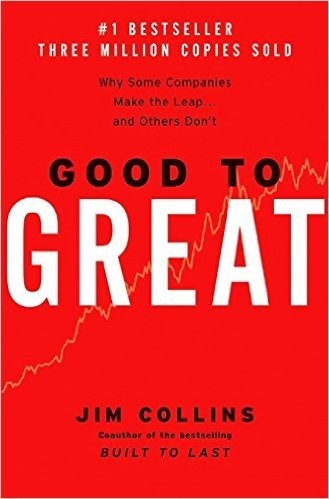
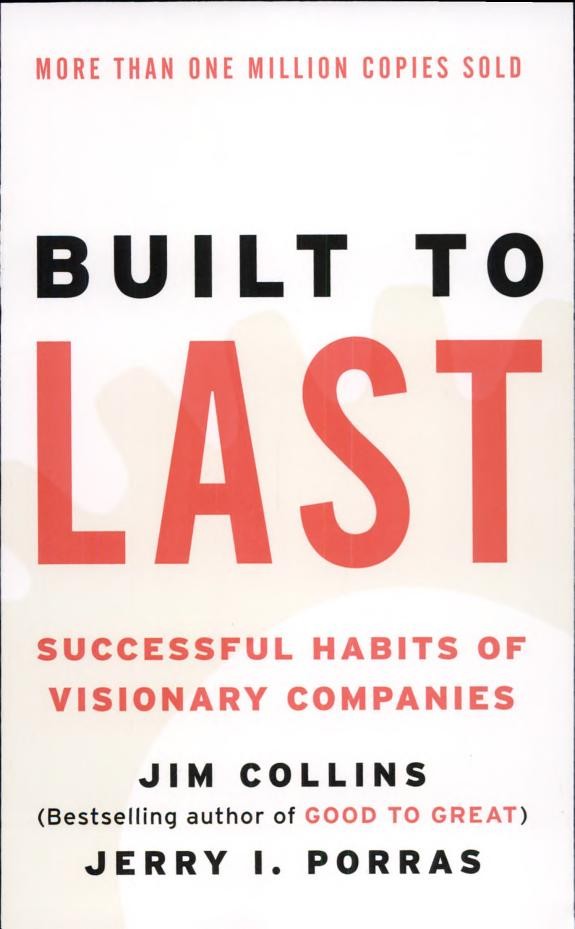
Few business books have been as widely read, or as often discussed, as Jim Collins’s Good to Great and Built to Last, the latter written with Jerry I. Porras. They sit side by side on countless leaders’ bookshelves, and they ask two closely related questions. One asks how a good company becomes a great one. The other asks what lets an outstanding company keep going, generation after generation.
This guide looks at what each book offers, how they fit together and which might suit you, your team or your business best. We’ll also take a thoughtful look at what readers have learned in the years since these books were published, because the later stories of some of the featured companies make for a fascinating addition to the reading. And we’ll point to a few of our other Book Club guides that connect with the same ideas.
Good to Great is about the leap: what the companies Collins studied did to move from good results to great ones, with ideas such as Level 5 leadership, getting the right people in place and the flywheel. Built to Last is about longevity: what the long-lived “visionary” companies it studied had in common, with ideas such as core ideology, big audacious goals and “clock building”. Many readers find Good to Great a natural fit for growth and turnaround, and Built to Last a natural fit for founders thinking about culture and lasting purpose. Both are a pleasure to read with a curious eye.
The two books side by side
| Good to Great | Built to Last | |
|---|---|---|
| Author | Jim Collins | Jim Collins and Jerry I. Porras |
| First published | 2001 | 1994 |
| Core question | How can a good company become a great one? | What do enduring, visionary companies have in common? |
| Signature ideas | Level 5 leadership, “first who, then what”, the hedgehog concept, the flywheel | Core ideology, big audacious goals, “clock building”, preserving the core while stimulating progress |
| Method | Comparing companies that made a sustained leap with similar companies that did not | Comparing long-lived “visionary” companies with similar companies that did not stand out in the same way |
| Best for | Leaders working on growth, focus and turnaround | Founders and leaders thinking about culture, purpose and longevity |
| Worth knowing | Based on a study of companies up to its publication date, so later events add useful context | Written earlier still, so it is a lovely snapshot of its period |
| Difficulty | Easy to read | Easy to read, with a more detailed research feel |
What they share
- A research-led approach. Both books are built on comparisons between companies, which gives the ideas a tangible, evidence-minded flavour.
- Memorable language. Both have given business conversation a set of phrases that people still use, from “flywheel” to “BHAG”.
- A belief in people and purpose. Both stress that great organisations are shaped by the people in them and the values they share.
- Accessible storytelling. Each book keeps its ideas grounded with company stories that are easy to follow.
Good to Great: how good becomes great
Good to Great appeared in 2001. Collins and his research team identified a group of companies whose results rose from ordinary to exceptional and stayed there, and compared them with similar companies that did not make the same leap. The book distils what they found into a handful of memorable ideas:
- Level 5 leadership. Leaders who combine personal humility with strong professional determination.
- First who, then what. Getting the right people on board before settling the direction of travel.
- Confronting the brutal facts. Facing reality honestly while keeping faith that you can prevail in the end.
- The hedgehog concept. A simple idea at the overlap of what you can be best in the world at, what drives your economics and what you care about deeply.
- The flywheel. The picture of steady, accumulating effort that builds momentum over time, rather than a single dramatic push.
The flywheel is perhaps the book’s most enduring image, and many teams still use it to describe how their own work compounds. It is a lovely way of thinking about steady progress.
Draw your own hedgehog concept on one sheet of paper this month. In week one, list what you or your team could be best at. In week two, note what drives your economics. In week three, write down what you care about most. In week four, look for where the three overlap, and share it with a colleague.
Built to Last: what keeps a company going
Built to Last, written by Collins with Jerry I. Porras and published in 1994, grew out of a research project at Stanford. The authors studied a set of long-established “visionary” companies and compared each with a similar rival, looking for what set the visionary ones apart over many decades.
Some of the book’s best-known ideas:
- Clock building, not time telling. Rather than relying on a single brilliant idea or leader, build an organisation that can keep ticking long after any one person has gone.
- Core ideology. A set of core values and a purpose that stay steady, giving a company a lasting sense of identity.
- Preserve the core and stimulate progress. Hold on to what is fundamental while staying open to change in everything else.
- Big, hairy, audacious goals. Bold, clear goals, often abbreviated to BHAGs, that rally people around an exciting ambition.
- The genius of the AND. The idea that organisations can pursue seemingly opposite aims together, rather than choosing one or the other.
For founders, the book is a gentle prompt to think early about the kind of organisation they want to build, and about the values that will still matter in twenty or thirty years.
Write a short statement of your organisation’s core values and purpose, in no more than five lines. Over the month, ask three colleagues to tell you what they think the values are, without seeing yours. Compare the answers, and note where they match and where a conversation might help.
A thoughtful look at what came after
One of the pleasures of reading these books now is that time has added a second layer to them. Both were based on companies as they stood at the time of the research. In the years since, some of the featured companies went on thriving, while others met real challenges. Circuit City, one of the companies profiled in Good to Great, later filed for bankruptcy, and Fannie Mae entered government conservatorship during the 2008 financial crisis.
Collins himself returned to the subject in a later book, How the Mighty Fall, which looks at how once-strong companies decline. That sits very naturally beside the earlier two.
This is also a good moment to enjoy a little critical thinking. Whenever a study looks back at successful companies to find what they have in common, readers can ask a few friendly questions:
- Would we see the same pattern in companies that were not chosen? Both books did use comparison companies, which helps, but it is still worth asking whether a pattern holds more widely, because looking back at successful companies can naturally make some qualities seem especially decisive.
- How much is skill, and how much is circumstance? Good fortune and timing play a part in every story.
- Do the ideas still help even if some of the examples have changed? Often the answer is yes: a principle such as getting the right people on board can be useful whatever happened to a particular firm.
These questions do not take anything away from the books. They simply make the reading richer, and they echo themes from our guide to Thinking, Fast and Slow and Noise, which explores overconfidence and the way a good story can feel especially persuasive.
Where the two books feel different
The clearest difference is the question each asks. Good to Great looks at a leap in performance and asks what produced it. Built to Last looks at a long span of years and asks what sustained it. One is about momentum; the other is about endurance.
They also differ in feel. Good to Great moves briskly through a small set of concepts that are easy to remember and share. Built to Last has a more detailed research flavour and a broader range of ideas, which is part of what makes it a rewarding companion once you have met the first.
Which one suits which situation?
Here is a gentle guide, based on what each book emphasises. Treat it as a starting point rather than a rulebook:
| Your situation | Where to start | Why |
|---|---|---|
| Leading a business that wants to improve its results | Good to Great | Its ideas on focus, people and momentum are aimed at the step up |
| Turning around a team or business | Good to Great | The hedgehog concept and the flywheel give a clear way to refocus |
| Founding a new company and shaping its culture | Built to Last | Its emphasis on values and purpose helps you set foundations early |
| Planning for the long term or for succession | Built to Last | “Clock building” invites you to think beyond any one leader |
| Wanting a shared vocabulary for your leadership team | Good to Great | Short, memorable ideas are easy to discuss together |
| Reading widely about organisations | Both | Together they cover the leap and the long haul |
Connecting these ideas to other Book Club reads
Leadership and organisations run through many of the books we have looked at. A few connections you might enjoy:
- Turning ideas into routines. The flywheel is really a habit of steady effort, which is the heart of our guide to Atomic Habits and The Power of Habit.
- Founding and testing. If you are building a company from scratch, our comparison of Zero to One and The Lean Startup pairs nicely with Collins’s thoughts on purpose and values.
- Judgement and consistency. The “first who” principle relies on good judgement about people, a subject explored in Thinking, Fast and Slow and Noise.
- Leadership across the centuries. Machiavelli’s reflections on lasting authority in our guide to The 48 Laws of Power and The Prince make an intriguing companion to Collins on endurance.
- Strategy and focus. The hedgehog concept echoes the themes of preparation and position in The Art of War and The Prince and the campaign thinking in The 48 Laws of Power and The 33 Strategies of War.
- Understanding the people in the organisation. Our guide to The 48 Laws of Power and The Laws of Human Nature looks at the tendencies behind behaviour, which shape every culture.
- Conversations that move things forward. Leaders spend a great deal of time in negotiation, which our guide to Never Split the Difference and Getting to Yes explores with warmth and practical tools.
You can find all of these, and more as we add them, on our CROWNLEIGH Book Club page.
Our suggested reading order
If you are focused on improving how an existing organisation performs, we’d suggest starting with Good to Great. Its ideas are concise and easy to put on a whiteboard. Then read Built to Last for a broader view of purpose, culture and longevity. If you are founding something new, it works beautifully to begin with Built to Last and come to Good to Great afterwards for the language of focus and momentum.
Whichever you open first, try reading with a pen in hand. Both books reward a few questions in the margin.
Frequently asked questions
Should I read Good to Great or Built to Last first?
If you want ideas for improving an organisation’s results, Good to Great is a lovely place to begin. If you are thinking about culture and long-term purpose, Built to Last is an equally good first read. Many readers enjoy either order.
Is Good to Great still relevant after later events at some of its companies?
Many readers feel that it is, in the sense that its ideas are principles you can test against your own experience, such as getting the right people on board and building steady momentum. Reading it alongside later events, and alongside Collins’s own follow-up on decline, makes it even more thought-provoking.
Do I need to read both?
Not at all. Each stands on its own. Reading both simply gives you two complementary views, one on the leap and one on the long haul.
Are these books suitable for people outside big companies?
Yes. Although the examples come from large organisations, the ideas, such as clear values, the right people and steady effort, apply just as well to small teams, charities and start-ups.
Can I read Good to Great and Built to Last together, and is it worth it?
Yes, and many people enjoy it. A pleasant approach is to read a chapter of one, then a chapter of the other, and try one idea from each over the same month. The 30-day tests above are an easy way to do just that.
A closing thought
Two books, one author and a shared curiosity about what makes organisations flourish: that is a rich place to explore. Whether you begin with the leap or the long haul, you are likely to finish with a handful of memorable ideas, a few questions of your own and a little more appreciation for how much good work depends on people and purpose.
Book links go to Amazon; see our advertising disclosure.