Emotional Intelligence vs Emotional Intelligence 2.0
Daniel Goleman’s 1995 classic on why emotional skills matter, and Travis Bradberry and Jean Greaves’s practical guide of 66 strategies: two books on emotional intelligence, compared, with a worked workplace example and a suggested reading order.
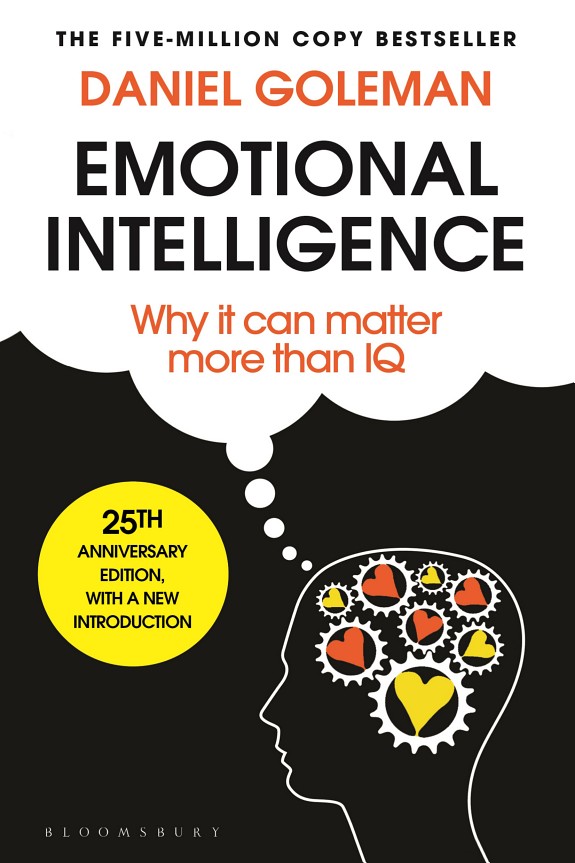
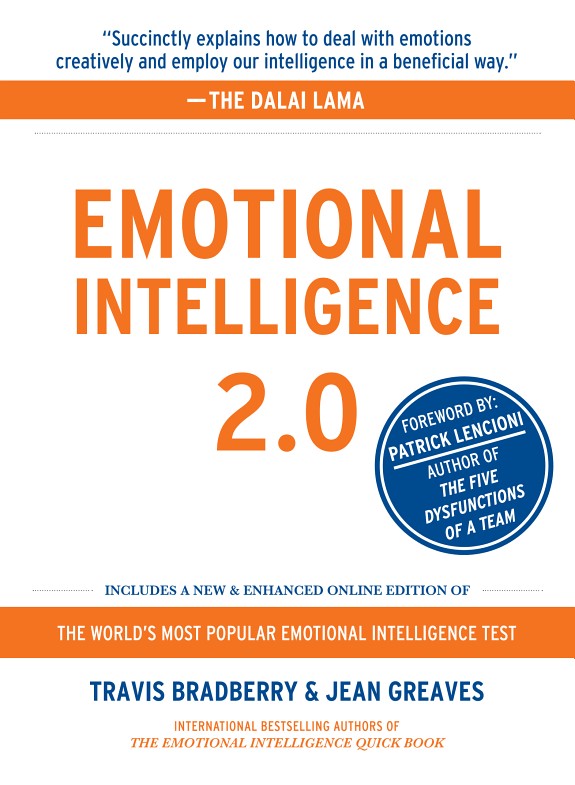
Search for a book on emotional intelligence and two titles with almost the same name appear side by side. Daniel Goleman’s Emotional Intelligence (1995) is the book that brought the idea to a wide audience, arguing that our emotional skills can matter as much as our intellect in work and life. Travis Bradberry and Jean Greaves’s Emotional Intelligence 2.0 (2009) takes the idea in a more practical direction, with a short explanation of the model and a collection of strategies to try. They are often recommended together, and the similar names can make it hard to tell which one you want.
This guide looks at what each book offers, how they compare and which might suit you best. We have also added a worked workplace example and a reading order, and we will point to a few of our other CROWNLEIGH Book Club guides that connect with the same themes.
Emotional Intelligence is the idea book: it explains what emotional intelligence is, draws on research into the brain and behaviour, and is commonly summarised as five areas of emotional skill. Emotional Intelligence 2.0 is the practice book: it is short and organised around four skills, and it offers 66 strategies you can try. Many readers find Emotional Intelligence the richer read for understanding, and Emotional Intelligence 2.0 the quicker route to things to do on Monday morning. If you want the background, begin with Goleman. If you want exercises, begin with Bradberry and Greaves.
The two books side by side
| Emotional Intelligence | Emotional Intelligence 2.0 | |
|---|---|---|
| Authors | Daniel Goleman | Travis Bradberry and Jean Greaves |
| Full title | Emotional Intelligence: Why It Can Matter More Than IQ | Emotional Intelligence 2.0 |
| First published | 1995 | 2009 |
| Core idea | Emotional skills such as self-awareness, self-control and empathy shape how well we live and work, and they can be developed | Emotional intelligence can be understood as four skills, and each can be strengthened with specific strategies |
| Structure | Five areas, often summarised as self-awareness, self-regulation, motivation, empathy and social skills | Four skills: self-awareness, self-management, social awareness and relationship management |
| Signature ideas | How the emotional brain can override reasoned thought; the value of self-control; empathy as a foundation of relationships | 66 strategies; a self-assessment that helps you choose where to focus |
| Style | Journalistic and research-led, with stories from science, schools and workplaces | Short, practical and self-help in format, with brief chapters of strategies |
| Best for | Readers who like to understand the ideas and the evidence behind them | Readers who want a practical programme to work through |
| Things to bear in mind | Written in 1995, so some of the science has moved on, and researchers continue to debate how emotional intelligence is best measured | More of a workbook than a theory book, so it goes lighter on research and background |
What they share
- A belief that emotional skills can be developed. Both books treat emotional intelligence as something you can build, not a fixed trait.
- Self-awareness first. Each starts from noticing your own feelings and reactions.
- Relationships at work. Both are interested in how emotional skills affect teams, managers and colleagues.
- A general audience. Neither assumes any background in psychology, and both are written in plain language.
Emotional Intelligence: why it can matter more than IQ
Daniel Goleman is a psychologist and science journalist, and Emotional Intelligence gathered research from psychology and neuroscience into a book for general readers. The concept itself had been described by the researchers Peter Salovey and John Mayer a few years earlier, and Goleman’s book helped to make it widely known. Its central claim, reflected in the subtitle, is that emotional skills can be an important complement to intellectual ability in determining how people fare.
Some of the key ideas:
- Five areas of emotional intelligence. Knowing your own emotions, managing them, motivating yourself, recognising emotions in others and handling relationships. These are often summarised as self-awareness, self-regulation, motivation, empathy and social skills, a framework for thinking about emotional skill.
- The emotional brain. The book describes how strong emotions can sometimes override careful thought, a pattern Goleman describes as an ‘emotional hijacking’, linked to the brain’s amygdala.
- Self-control. The ability to delay gratification and manage impulses is presented as an important foundation, and the book discusses well-known research on children and self-control.
- Empathy. Reading other people’s feelings is described as central to good relationships.
- Emotional learning. The later chapters look at how emotional skills might be taught, particularly to children.
The book is often enjoyed for its curiosity and its range, and as an introduction to a topic that is now widely discussed in workplaces.
Each evening for a month, write down one moment from the day when you felt a strong emotion. Note what triggered it, what you did and what you would do differently. After two weeks, look for patterns, such as particular situations or times of day, and choose one to approach differently.
Emotional Intelligence 2.0: a practical programme
Travis Bradberry and Jean Greaves are co-authors of Emotional Intelligence 2.0, which presents emotional intelligence as a skill set that can be strengthened. The book is short, and much of it is taken up with strategies, each described briefly. It organises the topic into four skills, which it groups into those that concern you and those that concern your dealings with others.
Some of the key ideas:
- Four skills. Self-awareness, self-management, social awareness and relationship management.
- 66 strategies. A menu of practical ideas, organised under each of the four skills, from which readers choose a few to try.
- A self-assessment. The book is designed to be used with an assessment, which helps you see which skills to focus on first. Some copies come with a code for taking it online, so it is worth checking that the edition you buy includes one, especially if you buy second-hand.
- Choose and practise. The suggestion is to pick a small number of strategies and keep practising them.
The book moves quickly from ideas to action, which makes it a convenient starting point for team workshops and personal development plans.
If your edition includes a self-assessment, take it and note your lowest-scoring skill. If not, choose the skill you would most like to strengthen. Select two strategies from the book for that skill, practise them for a month, and each week write one line on what you noticed. At the end, decide whether to keep them, swap them or add another.
Where the two books agree, and where they feel different
The two books agree on the main point: emotional skills matter, and they can be developed. They also share a wariness of the idea that cleverness alone is enough. The differences lie in what each is trying to do for the reader.
Emotional Intelligence is trying to explain. It wants you to understand why emotions behave as they do, how that connects to the brain and to behaviour, and why that matters for families, schools and workplaces. Emotional Intelligence 2.0 is trying to equip. It assumes you already accept the idea, and moves quickly to what you might do next. The two can work as a pair: one gives you reasons to care, and the other gives you something to try. The field has also moved on since 1995, and researchers continue to discuss how best to define and measure emotional intelligence. Both books are best read as useful frameworks, not as the final word.
A worked example: a tense team meeting
To see the difference in flavour, imagine a manager who has just received sharp feedback from a colleague in a team meeting. The two columns below are short illustrations of how each book might shape the response, not a summary of either.
| Moment | In the style of Emotional Intelligence | In the style of Emotional Intelligence 2.0 |
|---|---|---|
| Noticing | Recognise the rush of emotion, and understand why feelings can crowd out careful thought | Name the feeling, and rate how strongly it is affecting you |
| Pausing | Give yourself a moment before replying, as an exercise in self-control | Pick a strategy you have practised, such as taking a breath or counting before you speak |
| Understanding the other person | Ask what the colleague might be feeling, and what lies behind the tone | Use the social awareness skill: listen to what is said and what is not |
| Responding | Reply in a way that keeps the relationship intact | Use a relationship strategy, such as acknowledging the point before explaining your view |
| Afterwards | Reflect on what the moment taught you about your own patterns | Note what worked, and add or swap a strategy for next time |
Notice how the first column builds understanding and the second builds a routine. You may well want both: some understanding to know why a habit matters, and some practice to make it stick.
Which one suits which situation?
Here is a quick guide, based on what each book emphasises. Use it as a prompt rather than a rulebook:
| Your situation | Where to start | Why |
|---|---|---|
| You are curious about the ideas and the research | Emotional Intelligence | It explains the background in depth |
| You want a practical programme to follow | Emotional Intelligence 2.0 | It is built around strategies and practice |
| You are a manager planning a team workshop | Emotional Intelligence 2.0 | Its short chapters and strategies lend themselves to group use |
| You are interested in emotions and the brain | Emotional Intelligence | It spends more time on the science |
| You would like both the reasons and the routines | Both | One explains why, the other suggests how |
If you enjoyed these ideas
A handful of our other CROWNLEIGH Book Club guides connect closely with the ideas in these two books:
- Presence and temperament. How quieter and warmer styles come across at work appears in our guide to Quiet and The Charisma Myth.
- Connecting with people. Warm, practical ideas about conversation are in our guide to How to Win Friends and Influence People and How to Talk to Anyone.
- Leading with care. Two views of leadership, one centred on responsibility and one on care, feature in our guide to Extreme Ownership and Leaders Eat Last.
- Emotion in negotiation. The role of empathy under pressure is explored in our guide to Never Split the Difference and Getting to Yes.
- How we judge. How fast, emotional reactions shape decisions is explored in our guide to Thinking, Fast and Slow and Noise.
You can find all of these, and more as we add them, on our CROWNLEIGH Book Club page.
Our suggested reading order
If you are new to the subject, we would suggest starting with Emotional Intelligence. It gives you the ideas and the vocabulary, and it makes the later practice feel purposeful. Then read Emotional Intelligence 2.0 when you are ready to try specific strategies. If you already accept the idea and want to begin practising straight away, it works equally well the other way round: begin with Emotional Intelligence 2.0 for the exercises, and follow with Emotional Intelligence when you would like to know more about the thinking behind them.
Frequently asked questions
Should I read Emotional Intelligence or Emotional Intelligence 2.0 first?
If you would like to understand the idea and its background, Emotional Intelligence is a good first read. If you want exercises you can start this week, Emotional Intelligence 2.0 is a natural place to begin. Either order can work, and each is readable over a few weeks of evenings.
Which emotional intelligence book is best for managers?
It depends on what you need. Emotional Intelligence is a good choice for understanding why emotional skills matter in teams and organisations. Emotional Intelligence 2.0 is a good choice if you want a practical set of strategies to try and to share with a team. Reading both can be useful.
Is Emotional Intelligence 2.0 a sequel to Emotional Intelligence?
Not in a strict sense. It is a separate book by different authors, which draws on the same general idea and presents it in a more practical format. You do not need to read one to understand the other.
Do I need to read both?
Not necessarily. Each stands well on its own. Reading both can give you a sense of why emotional skills matter and a set of ways to build them.
Can I read Emotional Intelligence and Emotional Intelligence 2.0 together, and is it worth it?
Yes, and some readers like to do exactly that. One approach is to read a chapter of one, then a chapter of the other, and try one idea from each over the same month. The 30-day tests above are an easy way to do just that.
A closing thought
Read together, the two books suggest a simple idea: that how we handle our feelings, and how we respond to other people’s, is a skill that can grow with attention and practice. Whichever you open first, you may finish with a clearer sense of what happens inside you in difficult moments, and a few small things to try next time.
Book links go to Amazon; see our advertising disclosure.