Range vs Peak
David Epstein on why breadth and a late start can pay off, and Anders Ericsson and Robert Pool on how deliberate practice builds expertise: two books on how people become good at things, compared, with a ‘which path are you on’ guide and a suggested reading order.
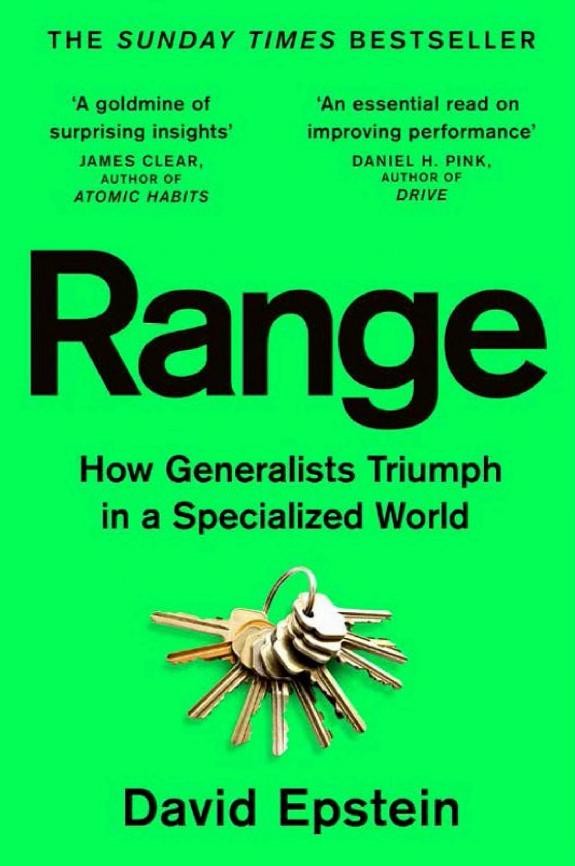
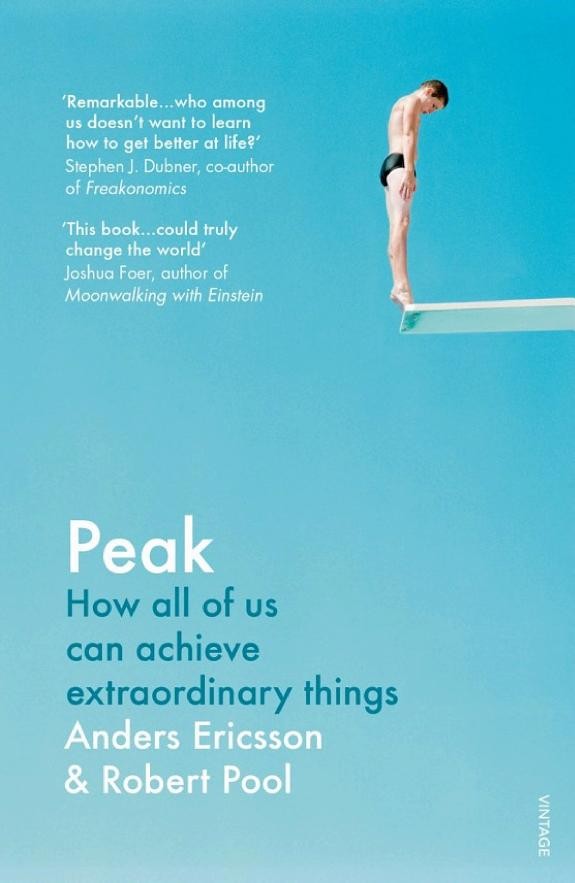
How do people become genuinely good at things? One popular answer says to start early, choose a field and practise relentlessly. Another says to explore widely, try different things and settle on a path later. Two well-known books seem to stand on opposite sides of that debate. Anders Ericsson and Robert Pool’s Peak (2016) presents the science of deliberate practice, drawn from decades of research on experts. David Epstein’s Range (2019) makes the case that breadth, varied experience and a later start often serve people well, particularly in complex and changing fields. Read carefully, they are less opposed than their reputations suggest, and the two can complement each other.
This guide looks at what each book offers, how they compare and which might suit you best. Because the real question for most of us is which approach fits our own situation, we have added a ‘which path are you on’ guide, along with a reading order. We will also point to a few of our other CROWNLEIGH Book Club guides that connect with the same themes.
Range is about choosing and exploring: it argues that in many modern fields, people who sample widely, draw on analogies from other areas and take time to find the right fit often thrive, and it is a thoughtful companion for career decisions. Peak is about building skill: it describes how focused, well-designed practice with feedback develops expertise, and it is a practical guide to getting better at something specific. Many readers find Range the more helpful book when deciding what to pursue, and Peak the more helpful once you have chosen. Neither book dismisses the other approach.
The two books side by side
| Range | Peak | |
|---|---|---|
| Authors | David Epstein | Anders Ericsson and Robert Pool |
| Subtitle | Why Generalists Triumph in a Specialized World | Secrets from the New Science of Expertise |
| First published | 2019 | 2016 |
| Core idea | Breadth, varied experience and a delayed start can be strengths, especially in complex or unpredictable fields | Expertise is built through deliberate practice: focused, structured effort with feedback, guided by good methods |
| Signature ideas | Kind and wicked learning environments; sampling periods; match quality; analogical thinking; the value of outsiders | Deliberate practice; purposeful practice; mental representations; the problem with the ‘10,000-hour rule’ as popularly told |
| Evidence from | Sport, music, science, business and the arts, with studies of how people learn and perform | Decades of research on expert performance in music, chess, memory, sport and other fields |
| Best for | Readers choosing a career, changing direction or working across fields | Readers who want to improve a specific skill, or who coach, teach or train others |
| Things to bear in mind | Its examples are chosen to make a case, so it is worth testing the ideas against your own field | Its methods work best in fields with established training approaches, so some situations need adapting |
| Reading experience | Story-led and wide-ranging, with many short profiles | More structured, with research woven through and a clear set of principles |
What they share
- Interest in how people learn. Both books are built on research into learning and performance, and both are written for general readers.
- The value of feedback. Both treat prompt, accurate feedback as important to learning, though they place it in different settings.
- Doubt about shortcuts. Neither suggests that talent alone, or a quick trick, produces excellence.
- Attention to the ‘10,000-hour’ idea. Both discuss it, and both suggest that it has been oversimplified in popular retellings.
Peak: how deliberate practice builds expertise
Anders Ericsson was a psychologist who spent his career studying how experts develop their skills, and Peak, written with the science writer Robert Pool, brings that research to a general audience. A great deal of the book is about what separates ordinary effort from the kind of practice that leads to real improvement, and about what the research actually says about talent.
Some of the key ideas:
- Deliberate practice. A specific kind of practice with clear goals, full attention, immediate feedback and work at the edge of your current ability, ideally guided by a teacher or proven training method.
- Purposeful practice. A more accessible version for fields without formal training methods, built on well-defined goals, focus, feedback and willingness to leave your comfort zone.
- Mental representations. Experts build detailed mental models that help them see patterns, plan ahead and notice mistakes.
- The popular ‘10,000-hour rule’. Ericsson explains that the figure came from a study of violinists at a Berlin music academy, that it was an average (and not every player in the group had reached it), and that there is nothing magical about the number. What matters, he argues, is the kind of practice as well as the hours.
- Adaptable abilities. The book argues that the brain and body are more adaptable than we often assume, and that this is part of why practice works.
The book is often appreciated as a practical, encouraging guide to improving at something specific.
Choose one skill you would like to improve. Define a specific goal for the month, practise for a short, focused session each day, and find a way to get feedback, from a coach, a recording or a measurable result. Each week, adjust the task so that it stays just beyond your current ability, and note what changes.
Range: why breadth can be an advantage
David Epstein is a journalist and author who has written about sport and science, and Range draws on research and stories from many fields to explore the benefits of breadth. The book examines the idea that early, narrow specialisation is the best route to success. It suggests that in many situations, particularly those that are complex and change over time, a broader path can be just as effective, and sometimes more so.
Some of the key ideas:
- Kind and wicked environments. Some fields offer clear rules and quick feedback, where repetition works well. Others are messier, and benefit from flexible thinking.
- The sampling period. Many successful people tried a variety of activities before settling, and found a better fit as a result.
- Match quality. Finding a good fit between a person and a role can matter more than an early head start.
- Analogical thinking. Ideas from one area can unlock problems in another, and people with varied experience often find these links.
- The outsider’s view. People from outside a field sometimes solve problems that insiders find stubborn.
Readers often enjoy the book for its reassurance that a winding path can be a valuable one, and for the way it invites you to look at your own experience as an asset.
Over the month, spend a few hours trying something outside your usual field, such as a short course, a conversation with someone in a different line of work or a small project. Afterwards, write down one idea or analogy from it that you could apply to your own work, and one thing you learned about what you enjoy.
Where the two books agree, and where they feel different
Despite their reputations, the two books are not simple opposites. Range does not argue that practice is unimportant, and Peak does not argue that everyone should specialise early. Epstein’s case is mostly about the beginning of a path and about complex fields. Ericsson’s case is mostly about how skill develops once you are working on something specific.
The difference is largely one of emphasis and setting. Peak applies most directly in fields with clear rules and established training, such as music, chess and sport, where the path to improvement can be mapped out. Range speaks most directly to fields where problems are open-ended and the rules change, such as many modern careers. A useful way to hold both in mind is that Range helps you decide where to aim, and Peak helps you improve once you are aiming. The two books also offer different kinds of encouragement: Range for people who feel they started late or changed direction, and Peak for people who want a method to follow.
Which path are you on?
Because the two books answer different questions, a short flow can help you decide where to begin. Treat it as a prompt rather than a rule:
| Question | If your answer is… | Where to start |
|---|---|---|
| Do you know which field you want to be in? | No, I am still exploring or considering a change | Range |
| Yes, I have chosen a field | Peak | |
| Is your field one with clear rules and quick feedback, such as an instrument, a sport or a technical craft? | Yes | Peak |
| No, it is complex and changes often | Range | |
| What is your main goal right now? | To decide what to do next | Range |
| To get measurably better at a particular skill | Peak | |
| Do you coach, teach or manage others? | Yes, and I want to help them improve | Peak |
| Yes, and I want to help them find the right role | Range | |
| Would you like both? | Yes | Both: first Range to choose, then Peak to build |
If you enjoyed these ideas
A handful of our other CROWNLEIGH Book Club guides connect closely with the ideas in these two books:
- Foxes and hedgehogs. The value of drawing on many perspectives appears in our guide to Superforecasting and The Signal and the Noise.
- Habits and practice. How routines make improvement stick is explored in our guide to Atomic Habits and The Power of Habit.
- Trying things out. Learning from small experiments is the theme of our guide to Rework and The Lean Startup.
- How we judge. The limits and strengths of expert judgement feature in our guide to Thinking, Fast and Slow and Noise.
- Focus and priorities. Choosing what to work on is explored in our guide to Getting Things Done and Eat That Frog.
You can find all of these, and more as we add them, on our CROWNLEIGH Book Club page.
Our suggested reading order
If you are still deciding where to put your energy, we would suggest starting with Range. It speaks to anyone with a varied background, and it encourages you to treat exploration as part of the process. Then read Peak when you have a direction and want to improve, for its clear principles on how to practise. If you have already chosen your field and are impatient to get better, it works equally well the other way round: begin with Peak for the method, and follow with Range for a wider sense of how people find their fit and keep growing.
Frequently asked questions
Should I read Range or Peak first?
If you are choosing a direction, Range is a good first read. If you have chosen and want to improve, Peak is a natural place to begin. Either order can work, and each is readable over a few weeks of evenings.
Is Range or Peak better for career development?
They help with different parts of it. Range is useful for thinking about which path to take and how to use a varied background. Peak is useful for building particular skills within the path you have chosen. Using both can be helpful.
Do the two books contradict each other?
Not directly. They study different questions in different kinds of field. One looks at how people find and shape a path, and the other at how people build skill once they are on one. Both discuss the popular ‘10,000-hour rule’, and both suggest that it is too simple.
Do I need to read both?
Not necessarily. Each stands well on its own. Reading both can give you a way of choosing a path and a method for improving along it.
Can I read Range and Peak together, and is it worth it?
Yes, and some readers like to do exactly that. One approach is to read a chapter of one, then a chapter of the other, and try one idea from each over the same month. The 30-day tests above are an easy way to try it.
A closing thought
Read together, the two books suggest a simple idea: that getting good at something involves both finding the right place to put your effort and then giving it focused attention. Whichever you open first, you may finish with a clearer sense of your own path and of what to practise next.
Book links go to Amazon; see our advertising disclosure.