Extreme Ownership vs Leaders Eat Last
Jocko Willink and Leif Babin on taking responsibility, and Simon Sinek on building a circle of safety: two popular leadership books, compared, with an office scenario for each and a suggested reading order.
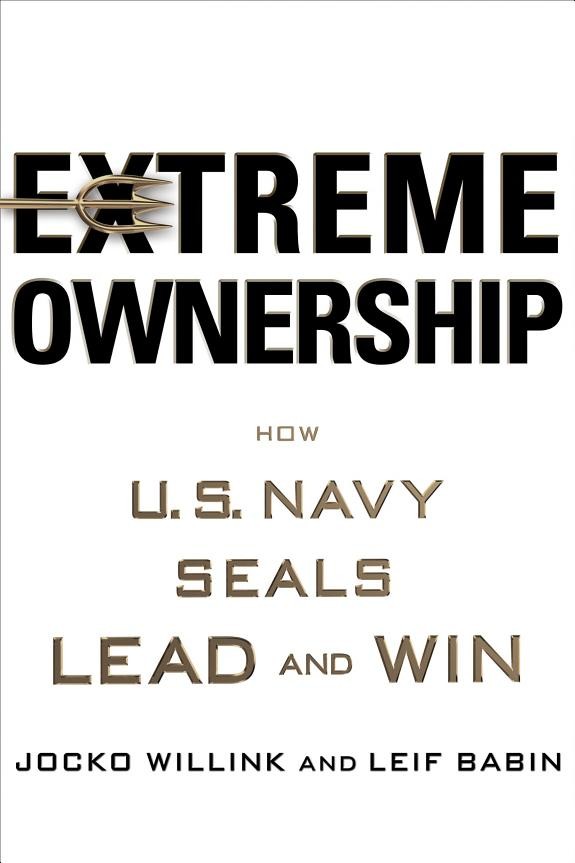
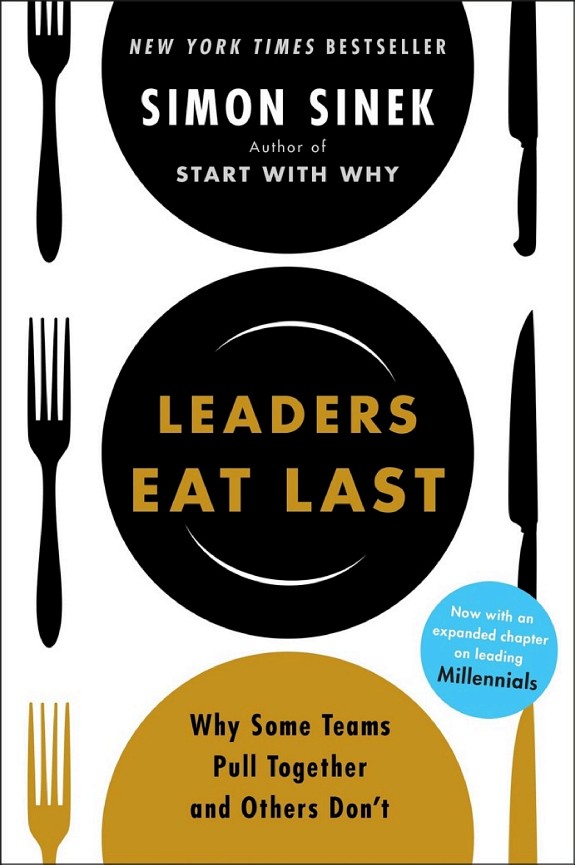
What makes a leader someone people are glad to follow? Two popular books answer from different directions. Extreme Ownership, by former Navy SEAL officers Jocko Willink and Leif Babin, draws on experiences in Iraq to make the case for taking full responsibility for everything in your world. Leaders Eat Last, by Simon Sinek, asks how leaders can build the kind of trust and safety in which people look out for one another. They are often recommended together, and they sit comfortably side by side.
This guide looks at what each book offers, how they fit together and which might suit you best. We will walk through an office scenario for each, and have a friendly word about how well ideas from the military carry over into everyday workplaces. Along the way, we will point to a few of our other Book Club guides that connect with the same themes.
Extreme Ownership is about accountability: it suggests that leaders do best when they own every outcome in their team, keep plans simple and give others room to lead. Leaders Eat Last is about culture: it suggests that when leaders create what Sinek calls a “circle of safety”, people feel secure enough to cooperate and give their best. Many readers find Extreme Ownership a motivating call to take responsibility and Leaders Eat Last a warm reminder that people do their best work when they feel safe. Both are written to encourage, and both are best read with your own workplace in mind.
The two books side by side
| Extreme Ownership | Leaders Eat Last | |
|---|---|---|
| Authors | Jocko Willink and Leif Babin | Simon Sinek |
| Background | Former U.S. Navy SEAL officers who served together in Iraq and later founded a leadership consultancy | Author and speaker on leadership, known for his earlier book Start With Why |
| First published | 2015 | 2014 |
| Core idea | Leaders take full ownership of everything in their world, and this can support the team’s success | Leaders who create a circle of safety help their people trust and look after one another |
| Signature ideas | Extreme ownership, “no bad teams, only bad leaders”, cover and move, keeping plans simple, decentralised command | The circle of safety, the role of trust, and the idea that leaders look after their people first |
| Focus | Accountability, discipline and clear action | Culture, trust and the wellbeing of people |
| Best for | Readers who like direct, action-oriented advice | Readers who like to think about culture and the human side of work |
| Reading experience | Story-led, with a battlefield account followed by a business lesson in each chapter | Reflective and story-led, mixing examples from the military, business and science |
What they share
- Leadership as service. Both books present leaders as people who are responsible for those they lead.
- Lessons from the military. Each draws on military experience, though in different ways, to explain ideas about teams.
- A focus on trust. Both recognise that teams tend to do better when people trust one another and their leader.
- Stories you can picture. Both rely on vivid examples to bring their ideas to life.
Extreme Ownership: responsibility, simplicity and trust in the team
Jocko Willink and Leif Babin served together in a Navy SEAL task unit during the 2006 deployment to Ramadi, Iraq, and Extreme Ownership grew out of the lessons they drew from those months. Each chapter pairs a story from the battlefield with a related story from the business world, to show how the same principle can apply in both places.
Some of the book’s key ideas:
- Extreme ownership. The authors suggest that a leader is responsible for everything in their area, including problems that seem to belong to someone else, and that this mindset opens the door to solutions.
- No bad teams, only bad leaders. A memorable way of expressing the idea that a leader’s approach can have a great influence on team performance.
- Keeping it simple. Clear, straightforward plans that everyone understands tend to work better than complicated ones.
- Cover and move. Teams and departments help one another, rather than working in isolation.
- Decentralised command. Everyone on the team understands the goal well enough to make good decisions on their own.
- Prioritise and execute. When many problems arrive at once, pick the most important one and focus on it.
Many readers enjoy the book as a clear and motivating reminder that taking responsibility is within everyone’s reach.
An office scenario. Imagine a project has slipped because another department sent its part late. A natural reaction might be to explain whose fault it was. In the spirit of the book, a team leader might ask instead: “What could I have done to make our needs clearer, and what can I do now to help?” That small change of question moves the conversation towards solutions.
Choose one problem at work or at home that you have been tempted to blame on someone or something else. Write down three things within your own control that might have helped, and do one of them within the week. At the end of the month, note what changed.
Leaders Eat Last: the circle of safety
Simon Sinek published Leaders Eat Last in 2014, with the subtitle “Why Some Teams Pull Together and Others Don’t”. The title comes from a tradition he describes in the military, in which officers let others eat first, as a sign of caring for those they lead. His central idea is that leaders who put the wellbeing of their people first help create an environment where people feel safe, and that this encourages trust and cooperation.
Some of the book’s key ideas:
- The circle of safety. A sense that the people around you have your back, so that you can focus on the work rather than on protecting yourself.
- Trust and cooperation. Sinek suggests that people work best together when they feel they belong.
- The chemistry of feeling. He draws on ideas about hormones and brain chemicals, such as oxytocin, to describe how trust and good feelings might arise. The science here is presented in a simple, accessible way.
- Looking after people. Leaders who show care for their team may be more likely to inspire loyalty.
Many readers find the book warm and encouraging, and a good prompt for thinking about the kind of place they would like their team to be.
An office scenario. Imagine a team member has made a mistake on a client report. A leader inspired by the book might respond with calm and curiosity: “Let’s work out what happened, and how I can help us avoid it next time.” Over time, people who feel safe to admit mistakes tend to raise problems earlier, which helps everyone.
Once a week for the month, do one small thing that helps someone around you feel safe and valued, such as thanking them for a specific piece of work, asking how they are or sharing credit. Make a note afterwards of how it seemed to land and how you felt.
A friendly word about military analogies
Both books borrow from military life, and it is worth gently remembering that a workplace is not a battlefield. Teams in offices, shops and studios usually work with different stakes, different relationships and different rules from a combat unit, and so ideas from one setting may need adapting to fit the other. Extreme Ownership itself pairs each military story with a business example to help with this, and many readers find it useful to adapt the ideas to their own context. Similarly, the science in Leaders Eat Last is presented in a popular, simplified style, so readers who want to explore the biology in more detail may enjoy following up with specialist sources.
Treating both books as sources of ideas to try, rather than as complete rulebooks, is a pleasant way to get the most from them.
Where the two books feel different
The clearest difference is where each puts the emphasis. Extreme Ownership starts with the leader: what do I own, and what can I do about it? Leaders Eat Last starts with the environment: what kind of place am I helping to create? One looks inward at personal responsibility, the other outward at the culture around us.
They also differ in tone. Extreme Ownership is direct and energetic, with short, memorable principles. Leaders Eat Last is more reflective, with a gentle, encouraging voice. Many readers find that the two balance each other well: accountability gives a team direction, and safety gives people the confidence to follow it.
Which one suits which situation?
Here is a gentle guide, based on what each book emphasises. Treat it as a starting point rather than a rulebook:
| Your situation | Where to start | Why |
|---|---|---|
| You would like to take more ownership of your work | Extreme Ownership | It is built around personal responsibility |
| You are leading a team and want to improve the culture | Leaders Eat Last | It focuses on trust and safety |
| You enjoy direct, action-oriented advice | Extreme Ownership | Its principles are short and practical |
| You are interested in how people feel at work | Leaders Eat Last | It explores belonging and wellbeing |
| You would like both accountability and care | Both | Together they cover responsibility and culture |
If you enjoyed these ideas
A handful of our other Book Club guides connect closely with the ideas in these two books:
- Leading through hard times. The human side of leading under pressure is explored in our guide to The Hard Thing About Hard Things and High Output Management.
- Building lasting organisations. The qualities of enduring teams are explored in our guide to Good to Great and Built to Last.
- Working with people. Warm, practical ideas about connecting with others appear in our guide to How to Win Friends and Influence People and How to Talk to Anyone.
- Agreeing with others. Trust and understanding are at the heart of our guide to Never Split the Difference and Getting to Yes.
- Strategy and command. Classic ideas about leading and planning appear in our guide to The Art of War and The Prince.
You can find all of these, and more as we add them, on our CROWNLEIGH Book Club page.
Our suggested reading order
If you would like a motivating way in, we would suggest starting with Extreme Ownership. It gives you a clear principle to try straight away. Then read Leaders Eat Last to widen the picture from your own responsibility to the culture you are helping to build. If you are leading a team that is feeling stretched, it works nicely the other way round: begin with Leaders Eat Last for the gentle perspective on trust, then follow with Extreme Ownership for the practical steps.
Frequently asked questions
Should I read Extreme Ownership or Leaders Eat Last first?
If you would like a clear call to take responsibility, Extreme Ownership is a lovely first read. If you are keen to think about culture and trust, Leaders Eat Last is a natural place to begin. Many readers enjoy either order.
Is Extreme Ownership helpful for managers in office settings?
Many managers find it useful, particularly the ideas about ownership, clear plans and prioritising. The book includes business examples alongside the military ones, and it is worth adapting the principles to your own team and workplace, since an office is a different setting from a combat unit.
Do I need to read both?
Not necessarily. Each stands on its own. Reading both gives you a way of thinking about personal responsibility and a way of thinking about culture.
How much of the science in Leaders Eat Last should I take at face value?
The book presents ideas about brain chemistry in a popular, simplified way. It is probably best enjoyed as a source of ideas about trust and belonging, and, if the biology interests you, followed up with specialist reading.
Can I read Extreme Ownership and Leaders Eat Last together, and is it worth it?
Yes, and many people enjoy it. A pleasant approach is to read a chapter of one, then a chapter of the other, and try one idea from each over the same month. The 30-day tests above are an easy way to do just that.
A closing thought
Both books carry a gentle message: that good leadership begins with how we show up for the people around us. Whichever you open first, you may well finish with a few simple ideas to try this week, and a warmer sense of the kind of leader, or colleague, you would like to be.
Book links go to Amazon; see our advertising disclosure.