To Sell Is Human vs The Psychology of Selling
Daniel Pink on why almost everyone is in sales now, and Brian Tracy on the habits and mindset of professional selling: two books on persuasion and selling, compared for founders and directors who don’t think of themselves as salespeople, with a suggested reading order.
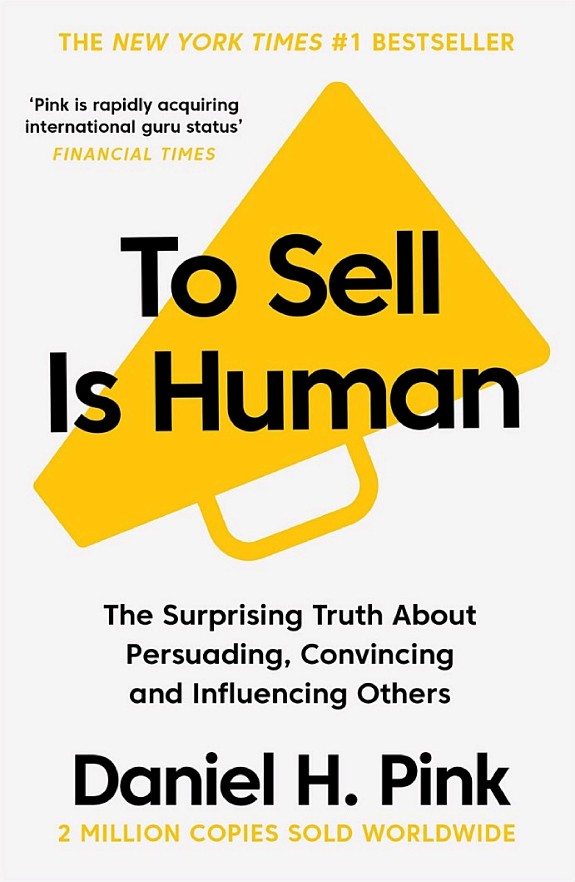
If you run a business, lead a team or pitch ideas to anyone, you are probably selling, even if you would never describe your job that way. Two books approach that reality from quite different directions. Daniel Pink’s To Sell Is Human (2012) argues that most of us now spend a good part of our working lives trying to move other people, and offers a modern, research-informed way to think about it. Brian Tracy’s The Psychology of Selling is a long-standing practical guide for people who sell for a living, built around the mindset and the step-by-step habits of professional salespeople. They are often grouped together, but they speak to somewhat different readers.
This guide is written with founders, directors and other readers who do not think of themselves as salespeople in mind. We look at what each book offers, how they compare and which might suit you best, and we have added a short worked example and a reading order. We will also point to a few of our other CROWNLEIGH Book Club guides that connect with the same themes.
To Sell Is Human is a broad, reflective look at selling as part of everyone’s working life: it describes the skills of attunement, buoyancy and clarity, and a set of ways to pitch, improvise and serve. The Psychology of Selling is a practical handbook for the person who sells: it combines advice on confidence and mental discipline with a clear sequence of steps, from finding prospects to asking for the order. Many readers find that To Sell Is Human suits people who do not think of themselves as sellers, and The Psychology of Selling suits people who sell every day. If you are a founder or director, you may enjoy beginning with To Sell Is Human and borrowing practical routines from The Psychology of Selling.
The two books side by side
| To Sell Is Human | The Psychology of Selling | |
|---|---|---|
| Author | Daniel H. Pink | Brian Tracy |
| Subtitle | The Surprising Truth About Moving Others | Increase Your Sales Faster and Easier Than You Ever Thought Possible |
| First published | 2012 | Book edition in the mid-2000s, developed from his earlier audio programme |
| Core idea | Most people spend much of their working time persuading and influencing others, and the old image of selling needs updating | Successful selling rests on a professional mindset, self-confidence and a clear process that can be learned |
| Signature ideas | Non-sales selling; attunement, buoyancy and clarity; types of pitch; improvising; serving | Mental discipline; the importance of self-belief; a step-by-step sales process; handling objections; asking for the order |
| Style | Research-led and story-driven, in the manner of popular behavioural science | Direct, motivational and practical, in the manner of a sales-training course |
| Best for | Founders, managers and professionals who sell ideas more than products | Salespeople, business owners and anyone who needs a clear sales routine |
| Things to bear in mind | More about understanding and attitude than a detailed sales script | More about technique and discipline than the research behind it, and the style reflects its era |
What they share
- Selling as a service. Both books treat good selling as a matter of meeting what the customer needs.
- Attitude matters. Each gives real weight to mindset, from Pink’s buoyancy to Tracy’s emphasis on self-belief.
- Understanding the customer. Both encourage the reader to look closely at what the customer wants.
- A general audience. Neither expects specialist knowledge, and both are written in plain language.
To Sell Is Human: everyone is in sales now
Daniel Pink is a bestselling author on work and motivation, whose other books include Drive. In To Sell Is Human, he draws on social science and a survey he conducted to suggest that, although relatively few people work in formal sales roles, a very large number of us spend a significant part of our working time persuading, convincing and influencing others. He calls this ‘non-sales selling’, and the book asks what the modern equivalent of the old salesperson’s skills looks like.
Some of the key ideas:
- Non-sales selling. Teachers, doctors, entrepreneurs and managers all spend time moving others to act, even when no money changes hands.
- Attunement. Being able to see a situation from another person’s point of view, and to adjust accordingly.
- Buoyancy. Staying upbeat and resilient in the face of rejection, with practical ideas for managing self-talk.
- Clarity. Helping others see their situation in a new way, and identifying the problem that is worth solving.
- Pitch, improvise, serve. The later chapters offer ideas for different kinds of pitch, for thinking on your feet and for making selling about service to the other person.
Many readers enjoy the book as a more modern and approachable way to think about persuasion, and as a useful perspective for people who find the word ‘sales’ uncomfortable.
For one month, keep a short note of each moment when you try to move someone to act, such as a colleague, a customer or a family member. Write down what you wanted, what the other person wanted, and one thing you did to see the situation from their side. At the end of the month, look for patterns in what worked.
The Psychology of Selling: the mindset and habits of professional selling
Brian Tracy is a speaker and author who has written and taught widely on selling, leadership and personal effectiveness. The Psychology of Selling is one of his best-known works on sales, and it takes the view that top performers combine strong inner habits with a well-practised outer routine. It is written in an encouraging, direct style, with many short, actionable pieces of advice.
Some of the key ideas:
- The inner game. The book gives a lot of space to confidence, self-belief and mental discipline, which it treats as the foundation for good results.
- A clear process. Selling is presented as a sequence of steps, from finding the right prospects and building rapport to understanding needs, presenting, answering concerns and asking for the order.
- Customers buy for reasons. The book encourages the seller to understand why a customer might want something, including emotional reasons as well as practical ones.
- Practice and repetition. Improvement is linked to regular practice and mental rehearsal.
- Referrals and repeat business. The book covers asking for referrals and building repeat business.
Readers often value the book for its directness, and for how readily its steps can be turned into a checklist.
Write out your own sales process as a short list of steps, from first contact to follow-up. For the next month, use it in every relevant conversation and record where you tend to lose momentum. At the end, choose one step to improve, and practise it deliberately for another two weeks.
Where the two books agree, and where they feel different
The two books agree on more than you might expect. Both treat selling as a skill that can be learned, both are interested in how the customer thinks, and both place weight on attitude. Where they differ is in their starting point.
To Sell Is Human begins from the observation that selling is already part of most jobs, and looks for an everyday way to describe it that suits the modern workplace. Its tone is reflective, and it spends time on the psychology of why people respond as they do. The Psychology of Selling begins from the assumption that you are doing the job and want to do it better, and it gives you a routine and the confidence to carry it out. One is written for the many who persuade, and the other for the few who sell as a profession. Both are written in the voice of their time: The Psychology of Selling reflects the direct style of sales training from several decades ago, while To Sell Is Human reflects the research-led popular writing of the early 2010s.
A worked example: pitching to a first big client
To see the difference in flavour, imagine a founder preparing to meet a potential first major customer. The two columns below are short illustrations of how each book might shape the preparation, not a summary of either.
| Moment | In the style of To Sell Is Human | In the style of The Psychology of Selling |
|---|---|---|
| Before the meeting | Think about the customer’s position: what pressures are they under, and how do they see the problem? | Prepare your goals for the meeting, and rehearse so that you walk in confident |
| Opening | Start with a question that shows you have thought about their situation (attunement) | Build rapport, and confirm the purpose of the meeting |
| Understanding needs | Help them see the problem more clearly, perhaps in a way they had not considered (clarity) | Ask questions to identify what they need and why it matters to them |
| Handling doubts | Stay upbeat, and treat a hesitation as useful information (buoyancy) | Listen to the concern, answer it directly and check that it has been resolved |
| Closing | Offer a clear next step that serves their interests | Ask for the order, or agree a specific next action |
Notice how the first column leans on understanding and framing, and the second on preparation and process. Many founders find that blending the two can work well: the first to decide what to say, and the second to make sure it gets said.
Which one suits which situation?
Here is a quick guide, based on what each book emphasises. Use it as a prompt rather than a rulebook:
| Your situation | Where to start | Why |
|---|---|---|
| You do not think of yourself as a salesperson | To Sell Is Human | It reframes selling as part of everyday work |
| You are building a sales routine for yourself or a team | The Psychology of Selling | It lays out a clear sequence of steps |
| You pitch ideas, funding or projects more than products | To Sell Is Human | Its idea of non-sales selling fits those situations |
| You want to build confidence in sales conversations | The Psychology of Selling | It focuses on mindset and practice |
| You would like both perspective and routine | Both | One reframes the task, the other helps you carry it out |
If you enjoyed these ideas
A handful of our other CROWNLEIGH Book Club guides connect closely with the ideas in these two books:
- Selling to businesses. Two research-based approaches to complex sales are compared in our guide to The Challenger Sale and SPIN Selling.
- Persuasion. How the way a message is framed shapes the response is explored in our guide to Influence and Pre-Suasion.
- Connecting with people. Warm, practical ideas about conversation appear in our guide to How to Win Friends and Influence People and How to Talk to Anyone.
- Brian Tracy on getting things done. Another of Tracy’s books, Eat That Frog!, is compared in our guide to Getting Things Done and Eat That Frog.
- Emotional skills. The skills of understanding yourself and others are explored in our guide to Emotional Intelligence and Emotional Intelligence 2.0.
You can find all of these, and more as we add them, on our CROWNLEIGH Book Club page.
Our suggested reading order
If you are a founder, director or professional who sells ideas as part of a wider role, we would suggest starting with To Sell Is Human. It reframes the task in a way many people find comfortable, and it gives you a vocabulary for what you are already doing. Then read The Psychology of Selling when you want a concrete routine, and for its emphasis on confidence and practice. If you already work in sales and want a practical refresher, it works equally well the other way round: begin with The Psychology of Selling for the process, and follow with To Sell Is Human for a wider view of why people respond as they do.
Frequently asked questions
Should I read To Sell Is Human or The Psychology of Selling first?
If you do not think of yourself as a salesperson, To Sell Is Human is a good first read. If you sell every day and want a clear process, The Psychology of Selling is a natural place to begin. Either order can work, and each is readable over a few weeks of evenings.
Do I need to read both Daniel Pink and Brian Tracy on sales?
Not necessarily. Each stands well on its own. Reading both can give you a way of understanding the task, and a routine for carrying it out.
Is The Psychology of Selling still relevant today?
Many of its ideas, such as preparation, understanding the customer and following up, remain useful. Some of the style and examples reflect the time in which it was first written, so it helps to adapt them to the way you sell now.
Is To Sell Is Human only for people who work in sales?
No. It is written largely for people who do not work in formal sales roles, and its main idea is that persuading and influencing are part of most jobs.
Can I read To Sell Is Human and The Psychology of Selling together, and is it worth it?
Yes, and some readers like to do exactly that. One approach is to read a chapter of one, then a chapter of the other, and try one idea from each over the same month. The 30-day tests above are an easy way to try it.
A closing thought
Read together, the two books suggest a simple idea: that selling, at its best, is helping someone else move towards something they want, and that both understanding and practice help you do it well. Whichever you open first, you may finish with a clearer sense of how you already persuade, and a few small things to try in your next conversation.
Book links go to Amazon; see our advertising disclosure.