Atomic Habits vs The Power of Habit
James Clear’s practical framework for building better habits and Charles Duhigg’s story-led study of how habits work in people, teams and brands. Here is what each offers and which to read first.
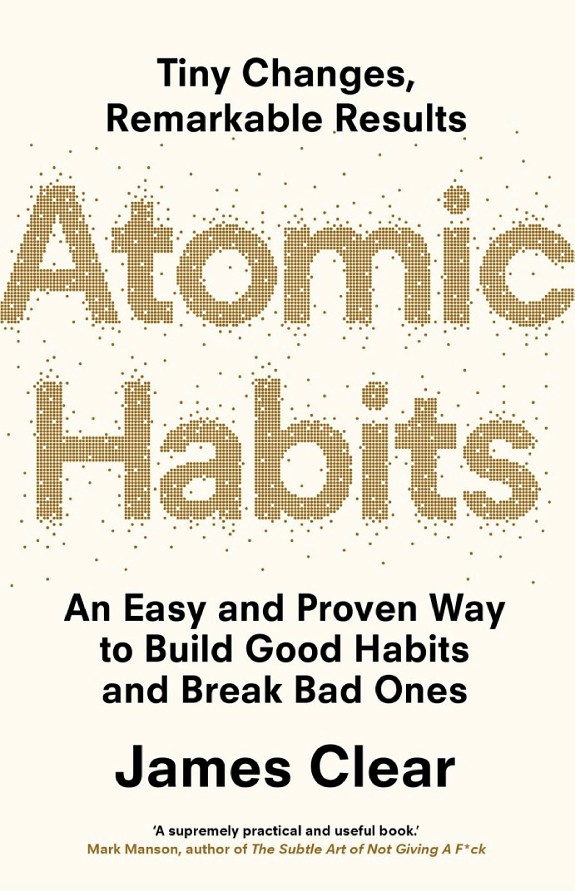
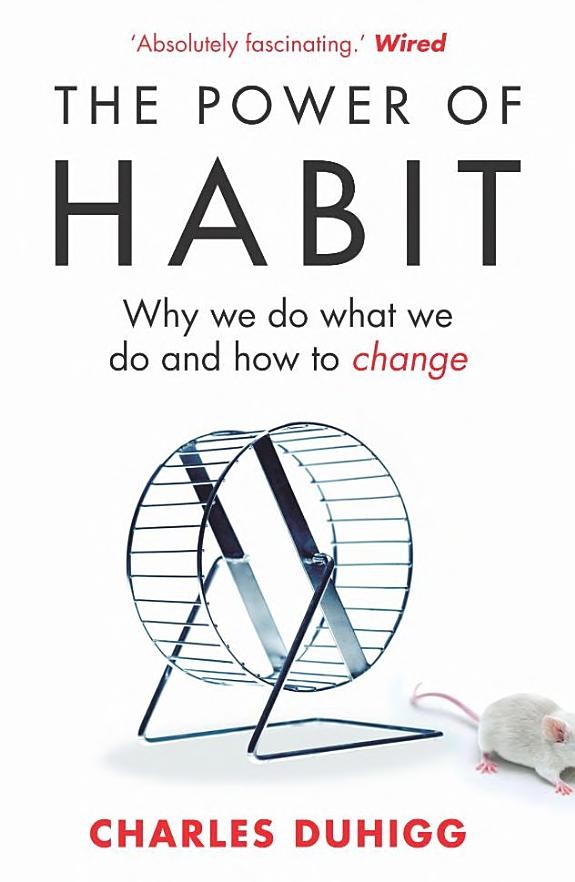
If you’ve ever tried to build a new routine, from a morning walk to a weekly planning session, you’ve probably been pointed towards two books: James Clear’s Atomic Habits and Charles Duhigg’s The Power of Habit. They’re often mentioned in the same breath, and it’s easy to see why. Both explain how habits work, both are full of memorable stories and both are warmly written for the general reader.
They do, however, come at the subject from different directions. This guide looks at what each offers, how they fit together and which might suit you, your team or your business best. Along the way we’ll point to a few of our other Book Club guides that connect with the same ideas, because habits turn out to sit underneath a surprising number of the skills those books describe.
Atomic Habits is a practical guide to changing your own behaviour, built around small steps, a clear four-part framework and the idea that habits are tied to the kind of person you see yourself becoming. The Power of Habit is a study of why habits form and how they shape individuals, organisations and communities, told through stories from business and everyday life. If you want a toolkit for your own routines, many readers start with Clear; if you’re curious about how habits work in teams, brands and markets, Duhigg is a lovely companion. Many people enjoy both.
The two books side by side
| Atomic Habits | The Power of Habit | |
|---|---|---|
| Author | James Clear | Charles Duhigg |
| First published | 2018 | 2012 |
| Core idea | Tiny improvements, repeated, add up; focus on the systems and the identity behind your habits | Habits follow a loop of cue, routine and reward, and understanding the loop is the key to changing it |
| Signature tools | Four laws of behaviour change, habit stacking, environment design, the two-minute rule | The habit loop, keystone habits, the idea of keeping the cue and reward while changing the routine |
| Scope | Mostly individual: how you can build or change your own habits | Individuals, then organisations, then society |
| Best for | Readers who want clear, step-by-step ideas to try straight away | Readers who enjoy case studies and want to understand how habits work in workplaces and markets |
| Worth knowing | Practical in its advice, with plenty of examples | Story-led, so the lessons arrive through narratives rather than a checklist |
| Difficulty | Very easy to read | Very easy to read |
What they share
Despite their different emphases, these two books have a good deal in common, which is part of why they work so well together.
- A shared loop. Both are built on the idea that a habit has a trigger, an action and a reward. Duhigg calls it the habit loop; Clear expands it into four stages (cue, craving, response and reward).
- Encouraging optimism. Both suggest that habits are things we can understand and shape, rather than fixed parts of our character.
- The power of small things. Both show how modest, repeated actions can have outsized effects over time.
- Lively storytelling. Each book keeps the ideas grounded with examples from sport, business, science and everyday life.
Atomic Habits: small steps and a clear framework
James Clear’s Atomic Habits appeared in 2018 and has become one of the best-loved books on the subject. Its central message is that big results often come from small, consistent changes, the kind of improvement that feels almost too modest to notice on any given day but adds up over months and years.
The book is organised around four laws of behaviour change. To build a good habit, Clear suggests making it:
- Obvious, by making the cue clear and easy to notice;
- Attractive, by linking it to something you enjoy;
- Easy, by reducing the friction between you and the action;
- Satisfying, by giving yourself a sense of reward straight away.
For habits you would like to leave behind, the book suggests inverting each law. Along the way it offers a handful of friendly, practical ideas: habit stacking, where you attach a new habit to one you already have; shaping your surroundings so that the helpful choice is the easy one; and the two-minute rule, which invites you to start with a version of the habit that takes just a couple of minutes.
One of the book’s most thoughtful ideas is about identity. Rather than focusing only on goals, Clear encourages readers to think about the sort of person they want to become and to let each small action act as a vote for that identity.
Choose one small habit and attach it to something you already do each day, for example “After I pour my morning coffee, I will write down my top three tasks.” Keep it so small that it feels almost easy, and tick it off on a calendar. At the end of the month, look at the row of ticks and notice how it feels.
The Power of Habit: how habits work, and why they matter
Charles Duhigg’s The Power of Habit was published in 2012. Duhigg is a journalist, and it shows in the best way: the book is packed with stories, and each one is used to illuminate an idea. It is arranged in three parts, looking at the habits of individuals, the habits of successful organisations, and the habits of societies.
The heart of the book is the habit loop. A cue triggers a routine, and the routine delivers a reward, and over time the loop becomes automatic. Duhigg suggests that one of the most helpful ways to change a habit is to keep the same cue and the same reward, and to experiment with a different routine in between.
The book also introduces keystone habits, which are habits that seem to set off wider changes in how a person or an organisation works. One of its best-known stories concerns Paul O’Neill’s leadership at the aluminium company Alcoa, where a clear focus on workplace safety is described as having helped to shape the whole company’s way of working. Stories like this make the book especially appealing for managers and founders who are curious about culture.
Because it looks beyond the individual, The Power of Habit can help you notice habits in places you might not have thought of: in the routines of a team meeting, in the way customers return to a favourite brand, or in the unwritten rules of a workplace.
Pick one routine you would like to understand better, such as an afternoon snack or a habit of checking your phone. Write down the cue (what happens just before), the routine and the reward you are really after. Then, for two weeks, try a different routine that gives the same reward, and see what you notice.
Where the two books feel different
The clearest difference is the viewpoint. Atomic Habits speaks to you as a person with habits you would like to build, and it gives you a step-by-step approach to doing so. The Power of Habit speaks to you as an observer of how habits operate, in individuals and in groups, and it gives you a way of seeing.
That is reflected in the way they are written. Clear tends to move from an idea to a practical suggestion fairly quickly. Duhigg tends to start with a story, such as a company turnaround or a personal puzzle, and let the idea emerge from it. Neither approach is better; they simply suit different moods and different questions.
Habits in business: a few ideas to explore
Both books are popular with founders, managers and teams. The table below is our own gentle reading, offered as a way to start your thinking rather than as a set of instructions:
| Situation | A thought from Atomic Habits | A thought from The Power of Habit |
|---|---|---|
| Building your own daily routine | Make the first step small and tie it to something you already do | Notice the cue and the reward behind your current routines before changing them |
| Welcoming a new colleague | Make the helpful actions obvious and easy to start, with simple prompts and checklists | Think about the small routines that quietly teach someone how things are done here |
| Running a weekly team meeting | Use a consistent trigger and a short, satisfying format so that the meeting is easy to keep | Look at which routines in the meeting are really driving the culture |
| Improving quality or safety | Reduce friction so that the safe choice is the easy one | Look for a keystone habit that could lift other parts of the work too |
| Building something customers return to | Make the next step obvious and rewarding | Study the cue and reward that bring people back, and how the habit forms |
Connecting habits to other Book Club reads
Habits sit quietly underneath many of the skills explored in other books, which is part of what makes this topic so rewarding. A few connections you might enjoy:
- Practice makes skills stick. In our guide to Never Split the Difference and Getting to Yes, the 30-day tests rely on the same idea as Atomic Habits: one small technique, repeated daily, becomes second nature.
- Understanding why we act as we do. Our guide to The 48 Laws of Power and The Laws of Human Nature explores the tendencies behind behaviour, which pairs nicely with Duhigg’s habit loop.
- Preparation as a habit. The thread of careful preparation in The Art of War and The Prince reads very naturally as a routine that you can build.
- Planning campaigns. If you enjoy the idea of structured planning, our comparison of The 48 Laws of Power and The 33 Strategies of War shows how habits of reflection can sharpen strategy.
- Reputation is built daily. Our guide to The 48 Laws of Power and The Prince touches on how reputation grows from many small actions, which is exactly the kind of accumulation Clear describes.
You can find all of these, and more as we add them, on our CROWNLEIGH Book Club page.
Our suggested reading order
If your main wish is to build or change your own routines, we’d suggest starting with Atomic Habits. Its framework is simple to remember and quick to try. Then read The Power of Habit to explore the wider story behind habits and to see how they show up in teams, brands and organisations.
If you are more curious about how habits work in workplaces and markets, it works beautifully to start with The Power of Habit and come to Atomic Habits afterwards for the practical toolkit. Either order gives you a lovely, rounded picture of the subject.
Frequently asked questions
Should I read Atomic Habits or The Power of Habit first?
If you want practical steps for your own habits, Atomic Habits is a natural first read. If you are drawn to stories about how habits work in companies and communities, The Power of Habit is a lovely place to begin. Many readers enjoy either order.
How might each habit book help managers?
Each helps in a different way. The Power of Habit gives managers a way of seeing the routines and culture of a team, while Atomic Habits gives them practical ways of making good routines easier to keep. Many managers find that the two together offer both the lens and the toolkit.
Do I need to read both?
Not at all. Each stands on its own, and you can come away with plenty from either. Reading both simply gives you two complementary views of the same subject.
Are these books suitable for beginners?
Yes. Both are written for the general reader, with clear language and plenty of stories. You do not need any background in psychology to enjoy them.
Can I read Atomic Habits and The Power of Habit together, and is it worth it?
Yes, and many people enjoy it. A pleasant approach is to read a chapter of one, then a chapter of the other, and try one idea from each over the same month. The 30-day tests above are an easy way to do just that.
A closing thought
Habits can sound like a small subject, yet these two books show how much of daily life, and of working life, rests on them. Whether you begin with a practical framework or a collection of stories, you are likely to finish with a few simple experiments to try and a kinder, more curious view of your own routines, and that is a very good place to start.
Book links go to Amazon; see our advertising disclosure.