Sapiens vs Guns, Germs, and Steel
Yuval Noah Harari on shared stories and Jared Diamond on geography and environment: two big-history bestsellers, compared, with a balanced look at the conversations around each and a suggested reading order.
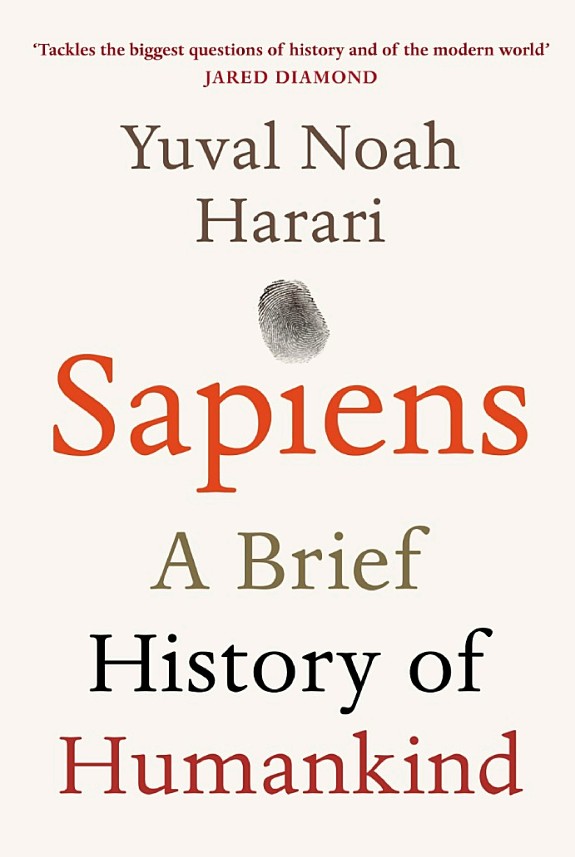

Why did humans come to dominate the planet, and why did some societies end up with so much more power and wealth than others? Two bestselling books take on these huge questions with great confidence and a talent for storytelling. Yuval Noah Harari’s Sapiens sweeps through the whole of human history, from our earliest ancestors to the present day, and asks how a modest ape came to shape the world. Jared Diamond’s Guns, Germs, and Steel asks why the peoples of different continents have had such different fortunes over the last 13,000 years. They are two of the best-known “big history” books, and they make wonderful companions.
This guide looks at what each book offers, how they fit together and which might suit you best. Because both books tackle such ambitious questions, we will also take a friendly look at some of the conversations they have prompted among scholars, and point to a few of our other Book Club guides that connect with the same themes.
Sapiens is about the stories we share: it suggests that our ability to believe in common ideas, such as money, nations and laws, is what allowed large numbers of strangers to cooperate. Guns, Germs, and Steel is about the places we come from: it suggests that differences in geography and environment help explain why some societies developed farming, technology and immunity to disease earlier than others. Many readers find Sapiens a thought-provoking tour of ideas about cooperation, and Guns, Germs, and Steel a rich account of how circumstances shape history. Both invite you to think big, and both are best enjoyed with curiosity and an open mind.
The two books side by side
Here is how the two books compare at a glance:
| Sapiens | Guns, Germs, and Steel | |
|---|---|---|
| Author | Yuval Noah Harari, a historian at the Hebrew University of Jerusalem | Jared Diamond, a scientist and professor at the University of California, Los Angeles |
| First published | 2011 in Hebrew, with the English edition following in 2014 | 1997 |
| Core question | How did Homo sapiens come to dominate the world? | Why did human societies on different continents develop at different paces? |
| Core idea | Shared stories and beliefs allow large-scale human cooperation | Geography and environment shaped the paths societies took |
| Signature ideas | The Cognitive, Agricultural and Scientific Revolutions; “imagined orders”; shared myths such as money and nations | Farming and domesticable plants and animals; the geography of continents; the spread of germs; the link from food production to technology |
| Time span | From the earliest humans to the present | Roughly the last 13,000 years |
| Best for | Readers who enjoy sweeping ideas and thought experiments | Readers who enjoy scientific, evidence-led explanations |
| Reading experience | Lively, conversational and thought-provoking | Detailed, thorough and a little more demanding |
What they share
- A big-picture view. Both books step back and look at human history on the largest scales.
- Drawing on many fields. Each combines history with ideas from biology, anthropology, geography and other subjects.
- Memorable examples. Both are full of vivid stories that make large ideas easy to hold.
- An invitation to wonder. Both leave you looking at the modern world, from supermarkets to borders, with fresh eyes.
Sapiens: the power of shared stories
Yuval Noah Harari first published Sapiens in Hebrew in 2011, and the English edition arrived in 2014. The book gives a brief history of humankind in four broad parts, which Harari describes as revolutions: the Cognitive Revolution, when he suggests humans developed new ways of thinking and communicating; the Agricultural Revolution; the unification of humankind; and the Scientific Revolution.
Some of the key ideas:
- Shared myths. Harari suggests that our ability to believe in things that exist through shared belief, such as money, companies and nations, lets very large groups cooperate flexibly.
- Imagined orders. Many of the structures that shape our lives are, in his view, agreements that people share rather than facts of nature.
- A fresh look at farming. He invites readers to ask whether the Agricultural Revolution was a clear gain for everyone, a thought-provoking question that has sparked plenty of discussion.
- Money, empires and science. The later chapters explore how trade, empires and the pursuit of knowledge brought the world together.
Many readers enjoy the book for its confident storytelling and for the way it makes them pause and think about things they usually take for granted.
Over the month, pick three everyday things that exist because people agree on them, such as money, a brand or a rule at work. For each, write down what the shared belief is and what would happen if everyone stopped believing in it. Notice how this changes the way you see them.
Guns, Germs, and Steel: how geography shaped history
Jared Diamond published Guns, Germs, and Steel in 1997, and it went on to win the Pulitzer Prize for General Nonfiction. The book begins with a question put to the author by a friend in Papua New Guinea, asking in essence why Europeans came to have so much “cargo” compared with the people of New Guinea. Diamond sets out to answer it by looking at the long sweep of history rather than at differences between peoples themselves.
Some of the book’s key ideas:
- Food production. Societies that could grow crops and keep animals could support denser populations, specialists and organised states.
- Starting conditions. Diamond points out that some regions had more plants and animals suited to domestication than others.
- The shape of the continents. He suggests that the way continents are oriented affected how easily crops, animals and ideas could spread.
- Germs. Diseases that arose from living close to domestic animals later had a major effect when different societies met.
- From food to technology. The title’s “guns, germs and steel” are the more immediate advantages that followed from these deeper environmental differences.
The book is generous in detail and rewards patient reading. Many readers value it as an explanation that looks to circumstances rather than to any claim about the abilities of different peoples, which Diamond makes clear is the point.
Choose one place or community you know well and, over the month, write down three ways its geography has shaped daily life, such as what grows there, how people travel or what trades developed. Then compare notes with a friend about what you each noticed.
Conversations around the two books
Because both books take on such huge subjects, they have been much discussed by scholars, and it is nice to know about some of those conversations. They are a sign of how much these books have made people think, and reading them does not stop you from enjoying either book.
- On Sapiens. Some historians and scientists have noted that covering so much ground naturally involves some simplification, and have offered different views on some of the book’s specific points, for example about the early history of farming and about happiness.
- On Guns, Germs, and Steel. Some scholars have suggested that other factors deserve more emphasis alongside geography and environment, such as institutions, culture and the choices people made. Diamond has explained that he is focusing on the broad, long-term background, not denying those other factors.
A friendly way to hold all this is to treat both books as lively, thoughtful introductions rather than the last word. If a chapter catches your interest, it can be rewarding to follow it up with a specialist book or article on the same subject.
Where the two books feel different
The clearest difference is where each looks for explanations. Sapiens looks at the human mind and the ideas we share: stories, beliefs and the structures built from them. Guns, Germs, and Steel looks outwards, at the environment, from soils and animals to the layout of continents. One asks what we have imagined together, the other what we were given to work with.
They also differ in pace and style. Sapiens moves quickly across all of history and often pauses to pose a question to the reader. Guns, Germs, and Steel is more methodical, building its argument step by step with evidence from many regions. Many readers find that the two complement each other well: one for the stories, the other for the setting in which the stories took place.
Which one suits which situation?
Here is a gentle guide, based on what each book emphasises. Treat it as a starting point rather than a rulebook:
| Your situation | Where to start | Why |
|---|---|---|
| You would like a lively, wide-ranging introduction to history | Sapiens | It is conversational and covers a huge span in one book |
| You enjoy scientific explanations and detailed evidence | Guns, Germs, and Steel | It builds its case step by step across many regions |
| You are curious about money, nations and how large groups cooperate | Sapiens | Shared stories and imagined orders are at the heart of the book |
| You are curious about why places differ in wealth and development | Guns, Germs, and Steel | It looks at how geography and environment set the scene |
| You would like both the stories and the setting | Both | Together they give a rounded picture of human history |
If you enjoyed these ideas
A handful of our other Book Club guides connect closely with the ideas in these two books:
- The surprises of history. The role of chance and the unexpected is explored in our guide to The Black Swan and Antifragile.
- How we tell stories. Our love of tidy explanations is explored in our guide to Thinking, Fast and Slow and Noise.
- Power and strategy through history. Classic ideas about power and conflict appear in our guide to The Art of War and The Prince.
- Why some endure. The qualities of lasting organisations are explored in our guide to Good to Great and Built to Last.
- Human nature. Our guide to The 48 Laws of Power and The Laws of Human Nature looks at the patterns in how people behave.
You can find all of these, and more as we add them, on our CROWNLEIGH Book Club page.
Our suggested reading order
If you would like a lively way in, we would suggest starting with Sapiens. It gives you the whole sweep of history in one go and plenty to talk about. Then read Guns, Germs, and Steel for a more detailed look at how environment shaped the early chapters of that story. If you prefer to start with evidence and build up to the big ideas, it works nicely the other way round: begin with Guns, Germs, and Steel and enjoy Harari’s storytelling afterwards.
Frequently asked questions
Should I read Sapiens or Guns, Germs, and Steel first?
If you would like a lively overview of human history, Sapiens is a lovely first read. If you are keen on a detailed, evidence-based explanation of why societies differ, Guns, Germs, and Steel is a natural place to begin. Many readers enjoy either order.
Is Sapiens accurate?
It is a popular, wide-ranging book that draws on many fields, and Harari presents it as a synthesis. Some specialists have offered different views on particular points and note that certain topics are simplified, so many readers treat it as a thought-provoking starting point and follow up on the subjects that interest them most. The “Conversations around the two books” section above gives a short overview.
Do I need to read both?
Not necessarily. Each stands on its own. Reading both gives you a story about the power of shared beliefs and a story about the influence of environment.
Are these books difficult to read?
Both are written for the general reader. Sapiens is the quicker and more conversational of the two, while Guns, Germs, and Steel is longer and more detailed, so it can take a little more time.
Can I read Sapiens and Guns, Germs, and Steel together, and is it worth it?
Yes, and many people enjoy it. A pleasant approach is to read a chapter of one, then a chapter of the other, and try one idea from each over the same month. The 30-day tests above are an easy way to do just that.
A closing thought
Both books carry a gentle invitation: to step back from the day-to-day and wonder about how we got here. Whichever you open first, you may well finish with a richer sense of how much of the world around us is shaped by stories, and by the places we have called home.
Book links go to Amazon; see our advertising disclosure.