Influence vs Pre-Suasion
Robert Cialdini’s classic principles of persuasion and his follow-up on the moment before a message: two books on influence, compared. Here is what each offers, who each suits and which to read first.
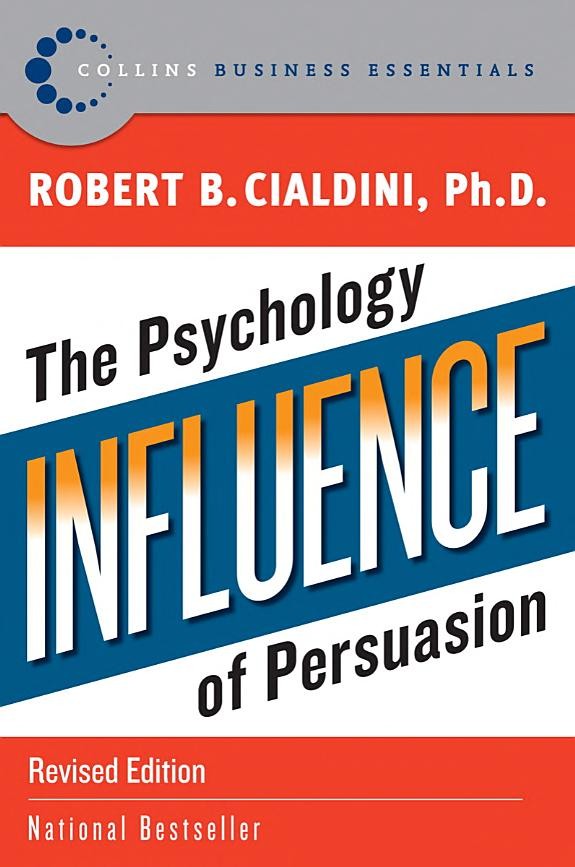
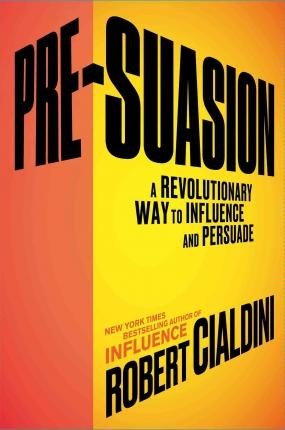
Why do we say yes to some requests and no to others? Robert Cialdini has spent much of his career asking exactly that question, and two of his books have become favourites with anyone who works with people: Influence, a long-standing classic on the psychology of persuasion, and Pre-Suasion, which turns the spotlight on what happens just before a message is delivered.
If you are wondering which to read first, or whether you need both, this guide walks through what each offers, how they fit together and how you might put their ideas to work in an honest, friendly way. We’ll include a worked example of a sales email, and point to a few of our other Book Club guides that connect with the same themes.
Influence sets out the principles that tend to guide people’s decisions, such as reciprocity, social proof and scarcity. Pre-Suasion looks at the moment before a message and shows how what people are paying attention to can shape how they respond. If you would like the foundations, many readers start with Influence; if you already know the principles and want to think about setting up the moment, Pre-Suasion is a natural second step. Many people enjoy both, often in that order.
The two books side by side
| Influence | Pre-Suasion | |
|---|---|---|
| Author | Robert B. Cialdini | Robert B. Cialdini |
| First published | In the 1980s; later editions have been updated | 2016 |
| Core idea | A handful of principles help explain why people say yes | What comes just before a request can shape how it is received |
| Signature ideas | Reciprocity, commitment and consistency, social proof, authority, liking, scarcity (with unity added in later editions) | Attention, associations and “privileged moments” |
| Focus | The principles of persuasion | The set-up that precedes persuasion |
| Best for | Anyone who wants to understand everyday decisions, in sales, marketing, leadership or life | Readers who already know the principles and want to think about timing and framing |
| Worth knowing | A classic with many studies and examples; rewards a slow read | Builds on the first book and is easiest to enjoy with it in mind |
| Difficulty | Easy to read | Easy to read, with a little more psychology |
What they share
- The same author and curiosity. Both books draw on Cialdini’s research and his gift for turning studies into stories.
- Everyday examples. From restaurants to charities to email, the scenarios are easy to recognise from your own life.
- A practical, honest spirit. Both are as useful for spotting influence as for using it, and Cialdini encourages using these ideas truthfully.
- A readable style. You do not need any background in psychology to enjoy either.
Influence: the principles of persuasion
Influence has been a favourite for decades, and it is easy to see why. Cialdini, a psychologist who spent much of his career at Arizona State University, set out to understand why people comply with requests, and organised what he found into a set of principles. They give readers a lovely shared vocabulary:
- Reciprocity. We feel inclined to return favours and kindnesses.
- Commitment and consistency. Once we have taken a stand, we like to stay consistent with it.
- Social proof. We look to what others are doing, especially people like us, to guide our own choices.
- Authority. We tend to respect and follow credible experts.
- Liking. We are more open to people we like and who like us.
- Scarcity. We value things more when they seem rare or limited.
Later editions of the book add a seventh principle, unity, which is about the sense of shared identity we feel with others.
Readers often say the book makes them better at noticing influence in daily life: the reminder email, the “most popular” label, the free sample. Understanding these patterns can help you make choices with open eyes, as well as communicate more thoughtfully.
Each week, choose one principle and watch for it in everyday life: in an advert, a shop display or a message from a friend. Write down where you spotted it and how it made you feel. At the end of the month, pick the principle you noticed most and think about one honest, generous way you could apply it in your own work.
Pre-Suasion: setting the moment
Pre-Suasion was published in 2016 and takes a step back. If Influence is about what makes a message persuasive, Pre-Suasion is about what happens in the moments just before it. Cialdini’s starting point is that whatever people are focusing on at a given moment can colour how they respond to what comes next.
The book explores several threads:
- Attention. What we focus on at any moment tends to feel important, which shapes how we respond to the next thing we hear.
- Associations. The ideas and feelings that surround a message, even gently, can influence how it is received.
- Privileged moments. Moments when someone is especially receptive to a particular message because their attention is already pointing in the right direction.
- Setting a welcoming scene. Thinking about the context in which a conversation or request takes place.
For anyone who writes, presents or leads, it is a thoughtful reminder that how you open a conversation can matter as much as what you say next. Cialdini also emphasises using these ideas honestly, with openings that are relevant and true to the message that follows.
Before each important email, meeting or call this month, take two minutes to ask: what do I want the other person to be thinking about when they first hear from me? Choose an honest, relevant opening that points their attention to something genuinely useful. Afterwards, note how the conversation went.
A worked example: an email opener
To make the difference concrete, here is our own illustration of how the two books might shape the opening of a sales email. It is an example for practice rather than a template, and the business is imaginary.
Imagine a small bookkeeping firm writing to a local shop owner.
| Opening lines | What the books suggest | |
|---|---|---|
| A straightforward opener | “Hello, we are a bookkeeping firm offering monthly accounts packages. Our prices start at £90 a month. Would you like to hear more?” | Clear and polite, and it begins by introducing the firm, which the other two versions gently build on |
| With Influence in mind | “Hello, we have helped several shops on your street with their bookkeeping, and they have kindly allowed us to share their comments. Would you like a free checklist to see how your records compare?” | Draws on social proof (other local shops) and reciprocity (a helpful checklist offered freely), as long as every statement is true |
| With Pre-Suasion in mind | “Hello, what is the one job you would love to stop doing on a Sunday evening? Many shop owners tell us it is the paperwork, and we would love to help with that.” | Points the reader’s attention to something relevant before introducing the offer, again only if it is genuinely true to how you work |
Each version is honest and friendly; the second and third simply begin from the reader’s world. You might even combine them: open with the question, then offer the checklist.
Where the two books feel different
The clearest difference is the stage of the conversation each one illuminates. Influence helps you think about what makes a request persuasive. Pre-Suasion helps you think about the moment that comes first. One is the content of the message; the other is its setting.
They also feel different to read. Influence is a rich tour through experiments and everyday scenes, with a clear structure of principles. Pre-Suasion builds on those foundations and explores attention and context in more detail, so it is especially rewarding if you already know the first book.
A word on Charlie Munger
Influence has some famous admirers. Charlie Munger, the long-time business partner of Warren Buffett, was an enthusiastic reader and spoke about its influence on his thinking about human behaviour. It is a nice reminder that these ideas are valued far beyond sales and marketing, in investing, leadership and everyday decision-making.
Which one suits which situation?
Here is a gentle guide, based on what each book emphasises. Treat it as a starting point rather than a rulebook:
| Your situation | Where to start | Why |
|---|---|---|
| You are new to the psychology of persuasion | Influence | It lays out the principles in a clear, memorable way |
| You write emails, adverts or web pages | Pre-Suasion | It helps you think about the opening and the context |
| You lead a team and want to communicate warmly | Influence | Principles such as reciprocity and liking suit relationships at work |
| You already know the principles and want to go further | Pre-Suasion | It explores the moment that comes first |
| You enjoy understanding everyday behaviour | Both | Together they cover the message and the moment |
Connecting these ideas to other Book Club reads
Persuasion touches many of the topics we have explored. A few connections you might enjoy:
- Persuasion in conversation. Our guide to Never Split the Difference and Getting to Yes looks at how listening and framing help in negotiation, which pairs beautifully with Cialdini’s principles.
- The psychology behind behaviour. Our comparison of The 48 Laws of Power and The Laws of Human Nature explores tendencies such as conformity, which sit alongside social proof.
- Attention and judgement. Our guide to Thinking, Fast and Slow and Noise explains how quick, automatic thinking shapes our responses, a lovely companion to Pre-Suasion.
- Habits and cues. The idea that a cue can trigger a response runs through our guide to Atomic Habits and The Power of Habit.
- Talking to customers. If you are building a business, our comparison of Zero to One and The Lean Startup shows how listening to customers shapes what you build and how you describe it.
- Building trust over time. Our guide to Good to Great and Built to Last explores values and purpose, the foundations of credibility and authority.
- Reputation and influence through history. Our guide to The 48 Laws of Power and The Prince offers a historical perspective on how standing and perception work.
- Preparation and positioning. The thinking in The Art of War and The Prince and in The 48 Laws of Power and The 33 Strategies of War about preparation and setting the scene echoes the idea of the moment before.
You can find all of these, and more as we add them, on our CROWNLEIGH Book Club page.
Our suggested reading order
We would suggest starting with Influence. It gives you the vocabulary and the principles, and it makes Pre-Suasion richer when you meet it. If you already know the main principles from elsewhere, or you are mostly curious about writing and presenting, it works beautifully to begin with Pre-Suasion and return to Influence afterwards for the foundations.
Frequently asked questions
Should I read Influence or Pre-Suasion first?
Most readers find Influence a welcoming place to start, because it introduces the principles that Pre-Suasion builds on. If you are already familiar with the principles, starting with Pre-Suasion is perfectly sensible.
Do I need to read Influence before Pre-Suasion?
Not strictly. Pre-Suasion explains its ideas clearly and stands on its own. That said, it builds on themes from the first book, so many readers find it even more enjoyable with Influence in mind.
Are these books only for people in sales and marketing?
Not at all. The ideas apply to leadership, teaching, fundraising, family life and any situation where people make choices. Many readers enjoy them simply for the insight into everyday behaviour.
Is it all right to use these ideas?
Yes, when they are used honestly. Cialdini encourages applying them in ways that are true and relevant, and they are just as useful for noticing influence as for exercising it.
Can I read Influence and Pre-Suasion together, and is it worth it?
Yes, and many people enjoy it. A pleasant approach is to read a principle from Influence, then a chapter from Pre-Suasion, and try one idea from each over the same month. The 30-day tests above are an easy way to do just that.
A closing thought
Understanding why people say yes is really a way of understanding people, and that is a rewarding subject whatever your work. Whether you begin with the principles or with the moment before them, you are likely to finish with a sharper eye for everyday influence and a few warm, honest ideas to try the next time you want to share something that matters.
Book links go to Amazon; see our advertising disclosure.