Think and Grow Rich vs Rich Dad Poor Dad
Napoleon Hill on mindset and persistence and Robert Kiyosaki on assets and financial education: two enduring money classics, compared, with a gentle look at what has aged and a suggested reading order.
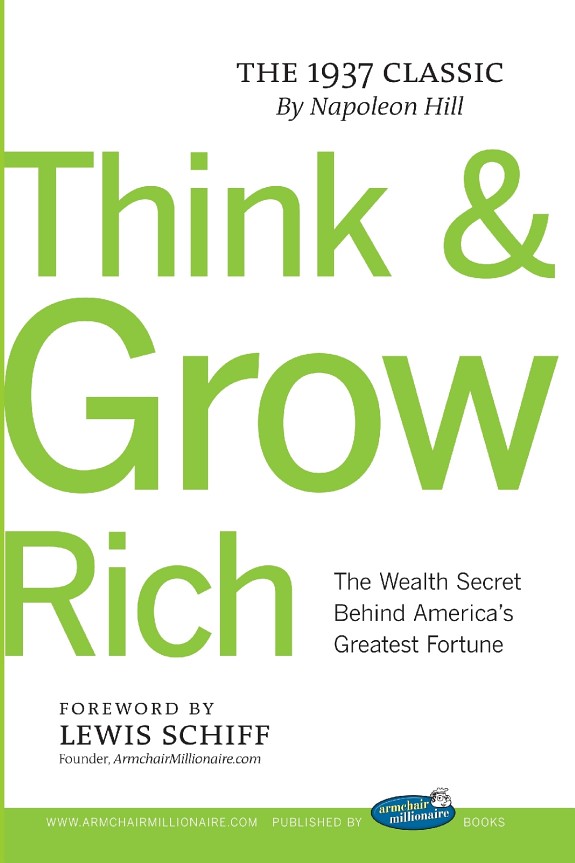
Few books about money have sold as widely, or been talked about as often, as these two. Napoleon Hill’s Think and Grow Rich, first published in 1937, is a classic of the personal-success tradition, with an emphasis on desire, persistence and the power of belief. Robert Kiyosaki’s Rich Dad Poor Dad is a modern money story that has introduced many readers to ideas about assets, liabilities and financial education. They come from different eras and offer different kinds of encouragement, and they make a thought-provoking pair.
This guide looks at what each book offers, how they fit together and which might suit you best. We will also take a gentle look at what has aged and what readers have discussed about each, and point to a few of our other Book Club guides that connect with the same themes. As always, this is a friendly overview of the books rather than financial advice.
Think and Grow Rich is about the mindset behind achievement: it argues that a clear, burning desire, a plan, persistence and the support of like-minded people can carry you a long way. Rich Dad Poor Dad is about a way of thinking about money: it contrasts two attitudes to work, saving and investing, and encourages readers to learn about assets and financial education. Many readers find Think and Grow Rich a motivating read for the mental frame and Rich Dad Poor Dad an easy, story-led way into thinking about money. Both are best enjoyed as sources of inspiration, with your own judgement alongside.
The two books side by side
| Think and Grow Rich | Rich Dad Poor Dad | |
|---|---|---|
| Author | Napoleon Hill | Robert T. Kiyosaki (with Sharon L. Lechter credited as co-author in some editions) |
| First published | 1937 | 1997, with later editions |
| Core idea | Achievement begins with a definite desire, supported by faith, planning, persistence and cooperation | Financial education and a focus on acquiring assets can change how you think about money |
| Signature ideas | Desire, faith, persistence, the “master mind” group, organised planning | “Rich dad” and “poor dad”, assets versus liabilities, financial education, making money work for you |
| Style | A motivational, philosophical guide written in the voice of the early twentieth century | A simple, story-led book using a parable of two father figures |
| Focus | Mindset and habits of thought | Attitudes to money and financial literacy |
| Best for | Readers who like motivational, classic self-help | Readers who want a simple, conversational introduction to money ideas |
| Reading experience | Earnest and encouraging, with examples from the era | Short, chatty and easy to read |
What they share
- The power of mindset. Both books give real attention to how we think about money and possibility.
- An invitation to take initiative. Each encourages readers to take action rather than wait for opportunity.
- Story-led teaching. Both rely on anecdotes and examples to bring their points to life.
- Enduring popularity. Both have been read by millions of people, and are still widely discussed.
Think and Grow Rich: desire, persistence and the master mind
Napoleon Hill published Think and Grow Rich in 1937, in the later years of the Great Depression. The book says it is based on Hill’s study of many successful people, and it presents what it describes as principles shared by those who have achieved their goals. Over the decades, it has become one of the best-known books in the personal-success tradition.
Some of the key ideas:
- Desire. The starting point is a clear, definite goal that you care about deeply.
- Faith and belief. Hill emphasises confidence in your ability to reach the goal.
- Organised planning. Turning a desire into a practical plan, and adjusting it when needed.
- Persistence. Continuing through setbacks is presented as one of the most important qualities.
- The master mind. Working with a small group of people who share your commitment, and who can offer ideas and encouragement.
Many readers enjoy the book as a motivating, reflective read, and return to its chapters on persistence and planning in particular.
Write down one clear goal in a single sentence, then a simple plan with three steps and a date for each. Share it with one or two supportive people, and check in with them once a week. At the end of the month, note which steps you took and what you would adjust.
Rich Dad Poor Dad: two ways of thinking about money
Robert Kiyosaki’s Rich Dad Poor Dad was first published in 1997 and has since sold in very large numbers around the world. It is built around the story of two father figures: his own father, whom he calls “poor dad”, and the father of a childhood friend, whom he calls “rich dad”. The contrast between their attitudes to work, money and risk forms the heart of the book.
Some of the key ideas:
- Assets and liabilities. Kiyosaki describes an asset as something that puts money into your pocket, and a liability as something that takes money out, and encourages readers to think about which is which.
- Financial education. He suggests that understanding money is a skill worth learning, and one that is not widely taught.
- Working for money and making money work. The book contrasts earning a salary with building income from investments or a business.
- Taking initiative. A theme of looking for opportunities and being willing to learn from experience.
Many readers enjoy the book as an accessible and thought-provoking first step towards thinking about money.
Make a simple list of what you own and what you owe, and next to each item note whether it brings money in or sends money out each month. Then pick one small thing to learn about, such as budgeting or how a savings account works, and spend a little time on it each week.
What has aged, and what readers have discussed
Both books have been read for many years, and as with any popular books, readers have shared a range of views about them. A few gentle notes may help you get the most from each:
- Think and Grow Rich. The book comes from the 1930s, and its language and examples reflect that time. Some readers find its emphasis on thought and belief inspiring, while others prefer to pair it with practical, evidence-based advice. Hill’s account of how he gathered his material is the book’s own telling, and it can be enjoyable to read it as a motivational classic rather than as a scientific study.
- Rich Dad Poor Dad. The book is a parable, told in a simple way, so it works best as an introduction rather than a detailed financial guide. Its ideas about assets and liabilities are a conversation starter rather than a complete plan, and the right approach to money can differ from one person to the next. Readers sometimes enjoy following it with a more detailed book on personal finance.
A friendly way to read both is as sources of inspiration, taking the ideas that resonate and checking the practical details with other sources. If you are making significant financial decisions, a qualified adviser can help you consider your own situation.
Where the two books feel different
The clearest difference is where each looks for the answer. Think and Grow Rich looks inward, at desire, belief and persistence, and treats the mind as the starting point. Rich Dad Poor Dad looks at a way of seeing money, assets and financial knowledge, and treats understanding as the starting point. One is about the engine, and the other about the map.
They also differ in feel. Think and Grow Rich has the earnest, formal tone of its era and a philosophical flavour. Rich Dad Poor Dad is chatty, short and built on a simple parable. Many readers enjoy the two together because the first builds motivation and the second offers a framework for thinking about money.
Which one suits which situation?
Here is a gentle guide, based on what each book emphasises. Treat it as a starting point rather than a rulebook:
| Your situation | Where to start | Why |
|---|---|---|
| You would like a boost of motivation and a way to set goals | Think and Grow Rich | It is built around desire, planning and persistence |
| You are new to thinking about money and like simple stories | Rich Dad Poor Dad | It is short, chatty and easy to follow |
| You enjoy classic, reflective self-help | Think and Grow Rich | It is one of the genre’s best-known books |
| You would like a conversation starter about assets and financial education | Rich Dad Poor Dad | It introduces the ideas in plain language |
| You would like both the mindset and a money framework | Both | Together they cover motivation and a way of looking at money |
If you enjoyed these ideas
A handful of our other Book Club guides connect closely with the ideas in these two books:
- More on money mindsets. Rich Dad Poor Dad sits alongside another thoughtful classic in our guide to Rich Dad Poor Dad and The Millionaire Next Door.
- Investing and behaviour. A calm look at money and temperament appears in our guide to The Intelligent Investor and The Psychology of Money.
- Working with others. The idea of the master mind connects with our guide to How to Win Friends and Influence People and How to Talk to Anyone.
- Small steps, repeated. Persistence often comes down to routine, which is the subject of our guide to Atomic Habits and The Power of Habit.
- Taking responsibility. Ownership of your own outcomes is explored in our guide to Extreme Ownership and Leaders Eat Last.
You can find all of these, and more as we add them, on our CROWNLEIGH Book Club page.
Our suggested reading order
If you would like a motivating way in, we would suggest starting with Think and Grow Rich. It gives you a way of thinking about goals and persistence, which makes a warm backdrop for what follows. Then read Rich Dad Poor Dad for a simple, story-led introduction to ideas about money. If you are already interested in finances and want the practical framework first, it works nicely the other way round: begin with Rich Dad Poor Dad and read Hill afterwards for the mindset.
Frequently asked questions
Should I read Think and Grow Rich or Rich Dad Poor Dad first?
If you would like motivation and a way of thinking about goals, Think and Grow Rich is a lovely first read. If you would like a short, simple introduction to money ideas, Rich Dad Poor Dad is a natural place to begin. Many readers enjoy either order.
Is Think and Grow Rich still worth reading?
Many readers feel that it is. It is a classic of the personal-success tradition, and its chapters on persistence, planning and working with others still resonate with many people. Its language and examples come from the 1930s, so some readers like to pair it with more recent, practical guidance.
Do I need to read both?
Not necessarily. Each stands on its own. Reading both gives you a motivating account of mindset and a simple way of thinking about money.
Are these books financial advice?
No. They are popular books that share the authors’ views and stories. They can be a pleasant starting point for thinking about money, and for decisions that affect your own finances it is worth looking at a range of sources and, where appropriate, speaking with a qualified adviser.
Can I read Think and Grow Rich and Rich Dad Poor Dad together, and is it worth it?
Yes, and many people enjoy it. A pleasant approach is to read a chapter of one, then a chapter of the other, and try one idea from each over the same month. The 30-day tests above are an easy way to do just that.
A closing thought
Both books carry a gentle message: that how we think shapes what we do, and that learning, planning and persistence can open doors. Whichever you open first, you may well finish with a little more curiosity about your goals, and a few simple ideas to try this month.
Book links go to Amazon; see our advertising disclosure.