Rich Dad Poor Dad vs The Millionaire Next Door
Robert Kiyosaki’s motivational parable about money and the research-led study of how wealth is really built: two bestselling books, compared. A general guide with a UK perspective, not financial advice.
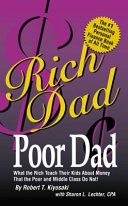
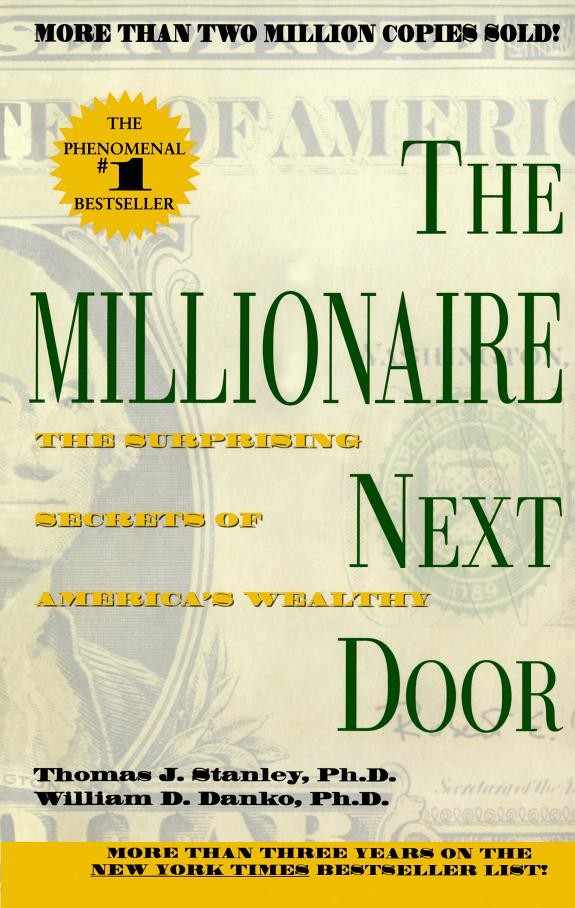
Two books about building wealth are recommended to newcomers more often than almost any others: Robert Kiyosaki’s Rich Dad Poor Dad, an energetic, story-led introduction to thinking differently about money, and Thomas J. Stanley and William D. Danko’s The Millionaire Next Door, a research-based look at how people who have built wealth tend to live. They are both bestsellers, both easy to pick up and both full of ideas to talk about. Yet they take rather different routes to the same broad subject.
This guide looks at what each book offers, where they meet, how they have been received and what changes if you are reading in the UK. We will also point to a few of our other Book Club guides that connect with the same themes.
Rich Dad Poor Dad is a motivational, story-led book that invites you to think about assets, financial education and entrepreneurship. The Millionaire Next Door is built on research into people who had accumulated wealth, and it paints a picture of everyday habits such as living modestly, spending carefully and often running a business. Many readers find Rich Dad Poor Dad a spark of inspiration and The Millionaire Next Door a grounded set of observations, and enjoy them as a pair.
The two books side by side
| Rich Dad Poor Dad | The Millionaire Next Door | |
|---|---|---|
| Author | Robert T. Kiyosaki (Sharon L. Lechter is credited as co-author on many editions) | Thomas J. Stanley and William D. Danko |
| First published | 1997 (self-published; a wider commercial edition followed in 2000) | 1996 |
| Style | A personal, story-led parable with a motivational voice | A research-led study with survey findings and case studies |
| Core idea | Financial education, and building assets rather than relying only on a salary | Wealth is often built through modest spending, steady saving and sensible choices, rather than flashy income |
| Signature ideas | Assets versus liabilities, the “rich dad” and “poor dad” viewpoints, learning about money | Living below your means, “under” and “prodigious” accumulators of wealth, the role of self-employment |
| Best for | Readers who want inspiration and a fresh way of thinking | Readers who like evidence and want to understand typical habits |
| Worth knowing | Written in a US context, and its anecdotes have prompted plenty of discussion | Based on US research from the 1990s, so it is a snapshot of its time |
| Reading experience | Quick, conversational and easy | Easy, with a few more figures and findings |
What they share
- An interest in what builds wealth. Both are fundamentally about the habits and mindset behind financial progress.
- A message that ordinary people can do it. Neither suggests that you need to be born into money.
- Simple, memorable ideas. Each reduces its message to a few easy-to-remember principles.
- A long-term view. Both focus on what happens over years, not weeks.
Rich Dad Poor Dad: a different way of thinking about money
Rich Dad Poor Dad is told as a personal story. Robert Kiyosaki describes learning about money from two influences: his own father, whom he calls “poor dad”, and the father of a friend, whom he calls “rich dad”. The contrast between their outlooks forms the backbone of the book.
Its main ideas include:
- Financial education matters. The book argues that learning how money works is a valuable skill that many people are never taught.
- Assets and liabilities. A well-known part of the book is its simple definition of the two, and its encouragement to think about whether what you own puts money in your pocket or takes it out.
- Working for money and making money work. The book invites readers to consider how income, learning and investment fit together.
- Thinking like an owner. The book encourages readers to be curious about business and entrepreneurship.
Many readers enjoy it as a pep talk. It is short, direct and designed to get you thinking and talking about money in a new way.
Spend a few minutes each week writing two short lists: things you own that you think put money in your pocket, and things that take money out. Notice how you feel about each list, and write one question you would like to learn more about. Treat the exercise as a conversation starter with yourself, not as a plan.
The Millionaire Next Door: what the research found
The Millionaire Next Door was written by Thomas J. Stanley, a researcher who studied wealthy households for many years, with William D. Danko. It draws on surveys and interviews with people in the United States who had accumulated significant wealth, and the picture that emerged was not what many people expect.
Its main observations include:
- Modest living. Many of the people studied lived in ordinary homes, drove ordinary cars and paid close attention to their spending.
- Income and wealth are different things. Someone can earn a high income and still accumulate little, while someone with a moderate income can build wealth steadily.
- Building and owning a business. A good number of the people studied were self-employed.
- Two types of people. The authors contrast those who accumulate wealth unusually well with those whose wealth is more modest relative to their income.
The book’s gentle message is that quiet, consistent choices tend to matter more than appearances. Many readers find it reassuring, because it suggests that wealth-building can be open to people who take a patient, careful approach.
Over the month, keep a simple note of two or three everyday purchases that were a pleasure and two or three that you barely remember. You are not judging; you are just noticing where the money goes and what you value. At the end of the month, spend ten minutes looking at the pattern.
How the books have been received
Both books have devoted readers, and both have prompted discussion. It is worth mentioning, in a friendly and factual spirit, a few points that readers often raise.
With Rich Dad Poor Dad, commentators have questioned how literally to take the book’s anecdotes, and have noted that it offers broad ideas rather than detailed, personalised guidance. Many readers take it as an inspirational parable and a prompt to learn more, rather than as a step-by-step manual. That is a lovely way to enjoy it: take the spark, then read further and check the details with reliable sources if you wish.
With The Millionaire Next Door, readers sometimes note that its research is from the 1990s and drawn from the United States, so some of the figures and examples naturally belong to their time and place. The underlying observations about spending, saving and patience have proved long-lasting, and a later book from the Stanley family revisited the ideas.
Reading these books in the UK
Both books were written with American readers in mind, and neither is a guide to UK rules. If you are reading in Britain, it helps to remember that the following are likely to work differently. This section is for general interest only and is not advice.
| Topic | In the books | For UK readers to keep in mind |
|---|---|---|
| Tax-advantaged accounts | The books refer to US arrangements | UK savers will have different arrangements, such as ISAs and pensions, with their own rules |
| Property | Property is often discussed as a route to building assets | Buying property in the UK can involve its own taxes and costs, such as stamp duty in England, and the details differ across the nations of the UK |
| Business ownership | Self-employment and small business feature in both books | UK business structures, taxes and support schemes are different from those in the US |
| Currency and figures | Dollar amounts from the 1990s onwards | Amounts and prices need translating to today’s pounds and costs |
| Financial advice | General principles | Rules on regulated advice and consumer protections are UK-specific |
As ever, the rules and costs depend on your circumstances and change over time, so official UK sources or a regulated adviser are the best place to check the details.
Where the two books feel different
The clearest difference is the way each makes its case. Rich Dad Poor Dad speaks in a personal, motivational voice and invites you to think differently. The Millionaire Next Door speaks in the voice of research and observation and invites you to notice what is already happening. One is a spark; the other is a mirror.
They also differ in what they emphasise. The first stresses learning, assets and an ownership mindset. The second stresses careful spending, saving and steady habits. Many readers find that the two balance each other well, with one encouraging ambition and the other encouraging patience.
Which one suits which situation?
Here is a gentle guide, based on what each book emphasises. Treat it as a starting point rather than a rulebook:
| Your situation | Where to start | Why |
|---|---|---|
| You would like a short, motivating read about money | Rich Dad Poor Dad | Its story-led style is quick and energising |
| You prefer evidence and observed patterns | The Millionaire Next Door | It is built on research into real households |
| You are curious about entrepreneurship | Rich Dad Poor Dad | It encourages an ownership mindset |
| You want to reflect on everyday spending | The Millionaire Next Door | Its picture of modest living invites you to notice your own habits |
| You enjoy comparing different views on money | Both | Together they cover inspiration and observation |
Connecting these ideas to other Book Club reads
Money habits are human habits, and many of the themes in these books appear elsewhere in our Book Club. A few connections you might enjoy:
- Behaviour, luck and patience. Our guide to The Intelligent Investor and The Psychology of Money is a natural companion to this one.
- Small steps repeated. Building wealth is largely a matter of routine, which is the heart of our guide to Atomic Habits and The Power of Habit.
- How our minds handle money. Our guide to Thinking, Fast and Slow and Noise explores loss aversion and overconfidence.
- Building something of your own. The ownership mindset in Rich Dad Poor Dad pairs well with our comparison of Zero to One and The Lean Startup.
- Lasting organisations. Our guide to Good to Great and Built to Last looks at steady, long-term thinking in companies.
- Persuasion and perception. Our guide to Influence and Pre-Suasion explores social proof, which often shapes spending choices.
- Why we compare ourselves. Our comparison of The 48 Laws of Power and The Laws of Human Nature looks at envy and status, themes that sit beneath much spending.
- Money conversations. Talking about money calmly with family or partners can be easier with the tools in Never Split the Difference and Getting to Yes and How to Win Friends and Influence People and How to Talk to Anyone.
- Strategy and preparation. The themes of planning in The Art of War and The Prince, The 48 Laws of Power and The 33 Strategies of War and The 48 Laws of Power and The Prince offer a historical backdrop to long-term thinking.
You can find all of these, and more as we add them, on our CROWNLEIGH Book Club page.
Our suggested reading order
If you would like a spark of inspiration, you might enjoy starting with Rich Dad Poor Dad. It is short and lively, and it gets you thinking and asking questions. Then The Millionaire Next Door can follow as a grounded set of observations about everyday habits. If you prefer to start with evidence, it works beautifully to begin with The Millionaire Next Door and read Kiyosaki afterwards for the motivational perspective.
Whichever you open first, you might enjoy reading with a notebook handy, and checking any specifics with reliable, current sources.
Frequently asked questions
Should I read Rich Dad Poor Dad or The Millionaire Next Door first?
If you want a quick, motivating introduction, Rich Dad Poor Dad is a lively first read. If you prefer research and observed patterns, The Millionaire Next Door is a natural first read. Many readers enjoy either order.
How should I approach Rich Dad Poor Dad?
Many readers treat it as an inspirational story and a prompt to learn more, rather than as detailed guidance. Commentators have questioned how literally to take its anecdotes, so it is a good idea to follow up any specifics with independent, reliable sources.
Do these books apply in the UK?
Their general ideas, such as learning about money, living thoughtfully and thinking long term, travel well. Their details were written with US readers in mind, so the specifics on tax, property and accounts will differ. Check current UK sources for those.
Are these books personal financial advice?
No. Both are general books written for a wide audience, and this article is a general guide to them. For decisions about your own money, a qualified, regulated adviser can help with your individual circumstances.
Can I read Rich Dad Poor Dad and The Millionaire Next Door together, and is it worth it?
Yes, and many people enjoy it. A pleasant approach is to read a chapter of one, then a chapter of the other, and notice how the ideas speak to each other. The 30-day reflections above are an easy way to do just that.
A closing thought
One book invites you to think boldly about money, and the other reminds you how much quiet consistency counts. Together they make a good-natured pair for anyone curious about building a more secure future. Whichever you read first, you may well finish with a few questions to explore, a few habits to notice and a calmer, more curious view of your own finances.
Book links go to Amazon; see our advertising disclosure.